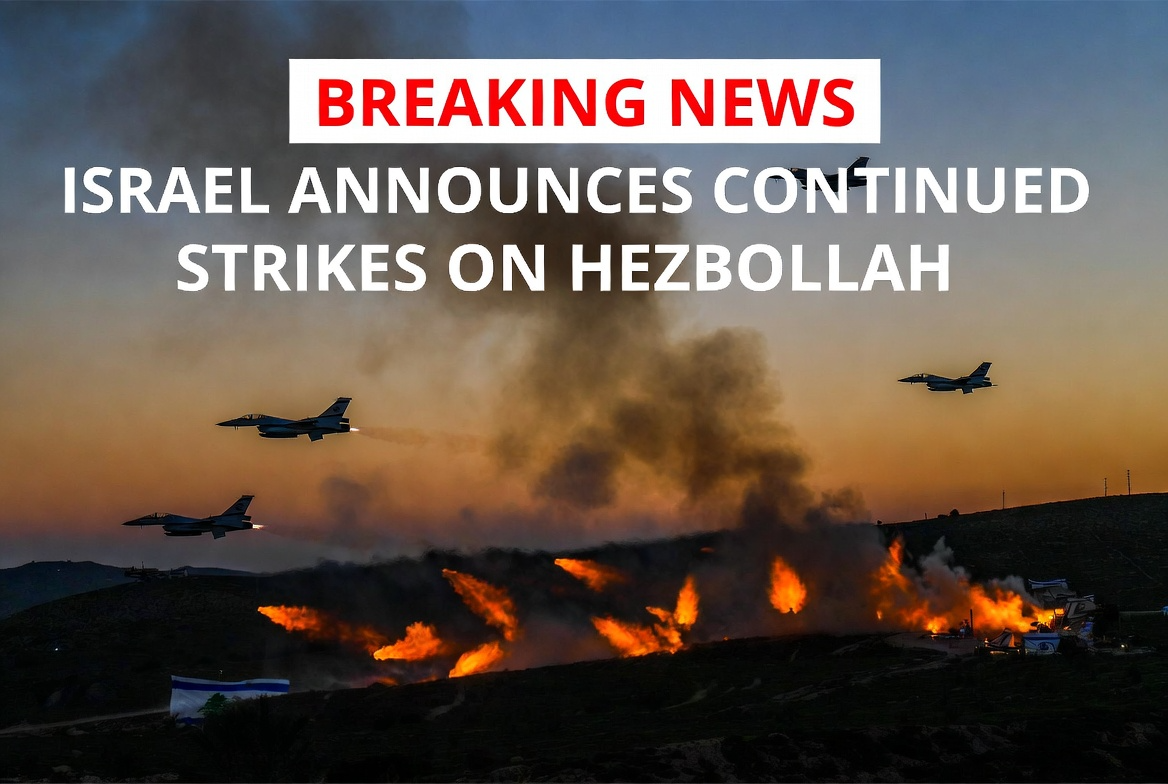
BEIRUT/JERUSALEM June 8, 2026 — Israel has stated it will press ahead with airstrikes and other operations targeting Hezbollah infrastructure in Lebanon, despite multiple U.S.-brokered ceasefire attempts in recent weeks.
The announcement, widely reported on social media and aligned with statements from Israeli officials, underscores the persistent challenges in de-escalating the conflict that erupted in March 2026. Multiple short-term truces — including extensions in April, May, and early June — have been repeatedly undermined by cross-border incidents, including rocket fire, drone attacks, and retaliatory strikes.
Israeli Prime Minister Benjamin Netanyahu’s office and the Israel Defense Forces (IDF) have maintained that operations will focus on dismantling Hezbollah’s military capabilities, particularly in southern Lebanon and areas used for launching attacks on Israel. Recent actions have included strikes on Beirut’s southern suburbs (Dahiyeh district), a Hezbollah stronghold, following alleged violations such as rocket launches toward northern Israel.
Lebanese authorities and Hezbollah have accused Israel of ongoing aggression, reporting civilian casualties and damage from frequent airstrikes even during supposed ceasefire periods. Lebanon’s health ministry and state media have documented dozens of deaths in southern Lebanon in recent days alone.
Background on the 2026 Lebanon Conflict
- The current round of hostilities intensified in March 2026 when Hezbollah launched rockets into Israel in solidarity with regional allies.
- Israel responded with a ground incursion into southern Lebanon and extensive airstrikes.
- U.S. President Donald Trump has facilitated several temporary ceasefires, aiming for a broader de-escalation that includes Hezbollah withdrawal south of the Litani River and Israeli pullback.
- However, both sides have accused each other of violations, with Israel citing continued Hezbollah attacks and Hezbollah demanding full Israeli withdrawal from Lebanese territory.
As of June 2026, the conflict has caused significant displacement, infrastructure damage, and casualties on both sides, with ripple effects raising concerns about wider regional involvement involving Iran.
Israeli officials have emphasized that operations will continue until Hezbollah’s threat is sufficiently neutralized, while diplomatic efforts under U.S. mediation remain active but face repeated setbacks.
This situation continues to evolve, with potential implications for stability across the Middle East. Further updates are expected as both sides respond.
About The Author