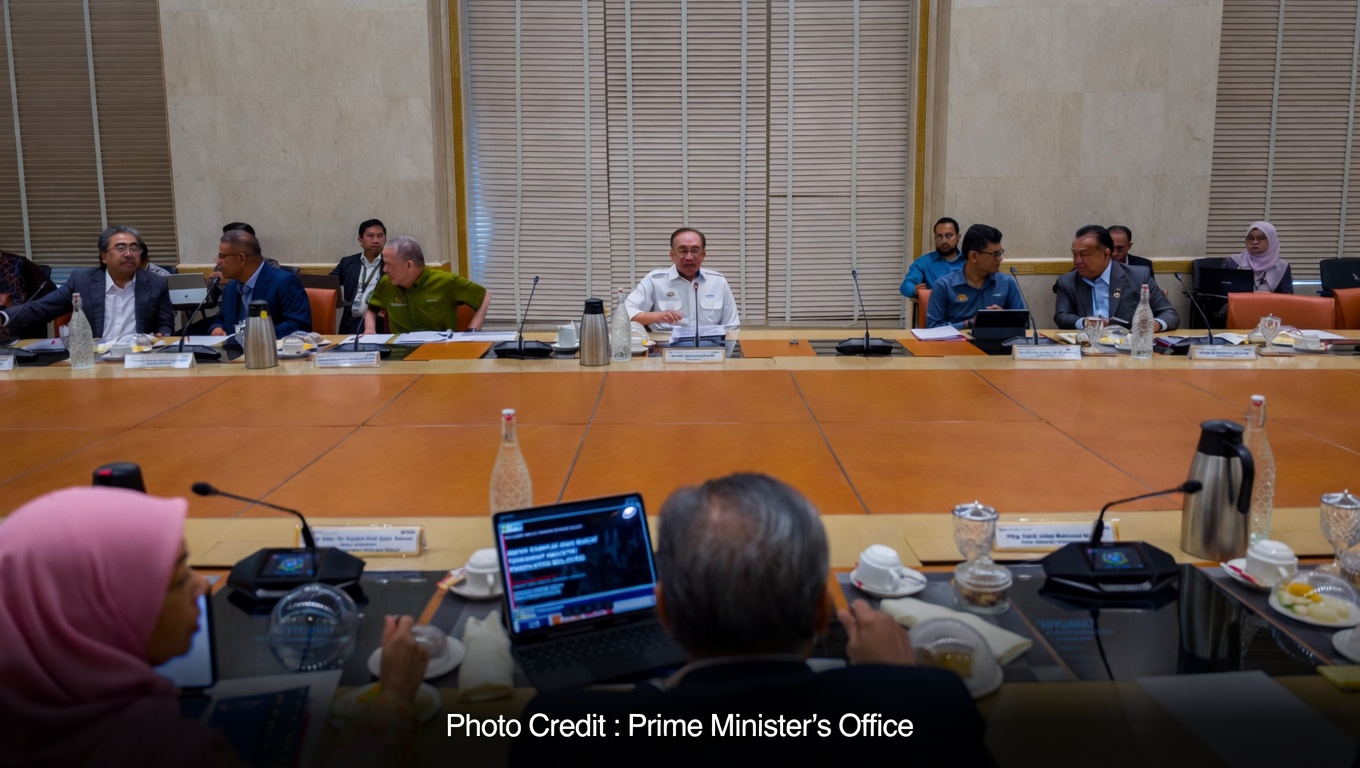
KUALA LUMPUR May 19, 2026 — Prime Minister Dato’ Seri Anwar Ibrahim today chaired a meeting of the National Economic Action Council (MTEN) that received a detailed briefing from the Federation of Malaysian Manufacturers (FMM) on the impacts of the ongoing global supply crisis on the country’s manufacturing sector.
The FMM presentation highlighted significant challenges faced by key subsectors, including automotive, food and beverage, plastics, chemicals, and electronics, due to rising costs and supply chain disruptions.
In his official statement on X, Anwar emphasised the importance of grounding government policies in ground-level realities, particularly to support small and medium enterprises (SMEs) that are most affected by current cost pressures.
“To ensure SMEs can maintain cash flow and sustain operations, the government has strengthened support through the RM5 billion SME Stabilisation Relief Facility (SME SRF) by Bank Negara Malaysia,” he said.
Additionally, RM5 billion in financing guarantees via the SJPP (Skim Jaminan Pembiayaan Perniagaan) have been made available to assist impacted sectors.
The MTEN meeting also reviewed proposed improvements to the Subsidised Diesel Control System (SKDS). Anwar said refinements would be implemented in a balanced manner to strengthen controls against leakages without disrupting business operations and national supply chains.
The Prime Minister reiterated the government’s commitment to prioritising the security of essential supplies.
“The government will continue to manage this crisis with a focus on guaranteeing supplies of food, energy, medicines, and essential goods, while curbing price increase pressures and strengthening the country’s economic resilience,” he added.
Anwar stressed that ongoing engagement with industry players and all stakeholders under the MADANI framework would be intensified to ensure policies are comprehensive and centred on the people’s and nation’s interests.
The latest MTEN session forms part of the government’s broader efforts to shield the economy and vulnerable groups from global shocks, building on previous directives for ministries to realign assistance programmes.
About The Author