Signature: Ew8l9iHJCxwPVQtzZRCsHE1aozCx6uKNQCmAg5bBKsFd/vJPhGBa60LF+aOsTV9G82bHgPpimh1S2/l8ik2ZYYNHFGhSlioX/0+B1LeO+ZKj/e3IHLVq+oYKKXPmMPdMw3n/avSXLYdUaBuFwuTDXyUBDSfbyg1YIOkxRYrfDfVF+oqzqRM/TzTS8+tSRNIyuMglPjC+rDdcZconKj9meAfL0wVnMqXoXdZqKTKhIYlaLPveN0gdbpPAE/Z7rx31
WASHINGTON D.C April 9, 2026 – President Donald J. Trump has issued a sharp warning to Iran against charging fees to oil tankers passing through the strategic Strait of Hormuz, describing any such practice as unacceptable.
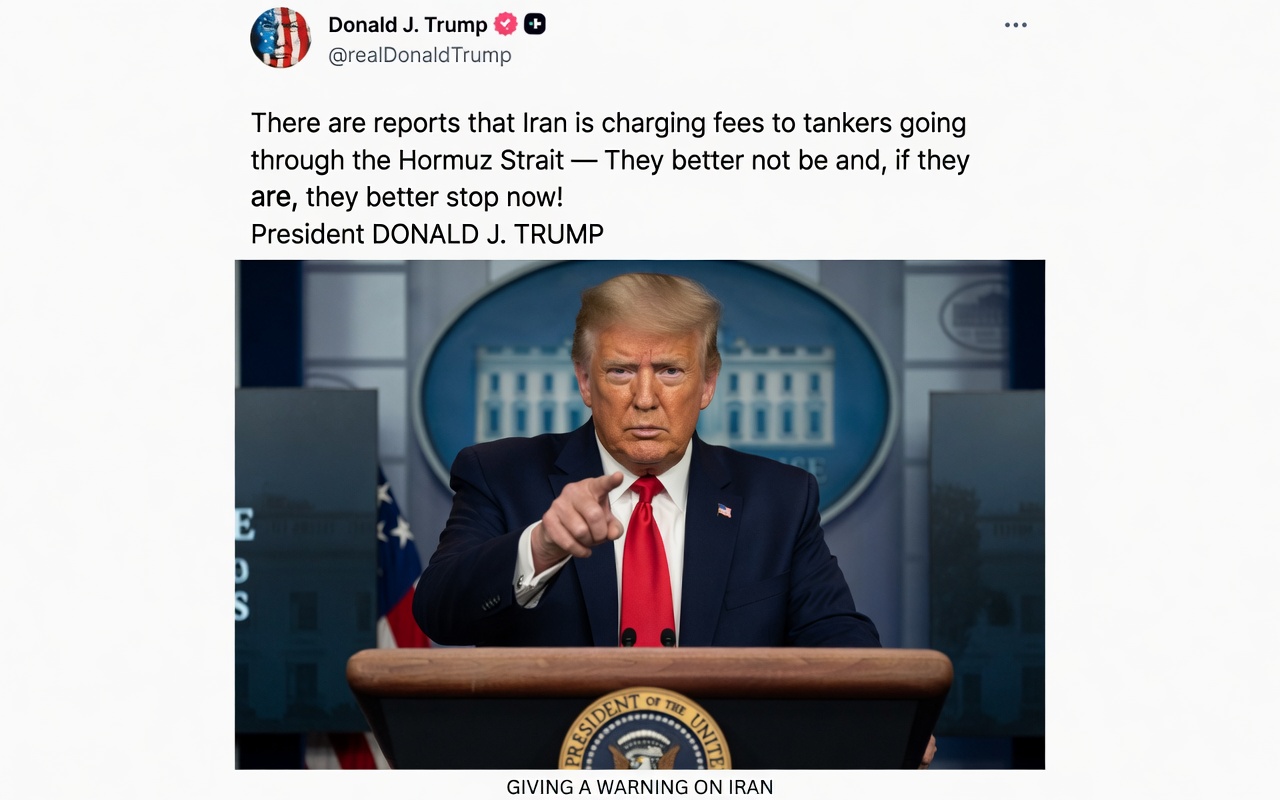
In a statement shared via the official White House account on X (formerly Twitter) late on April 9, Trump declared: “There are reports that Iran is charging fees to tankers going through the Hormuz Strait — They better not be and, if they are, they better stop now!”
The post, which includes a screenshot of the president’s message, comes amid heightened tensions following a two-week ceasefire agreement between the United States, Israel, and Iran that ended weeks of conflict and partially reopened the vital waterway.
The Strait of Hormuz, a narrow passage between the Persian Gulf and the Gulf of Oman, serves as a critical chokepoint for global energy supplies. Roughly one-fifth of the world’s seaborne oil and liquefied natural gas transits the strait under normal conditions.
Reports indicate Iran has begun imposing or is preparing to impose significant transit tolls on vessels—potentially as high as $2 million per tanker or around $1 per barrel of oil—with some payments reportedly demanded in cryptocurrency. These fees are intended to help fund reconstruction after damage sustained during the recent hostilities. Under the ceasefire framework, Iran and neighboring Oman were reportedly permitted to collect such charges as part of broader negotiations, though the U.S. position on the matter appears to have shifted.
Earlier this week, Trump had publicly floated the possibility of the United States charging its own tolls on the strait or even pursuing a “joint venture” with Iran to manage fees, calling the concept potentially advantageous. White House officials later clarified that the U.S. has not definitively accepted any toll regime and insists on unrestricted passage.
Shipping traffic through the strait remains limited despite the ceasefire, with analysts noting ongoing constraints and elevated global oil prices. Any escalation over fees could further disrupt energy markets and raise concerns about compliance with international maritime norms, which have long treated the strait as an open passageway for peaceful commerce.
The White House has not released additional details on the specific reports prompting Trump’s warning or any planned U.S. response. International observers are closely monitoring developments as the fragile truce holds and diplomatic talks continue.
Life News Agency will provide updates as more information emerges from Washington, Tehran, and shipping authorities.
About The Author