WASHINGTON D.C Sept 20, 2026 – The United States is reportedly reviewing possible military action against Yemen’s Iran-backed Houthi movement following a series of attacks on Saudi Arabia, including an attempted ballistic missile strike on the capital Riyadh, according to reports circulating Sunday.
President Donald Trump cut short a stay at Camp David and returned to the White House after meetings that a CNN national security analyst said were focused on deliberating and reviewing strike options in Yemen. U.S. embassies across several Middle Eastern countries issued warnings to American citizens to exercise caution amid fears of rapid escalation.
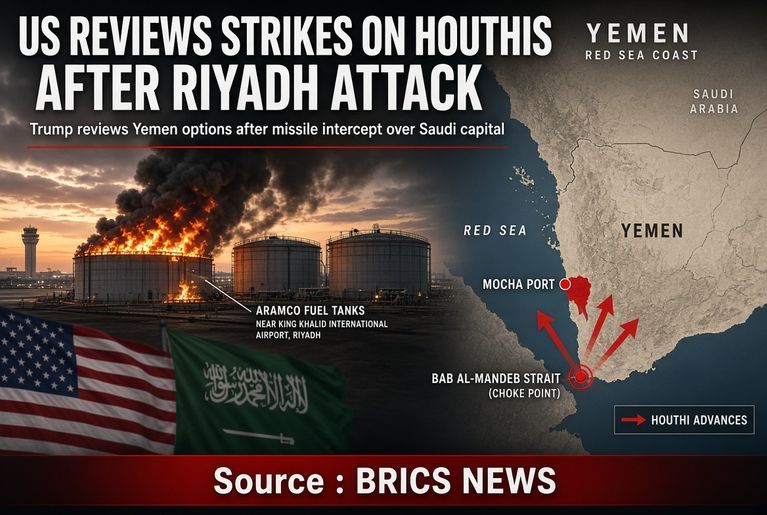
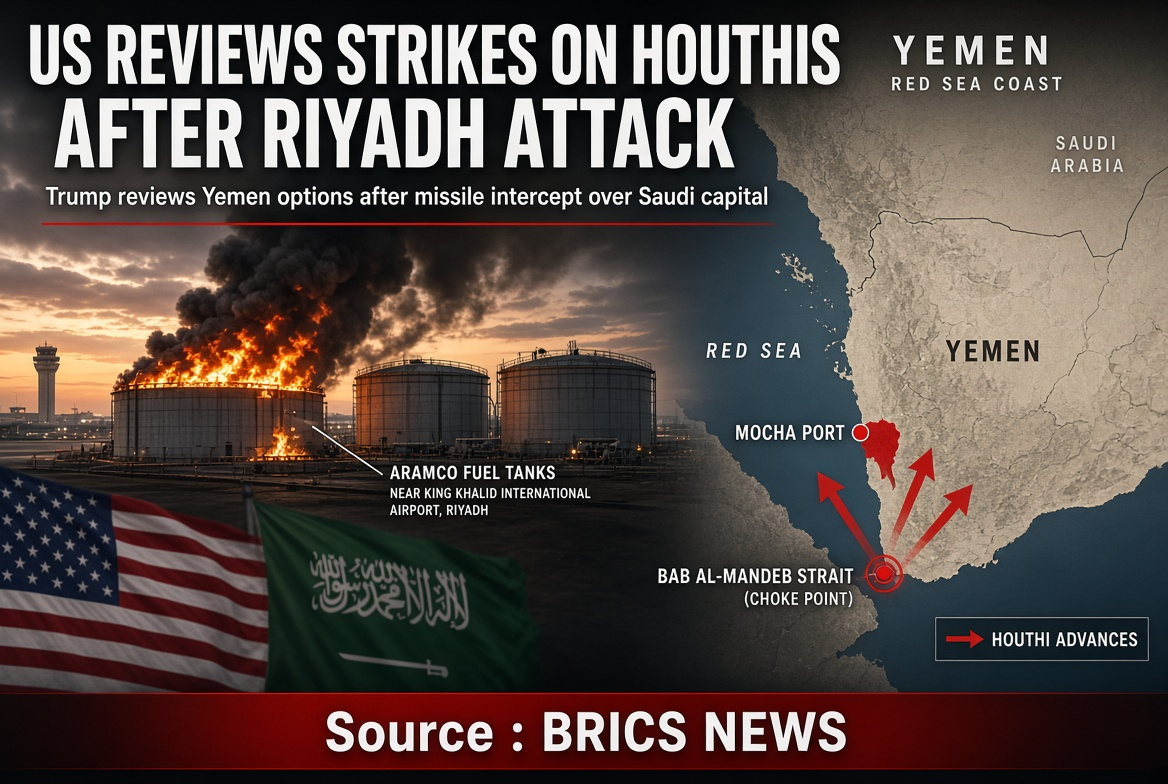
The latest trigger came Saturday. Houthi military spokesman Yahya Saree claimed the group launched missiles and drones at “sensitive sites” in Riyadh and at Aramco facilities in the Red Sea port of Yanbu in retaliation for Saudi airstrikes on Sanaa. Saudi-led coalition forces said they intercepted a ballistic missile fired toward Riyadh at dawn. Residents reported hearing explosions and seeing a large plume of black smoke and flames near fuel tanks at King Khalid International Airport. Saudi authorities reported no casualties or major damage and said additional attempted attacks on cities including Taif, Bisha, Farasan and Yanbu were also thwarted. It was the first air-raid alert sounded in Riyadh during the current round of fighting.
The Houthis have made rapid territorial gains in recent days. They seized the strategic Red Sea port city of Mocha (Mokha) and pushed toward the Bab al-Mandeb Strait, capturing nearby islands including Perim (Mayyun). The strait is a vital chokepoint for shipping between the Red Sea and the Gulf of Aden and has grown more important after disruptions in the Strait of Hormuz linked to the wider U.S.-Iran conflict. Saudi-backed Yemeni government forces suffered a series of retreats along the coast.
Washington has so far limited its involvement. Earlier this month, Saudi Crown Prince Mohammed bin Salman called Trump twice seeking U.S. airstrikes as Houthi forces advanced. Trump declined direct kinetic action, officials said, to keep American forces focused on the Iran theater and avoid opening another front. Instead, the U.S. expanded intelligence sharing, geospatial targeting support, and advisory assistance. Roughly 100 to 200 U.S. military personnel are in Saudi Arabia working with a joint command, but they are not participating in strikes or providing refueling or other operational support, according to multiple reports.
The Trump administration previously conducted a two-month bombing campaign against the Houthis in 2025 (Operation Rough Rider) before reaching a ceasefire in which the group agreed to halt attacks on U.S. shipping. U.S. officials recently met Houthi representatives in Oman; the group reportedly reiterated that it would not target American vessels and would confine attacks to Saudi-linked shipping. Vice President JD Vance confirmed the United States was in direct contact with the Houthis.
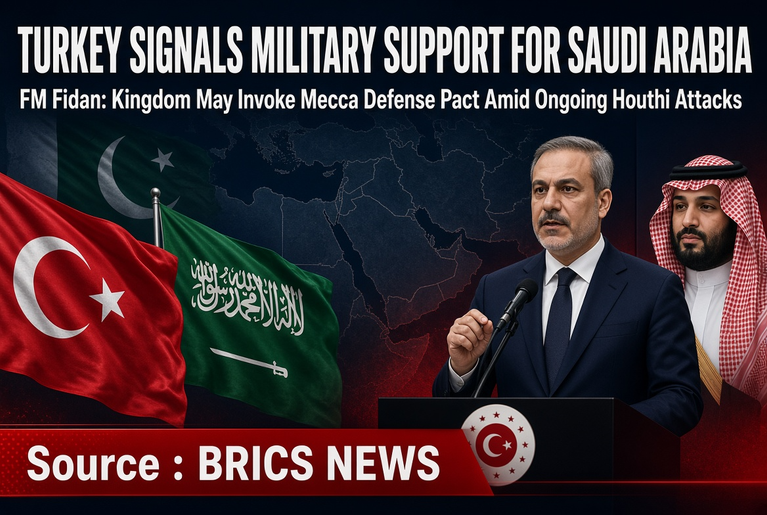
No official announcement of a decision to launch U.S. strikes has been made. Analysts note that American military resources are already stretched by the Iran conflict, interceptor stocks are low, and domestic political considerations ahead of midterm elections may weigh against a new campaign. Saudi Arabia has asked other partners including Pakistan, Turkey, Egypt, Britain and France for air-defense support, with limited commitments so far.
Oil markets have reacted to the dual threats of Hormuz and now Bab al-Mandeb, with crude prices remaining elevated. The situation remains fluid, with both sides exchanging strikes and no immediate diplomatic off-ramp apparent.
About The Author