WASHINGTON D.C, May 2, 2026 — President Donald J. Trump signed an executive order Friday that broadens U.S. sanctions against the Cuban government, targeting officials and foreign companies involved in the island’s security apparatus, human rights abuses, corruption, and key economic sectors including energy, finance, mining, and defense.
The order, issued under the International Emergency Economic Powers Act, authorizes secondary sanctions on foreign persons and financial institutions that do business with designated Cuban entities, effectively expanding the long-standing U.S. embargo. It also imposes immigration restrictions on individuals linked to the regime.
White House officials described the move as necessary to address repression by the Cuban government and threats to U.S. national security and foreign policy. A fact sheet released by the administration states the sanctions build on an earlier executive order from January 2026 declaring a national emergency over Cuba.
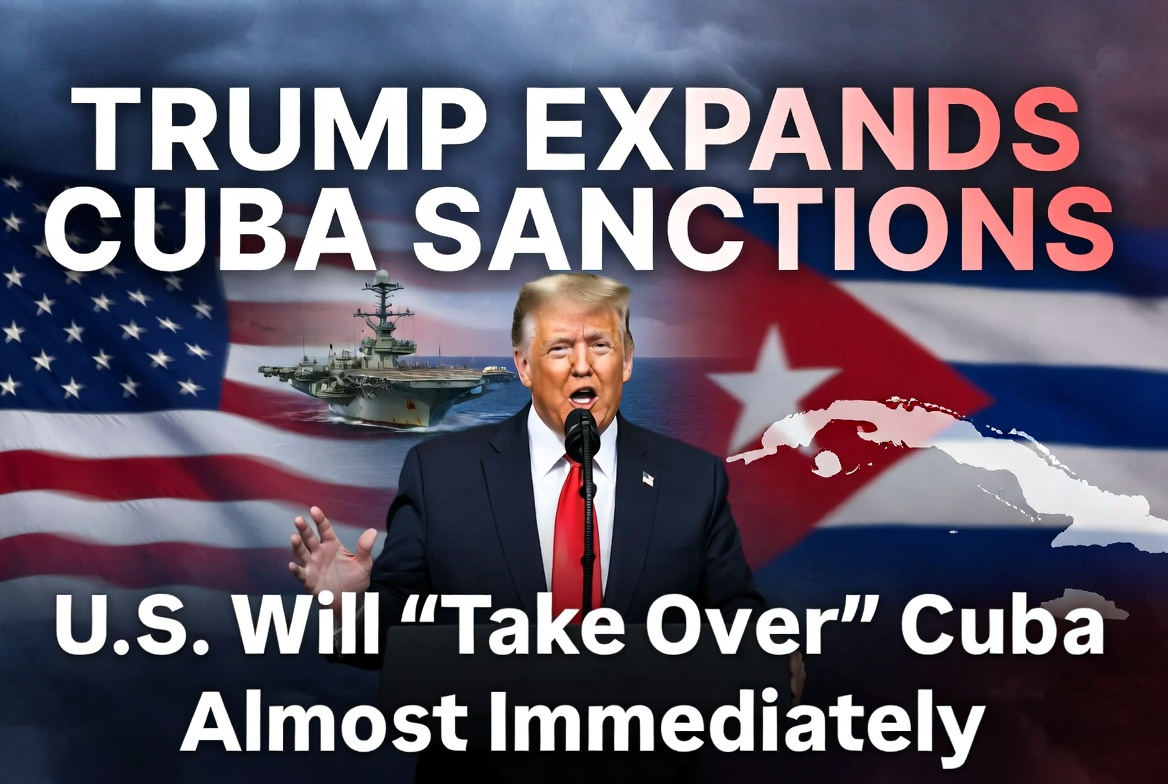
Later Friday evening, during a speech at the Forum Club of the Palm Beaches in West Palm Beach, Florida, Trump escalated his rhetoric, telling the audience the United States would be “taking over” Cuba “almost immediately.”
According to multiple reports and video of the remarks, Trump stated: “And he comes from, originally, a place called Cuba, which we will be taking over almost immediately… Cuba’s got problems. We’ll finish one first. I like to finish a job.” He referenced ongoing U.S. military operations in Iran and suggested an aircraft carrier could be positioned offshore as part of the effort.
The comments drew immediate attention amid Cuba’s ongoing economic crisis, including severe energy shortages and blackouts.
Cuba’s government condemned the sanctions as “collective punishment” and vowed to defend the homeland during May Day celebrations in Havana, where large crowds marched past the U.S. embassy. Cuban officials said the U.S. has “no right whatsoever” to impose the measures.
The executive order gives the Departments of Treasury and State broad authority to designate additional targets and sectors of the Cuban economy. It also directs the blocking of U.S. assets for those found to support the regime’s security forces or engage in serious human rights violations.
Analysts say the move signals a harder line toward Havana following the ouster of Venezuelan leader Nicolás Maduro earlier this year and reflects Trump’s long-standing criticism of the Cuban regime.
The CBS Mornings report that first highlighted the developments included footage of Trump’s Florida speech and confirmed the timing of the executive order.
No immediate military action has been announced, and White House spokespeople have not elaborated on the president’s “take over” comments beyond the sanctions framework.
This story is developing. Life News Agency will continue to monitor official statements from the White House and reactions from Havana.
About The Author