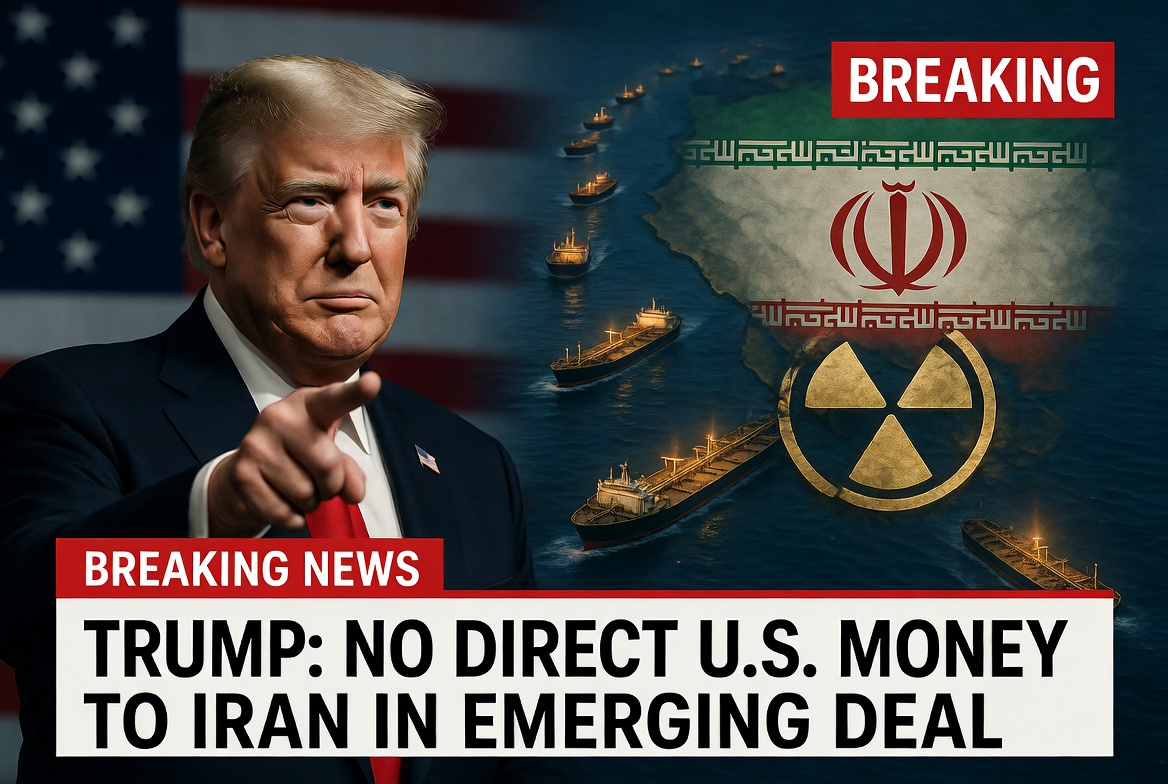
WASHINGTON, D.C. June 13, 2026 — President Donald Trump stated Saturday that Iran will receive no direct U.S. money under a prospective agreement aimed at ending recent U.S.-Iran hostilities, reopening the Strait of Hormuz, and addressing Tehran’s nuclear program.
In comments highlighted by accounts monitoring the situation, Trump emphasized a sharp contrast with previous pacts, such as the 2015 Obama-era Joint Comprehensive Plan of Action (JCPOA), which involved cash transfers and sanctions relief. “No money will be exchanged until further notice,” he has previously asserted in related statements.
According to U.S. officials and Trump’s public remarks, the emerging memorandum of understanding (MOU) includes:
- Immediate reopening of the Strait of Hormuz to unrestricted international shipping upon signing, with Iran clearing mines and forgoing tolls. The strait, vital for global oil flows, has been a flashpoint during the conflict.
- Nuclear concessions from Iran, including commitments never to pursue nuclear weapons, suspension of uranium enrichment, and disposal of highly enriched uranium stockpiles—potentially with U.S., international, and Iranian coordination.
- Phased economic benefits tied strictly to Iranian compliance, rather than upfront payments. Relief would reportedly come through third parties, such as Gulf states like the UAE, and only after verifiable steps.
Trump canceled planned U.S. strikes earlier this week, citing progress and approval at high levels in Iran, though Tehran has pushed back, stating no final deal exists and more time is needed.
Critics and observers on platforms like X express doubt. Many note that while the U.S. may avoid direct transfers, Iran could still access billions in previously frozen assets via intermediaries. Reports mention potential UAE channeling of around $10 billion, including half from frozen funds.
Some replies highlight historical precedents: the Obama administration’s $1.7 billion cash shipment and later unfreezing of $6 billion. Trump has long criticized these as flawed.
Iranian officials and analysts argue that major concessions without tangible relief are unrealistic, raising questions about whether the deal can hold.
The negotiations follow months of escalation, including U.S. and Israeli actions against Iranian targets. A potential signing could occur as soon as Sunday, June 14, possibly electronically or in Europe, though timelines have shifted repeatedly.
Pakistan’s Prime Minister has mediated aspects of the talks, expressing optimism. Regional players including Saudi Arabia, the UAE, and others are reportedly involved.
As details remain fluid, markets and global energy observers watch closely. Oil prices have fluctuated on hopes of resumed flows through Hormuz.
This story is developing. Further updates expected on any formal signing or clarifications from Tehran.
About The Author