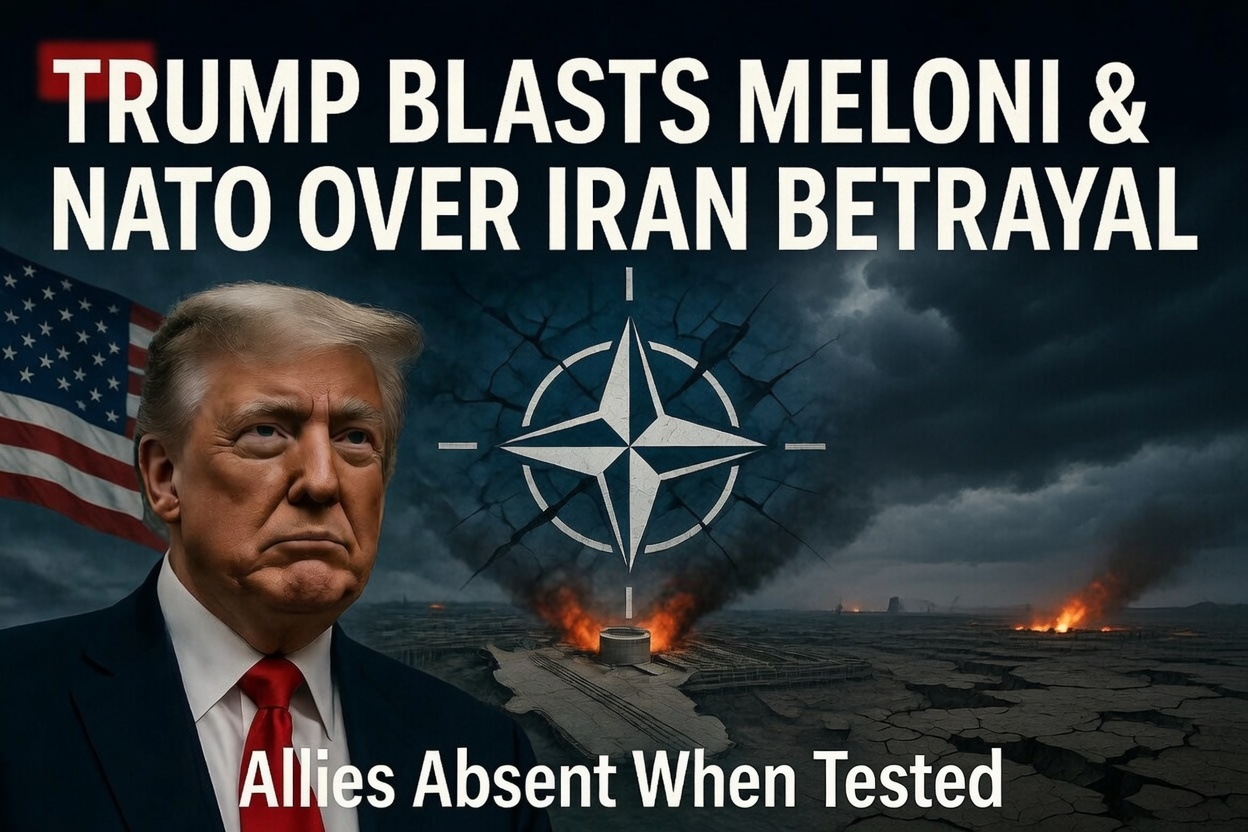
WASHINGTON, D.C. June 21, 2026 — President Donald J. Trump sharply criticized European NATO allies on Sunday, accusing them of failing to support U.S. efforts against Iran’s nuclear program despite decades of American defense spending. The remarks, shared via the White House Rapid Response account, focused particularly on Italian Prime Minister Giorgia Meloni and highlighted tensions following the 2026 U.S.-Israel military operation against Iran.
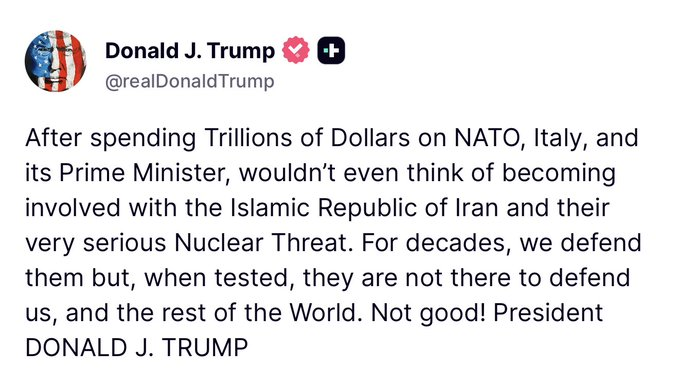
In the statement, Trump wrote: “After spending Trillions of Dollars on NATO, Italy, and its Prime Minister, wouldn’t even think of becoming involved with the Islamic Republic of Iran and their very serious Nuclear Threat. For decades, we defend them but, when tested, they are not there to defend us, and the rest of the World. Not good!”
The post included an image of the full statement attributed to Trump.
The rebuke comes amid ongoing fallout from Operation Epic Fury, the U.S.-Israeli campaign launched on February 28, 2026, that targeted Iranian nuclear facilities, missile sites, military infrastructure, and leadership, resulting in the death of Supreme Leader Ali Khamenei. The operation led to Iranian retaliation, including attempts to close the Strait of Hormuz — a critical chokepoint for global oil shipments — causing significant disruptions to energy markets.
Italy, along with other European nations like Spain, reportedly denied U.S. requests to use air bases such as Sigonella in Sicily for operations related to the Iran conflict. Italian officials cited the need for specific parliamentary authorization under existing treaties for combat-related use, distinguishing it from routine logistical flights. Meloni’s government has emphasized that bilateral relations with the U.S. remain strong despite the episode.
Trump has repeatedly framed NATO as a “paper tiger” and accused European allies of free-riding on U.S. military spending while refusing to share risks in key operations, including efforts to secure the Strait of Hormuz.
Meloni has pushed back against Trump’s characterizations in recent weeks, calling some claims “unacceptable” and denying elements of the reported interactions. The Italian leader, once viewed as a close ideological ally of Trump, has faced domestic and international pressure over Italy’s cautious stance on the Iran operation.
The dispute reflects deeper transatlantic strains post-conflict. While a memorandum of understanding aimed at ending hostilities was signed in mid-June 2026, issues around the Strait of Hormuz and Iran’s nuclear ambitions continue to fuel diplomatic friction.
Supporters of the America First agenda echoed Trump’s call for reevaluating U.S. commitments to NATO, with some suggesting the U.S. should withdraw or demand greater burden-sharing. Critics, including some European voices, argue that NATO is a defensive alliance and that the Iran operation extended beyond its mandate.
This latest exchange underscores ongoing debates about alliance reliability in an era of shifting global threats, with the White House using the moment to reinforce its push for stronger allied contributions to collective security.
About The Author