By Dr Mohd Afiq Mohd Nor and Dr Mohd Hafyzuddin Md Yusuf
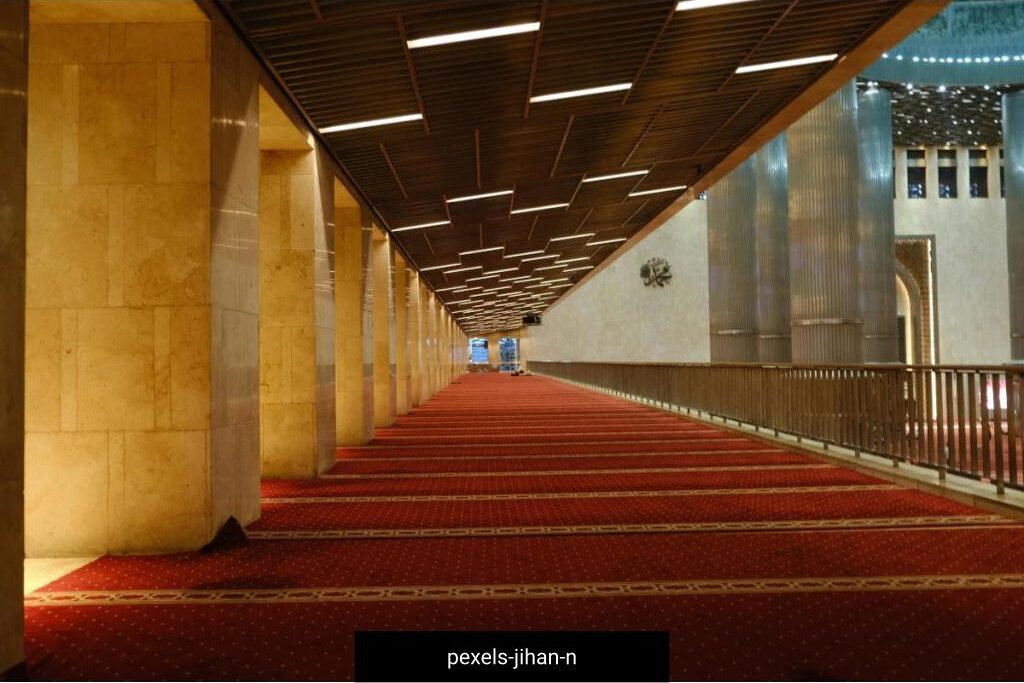
A mosque is more than a place of worship. In the heart of every community, it is a space where people gather, connect, learn and support one another. In today’s world, it can also become something even more powerful — a place that helps save lives.
Imagine the scene after tarawih prayers. Congregants are greeting one another, families are resting at the mosque compound, and the atmosphere is calm. Suddenly, someone collapses and becomes unresponsive,. In that moment, time is no longer counted in minutes. It is counted in seconds.
The person standing closest may not be a doctor, nurse or paramedic. More often, it is an ordinary member of the public — a fellow worshipper, a student, a teacher, a father or a neighbour. Yet that person may hold the key to survival.
Out-of-hospital cardiac arrest does not wait for the perfect setting. It happens at home, in schools, at shopping malls, at workplaces and, yes, even in mosques. When it happens, the first few minutes are critical,. Waiting passively for an ambulance may cost a life. Early cardiopulmonary resuscitation, or CPR, can keep blood flowing to the brain and vital organs while professional help is on the way.
This is why community readiness matters. CPR is not an advanced medical procedure reserved only for healthcare workers. Basic CPR can be learned by almost anyone. It is simple, practical and empowering. More importantly, it gives ordinary people the confidence to act when every second counts.
Recent stories of young children using CPR to help their friends remind us of a powerful truth: lifesaving skills are not limited by age or profession. If a child can learn and respond with courage, then surely adults, institutions and communities can do the same.
This is where mosques have an important role to play. Across Malaysia, mosques are already centres of spiritual development, education and social support. With the right training and partnerships, they can also become centres of emergency preparedness.
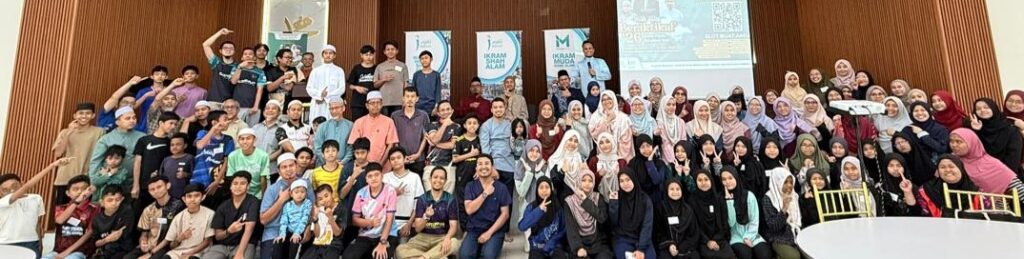
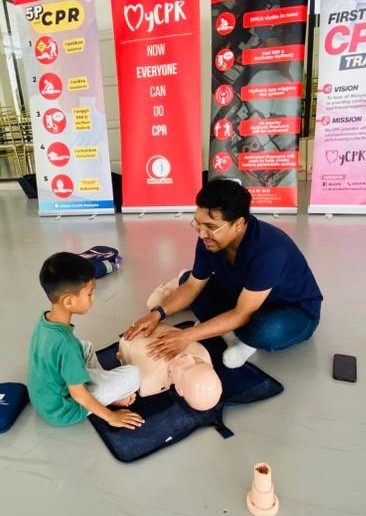
Programmes such as Selangor BerIktikaf ’26 at Masjid Raja Bendahara Tengku Badar Shah, Denai Alam, show how this can be done meaningfully. Through collaboration involving community organisations, healthcare professionals and the MyResQ initiative from Universiti Malaya, supported by Yayasan Inovasi Malaysia, worshippers were not only encouraged to strengthen their spiritual connection during Ramadan, but also equipped with basic lifesaving knowledge.
Participants were introduced to how to recognise an unresponsive person, how to perform effective chest compressions, and how to use an automated external defibrillator, or AED,. These are not abstract skills. They are practical actions that can make the difference between life and death.
Some may ask: what if an emergency happens during prayer? The principle is clear. Saving a life takes priority. In Islam, the preservation of life is a fundamental value. In a medical emergency, prayer can be paused or resumed later so that urgent help can be given,. Compassion, courage and action are all part of serving a higher purpose.
However, knowledge alone is not enough. The greater challenge is hesitation. In emergencies, many people freeze. Some assume someone else will act. Others fear making a mistake. This bystander effect is common, but it can be changed through training, repetition and confidence-building.
Universities have a special responsibility in this space. A higher education institution should not only produce graduates and research papers. It should translate knowledge into public benefit. It should bring science, innovation and compassion into the community.
MyResQ reflects this mission. The initiative aims to connect emergency victims with trained responders nearby through digital technology. By using real-time alerts, AED location mapping, emergency call integration and CPR learning modules, MyResQ helps strengthen the chain of survival before professional responders arrive.
This is especially important because ambulance response may take several minutes, while cardiac arrest demands almost immediate action. In many cases, the community itself is the true first responder,.
Now imagine if every mosque in Malaysia had trained CPR volunteers, accessible AEDs and congregants who knew exactly what to do when someone collapsed. The mosque would remain a place of worship, but it would also become a place of protection — a sanctuary not only for the soul, but also for life.
The question is no longer whether CPR should be learned. The real question is this: if someone collapses in front of us today, are we ready to act?
Higher education, faith institutions and communities must now work together. With knowledge, technology and compassion, we can build a Malaysia where help begins not only when the ambulance arrives, but from the very first person who chooses to step forward.
Dr Mohd Afiq Mohd Nor and Dr Mohd Hafyzuddin Md Yusuf are Consultant Emergency Physicians at Universiti Malaya Medical Centre.
About The Author