By: Professor Dato Dr Ahmad Ibrahim
The world economy is in the grip of a severe supply shock. The conflict in the Middle East has revealed a terrifying truth: the global economic order is structurally incapable of absorbing shocks to the stuff we need—energy, materials, and components. The conventional wisdom is to “de-risk” by reshoring manufacturing or friend-shoring supply chains. But this is a fool’s errand. It is expensive, inflationary, and merely swaps one set of geopolitical vulnerabilities for another. If we are serious about insulating the global economy from the volatility of supply shocks, we must embrace the circular economy—not as a green niche, but as the central pillar of economic security.
To understand why the circular economy is a strategic imperative, we must first understand why supply shocks are so much harder to manage than demand shocks. A demand shock—such as the one experienced during the Covid lockdowns—is essentially a sudden stop in spending. Central banks and treasuries have a playbook for this. By lowering interest rates, extending credit, and providing direct transfers, they can prop up aggregate demand until confidence returns. The goods are still out there; the factories still exist; the supply chains are intact. The challenge is reconnecting buyers with sellers.
A supply shock is the opposite. It is a sudden stop in the availability of goods. When energy supplies are disrupted by conflict in the Middle East, or when a strait like the Strait of Hormuz is threatened, you cannot print more oil. When critical minerals for semiconductors or batteries are concentrated in geopolitically hostile nations, a central bank cannot conjure substitutes out of thin air. The result is stagflation—the nightmare scenario of the 1970s, now reborn. Supply shocks create scarcity, which drives up prices (inflation) while simultaneously choking off the productive capacity to grow (stagnation). Demand-side tools are impotent here. In fact, trying to manage a supply shock with demand-side policies only creates more inflation.
The current political response to this reality is “de-risking.” The idea is to move production out of volatile regions and bring it closer to home. The Inflation Reduction Act and the CHIPS Act in the United States, and the Critical Raw Materials Act in the European Union, are all attempts to build strategic autonomy. But this is a linear solution to a linear problem. It assumes that security lies in owning the factory. Yet owning a factory in Ohio instead of China does not protect you if the energy to run that factory is cut off, or if the raw materials—lithium, copper, cobalt—are still subject to cartels or conflict zones.
Moreover, reshoring is incredibly capital-intensive and slow. It will take a decade to build the mining and refining capacity the West needs to truly decouple. In the meantime, we remain exposed to every geopolitical tremor. We are essentially trying to solve a crisis of resource scarcity by competing more aggressively for scarce resources. This is where the circular economy enters as the ultimate hedge against supply shocks. The circular economy—based on the principles of eliminating waste, circulating materials, and regenerating nature—is not merely an environmental aspiration; it is a supply chain defense strategy.
Every product that is repaired, remanufactured, or recycled is a product that does not need to rely on a newly mined primary resource from a conflict zone. When you build an economy that keeps materials in use at their highest value for as long as possible, you effectively create a “strategic reserve” that resides not in government stockpiles, but in the productive capacity of the economy itself.
Consider the European Union’s reliance on Russian energy. If Europe had invested a fraction of its defense budget into deep retrofitting of buildings (energy efficiency is a form of circularity) and industrial symbiosis—where one factory’s waste heat becomes another’s power source—the Kremlin would have lost its leverage years ago. A circular economy reduces the velocity of resource consumption. When energy or material supply is disrupted, a circular system has a buffer; a linear system goes into cardiac arrest.
Supply shocks cause inflation because demand for finite resources spikes against a constrained supply. By creating secondary markets for high-quality refurbished goods, remanufactured components, and recycled materials, the circular economy introduces elasticity into the supply side. When a new semiconductor is delayed due to a geopolitical crisis, a remanufactured one can fill the gap in less critical sectors. When copper prices skyrocket due to supply fears, urban mining—recovering copper from e-waste and old infrastructure—can act as a price stabilizer. This isn’t speculation; it’s basic economics. Increasing the diversity of supply sources, including secondary sources, makes the system anti-fragile.
The nations that will dominate the 21st century will not be those with the largest mines, but those with the most sophisticated material management systems. A country that can recover 95% of the lithium from its electric vehicle batteries, or that mandates modular design so that medical devices can be upgraded rather than replaced, is a country that cannot be held hostage by a foreign power deciding to cut off exports.
We are currently treating the circular economy as a “nice to have”—a policy relegated to environmental ministries focused on recycling rates. Given the volatility we now face—with the Middle East on fire, trade wars escalating, and resource nationalism on the rise—this is dangerously naive. We need a new economic doctrine. Finance ministries must recognize that investments in circular infrastructure (sorting facilities, remanufacturing hubs, modular design standards) are not climate expenditures; they are national security expenditures. The circular economy is not just an environmental strategy. It is the most important economic security strategy of our time. It is time we started treating it as such.
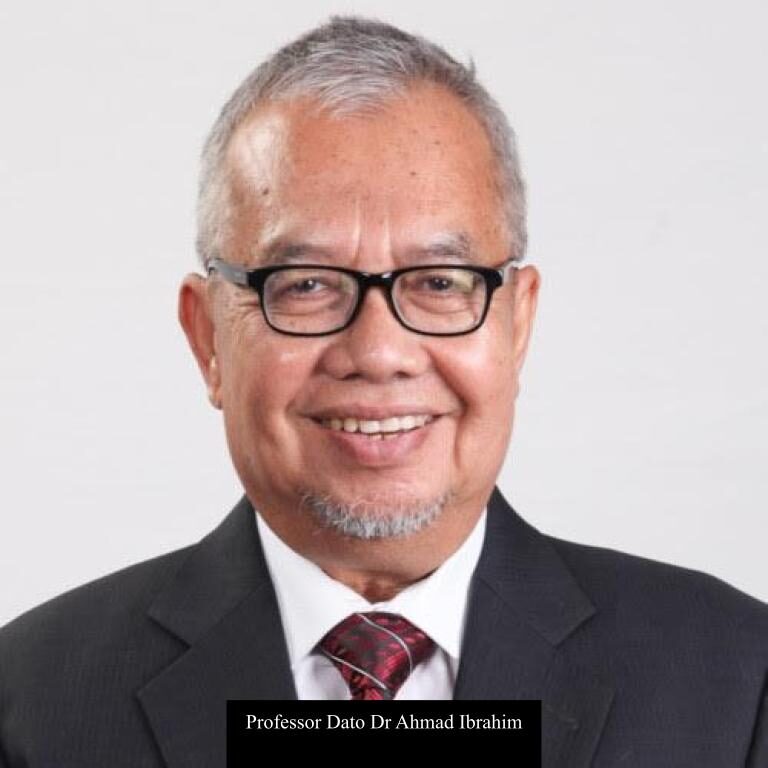
The author is affiliated with the Tan Sri Omar Centre for STI Policy Studies at UCSI University and is an Adjunct Professor at the Ungku Aziz Centre for Development Studies, Universiti Malaya.
About The Author