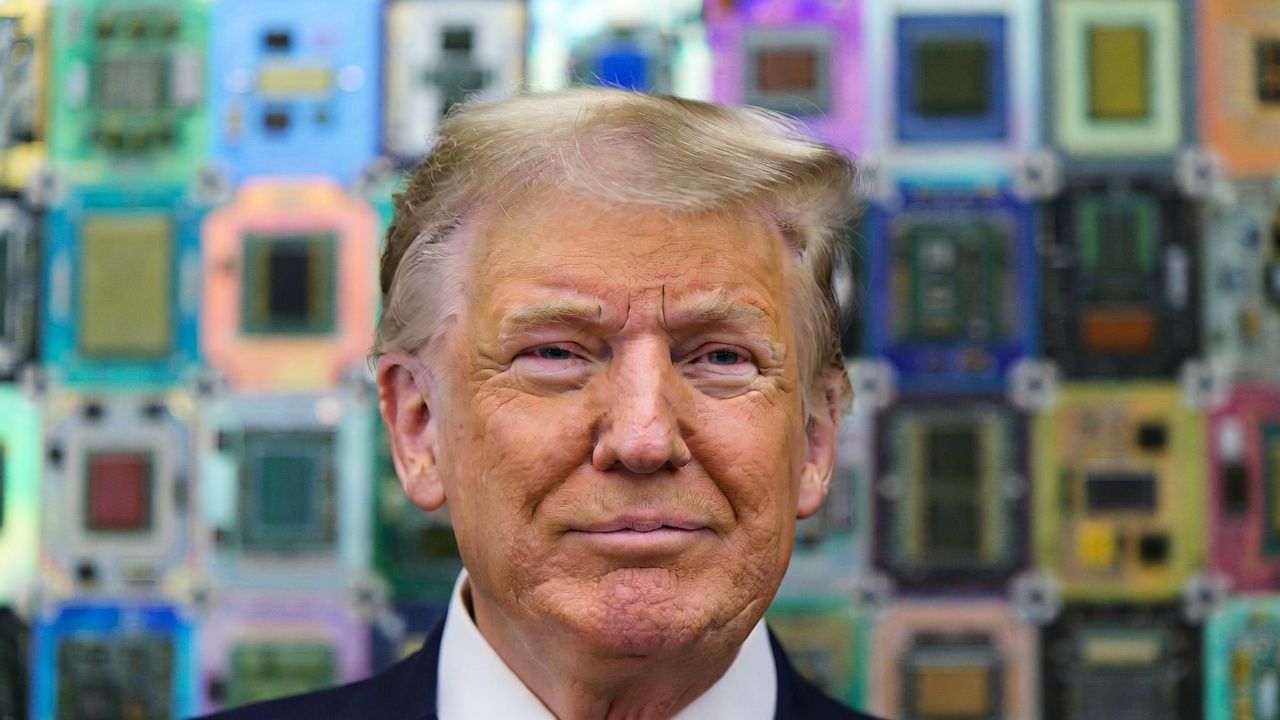
WASHINGTON, D.C. January 14, 2026 – President Donald Trump signed two executive actions in the Oval Office on Tuesday, focusing on strengthening U.S. supply chains for critical minerals and semiconductors amid ongoing trade and national security concerns.
The actions stem from Section 232 trade investigations. The first establishes processes to secure international supplies of critical mineral-derived products. The second addresses semiconductors, imposing measures on certain imports while enabling controlled exports of advanced but non-top-tier chips.
White House Staff Secretary briefed reporters shortly after the signing, explaining that imported semiconductors not used for domestic AI or computing development—particularly those transshipped to foreign destinations—will face a 25% tariff.
President Trump elaborated on the semiconductor policy, emphasizing its revenue potential for the United States. “They’re going to sell chips… it’s not the highest level… China wants them and other people want them — and we’re going to be making 25% on the sale of those chips,” Trump stated. He described the chips as “very good” but not the top-end models like Nvidia’s Blackwell or Rubin, adding, “We think it is in our best interest to do [this].”
The policy appears to allow U.S. companies, notably Nvidia, to export mid-level AI chips such as the H200 to markets including China, provided the federal government receives a 25% share of sales revenue, along with security reviews and restrictions. This move balances export controls with economic leverage, following previous Biden-era restrictions on advanced chip sales to China.
The White House Rapid Response account shared video footage of the briefing and Trump’s remarks on X, highlighting the actions as part of the America First agenda.
Analysts view the measures as a strategic blend of protectionism and revenue generation, potentially generating significant funds while maintaining U.S. dominance in cutting-edge semiconductor technology. Reactions in the tech sector have been mixed, with some praising the flexibility for U.S. firms and others raising national security concerns over any exports to China.
Further details on implementation are expected from relevant agencies in the coming weeks.
About The Author