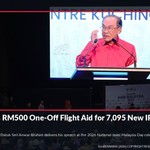
PUTRAJAYA Sept 17, 2026 — The Malaysian government has expanded electricity bill protection for domestic users from 600 kWh to 800 kWh a month, effective for usage from September through 31 December 2026, Prime Minister Datuk Seri Anwar Ibrahim announced on Thursday.
Households that stay within the new limit will be exempted from the Automatic Fuel Adjustment (AFA), the monthly retail charge, and Sales and Service Tax (SST). Anwar described the move as an immediate response to cost-of-living pressure after recent haze and hotter weather pushed some homes past the old 600 kWh cap and produced unusually high bills.
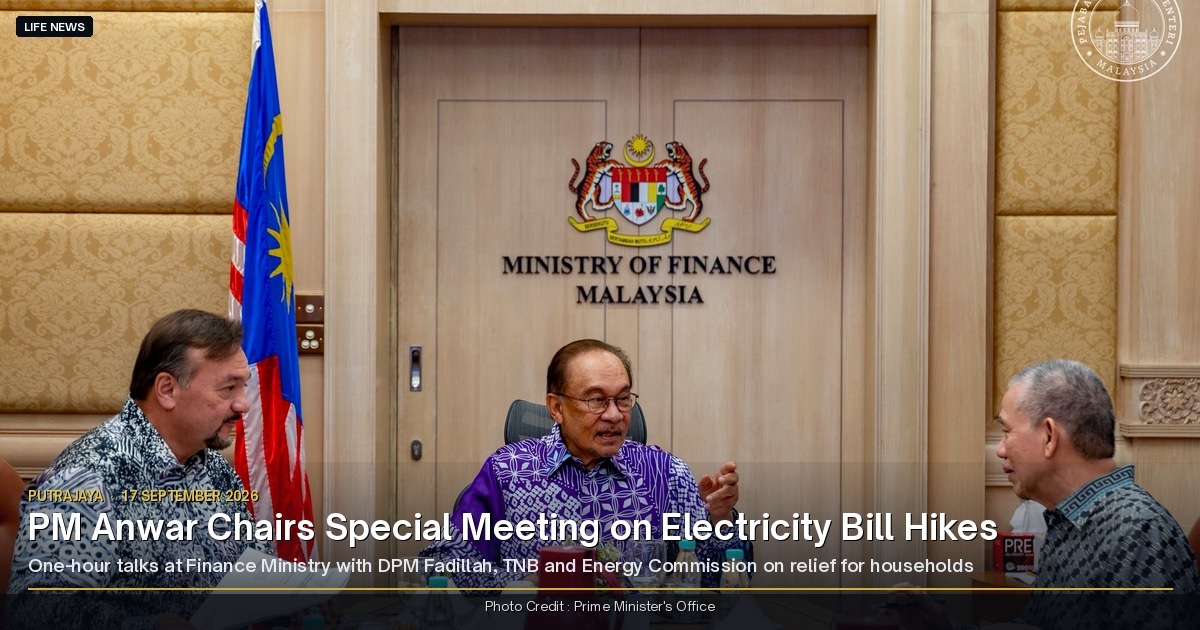
The change followed a special meeting he chaired at the Ministry of Finance with Deputy Prime Minister Fadillah Yusof, Second Finance Minister Amir Hamzah Azizan, Tenaga Nasional Berhad (TNB), the Energy Transition and Water Transformation Ministry (PETRA), and the Energy Commission.
AFA is a monthly adjustment that tracks fuel costs and exchange rates. For September it stands at +3.67 sen per kWh. Once a household crosses the protected threshold, the surcharge (or rebate) applies to the entire month’s usage, not only the excess units. That “all-or-nothing” rule is why bills can jump sharply when air-conditioning use rises.
Estimates circulating after the announcement put September savings at roughly RM39 for a 700 kWh household and about RM47 for an 800 kWh household. Projected AFA rates for the rest of the year remain positive, so the temporary higher cap will continue to cushion bills through December. Usage above 800 kWh will still attract the full set of charges. The threshold is scheduled to revert to 600 kWh on 1 January 2027.
Anwar thanked TNB, PETRA and the Energy Commission for implementing the measure quickly and said the government will keep watching fuel prices and market conditions so that future tariff decisions balance household affordability, supply security and the long-term sustainability of the energy sector.
TNB has previously noted that, since AFA began, consumers as a whole have received more in rebates (about RM3.1 billion) than they have paid in surcharges (about RM800 million). The latest adjustment is a short-term widening of the protected band rather than a permanent change to the targeted-subsidy framework.
About The Author