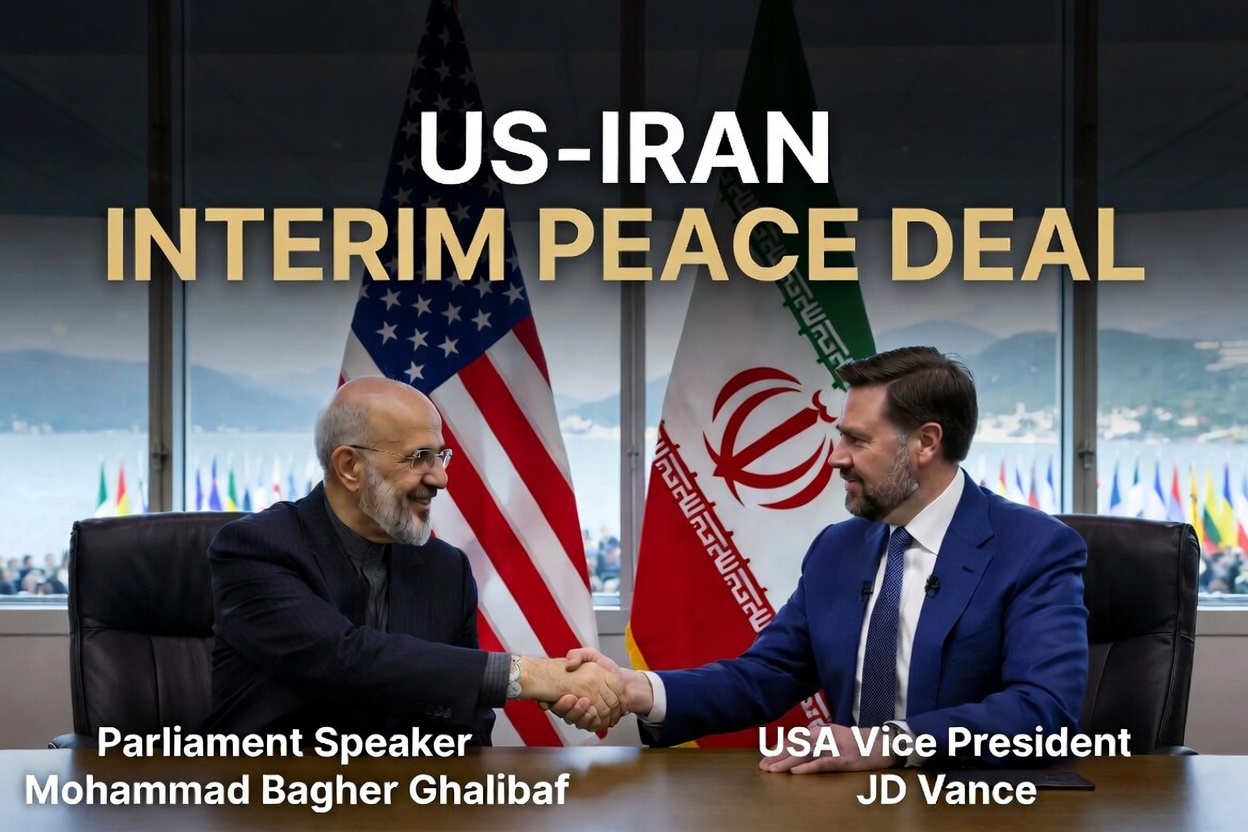
GENEVA, SWITZERLAND June 16, 2026 — Iranian Parliament Speaker Mohammad Bagher Ghalibaf will represent Tehran at the formal signing of an interim agreement with the United States aimed at ending months of direct conflict, Iranian state media and officials confirmed Tuesday.
The development marks a significant de-escalation in the 2025–2026 Iran–United States conflict, which has involved military strikes, disruptions to global oil shipping through the Strait of Hormuz, and a U.S. naval blockade.
According to Iran’s deputy foreign minister, Ghalibaf — who has served as a lead negotiator — will attend the ceremony in Geneva, expected as early as Friday. U.S. Vice President JD Vance is set to represent Washington.
Key Elements of the Interim Deal
- 60-day ceasefire extension: Builds on earlier fragile truces to halt all hostilities, including on fronts involving Lebanon.
- Reopening of the Strait of Hormuz: Critical waterway for global oil trade will reopen, easing maritime blockades and economic pressures.
- Path to further talks: The memorandum of understanding sets the stage for negotiations on Iran’s nuclear program, sanctions relief, and regional security issues. A full permanent agreement remains pending.
U.S. President Donald Trump described the deal as already electronically signed by himself, Vance, and Ghalibaf, calling it a “great deal.” He indicated a possible public release before Friday. Iranian officials have framed the agreement as preserving national rights without “surrender.”
The conflict escalated earlier in 2026, with direct U.S.-Iran exchanges following periods of heightened tensions. Pakistan has played a key mediation role, alongside other international efforts.
Both sides are claiming elements of victory: Washington highlights constraints on Iran’s nuclear ambitions, while Tehran emphasizes the reopening of shipping lanes and sanctions discussions.
Israel has reacted cautiously, with Prime Minister Benjamin Netanyahu stating that Jerusalem would continue to protect its interests independently. Hardliners in Iran have voiced opposition to the talks, targeting Ghalibaf in some protests.
Oil prices dipped on news of the potential reopening of the Strait of Hormuz, reflecting market relief over reduced geopolitical risk in energy markets.
This interim framework represents the most substantial diplomatic breakthrough since the war began, though analysts caution that long-term success depends on implementation, trust-building during the 60-day window, and avoidance of spoilers from regional actors.
Further details on the full text of the agreement are expected in the coming days as preparations for the Geneva signing advance.
About The Author