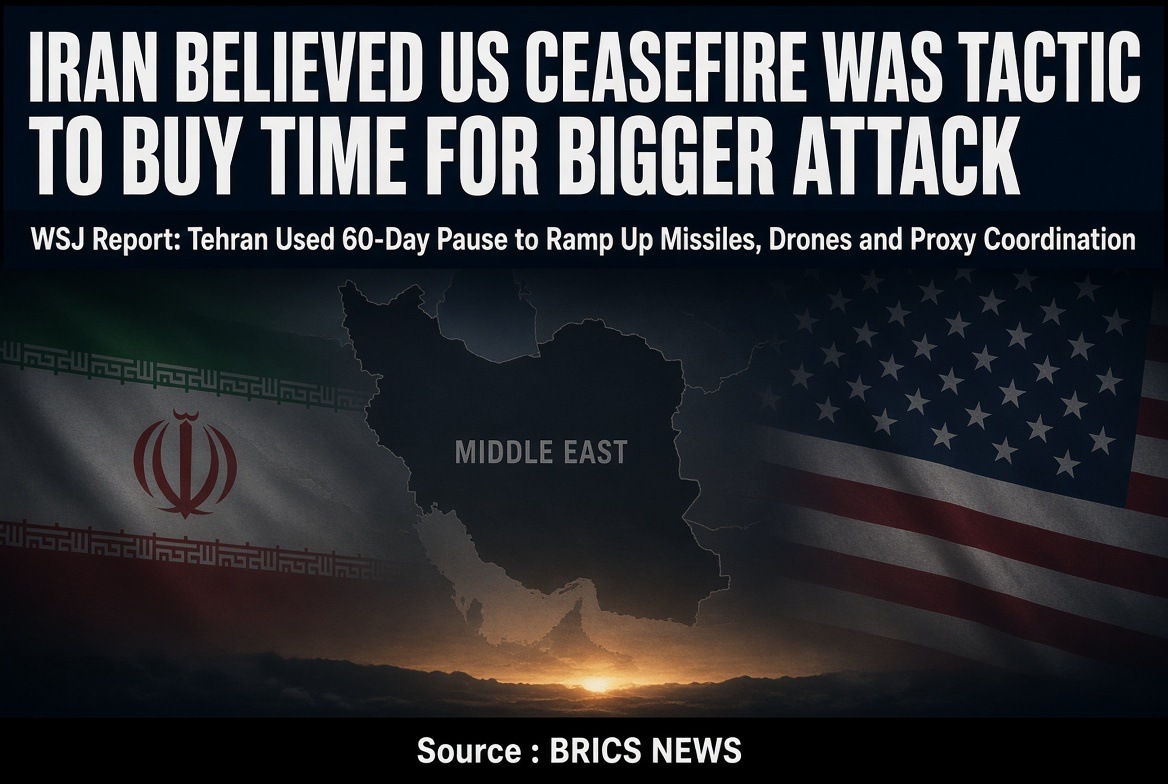
TEHRAN Aug 17, 2026 — Iran’s hard-line leadership treated a June memorandum of understanding with the United States as a temporary pause designed to relieve pressure on global markets and allow the US and Israel to prepare for a larger attack, according to a Wall Street Journal report published this weekend. Instead of pursuing diplomacy, Tehran used the subsequent two months to strengthen its military posture and coordinate with regional proxies for potential escalation.
The memorandum of understanding, signed in mid-June by US President Donald Trump and Iranian President Masoud Pezeshkian, halted open hostilities after months of conflict, called for the reopening of the Strait of Hormuz, and set a 60-day window for negotiations toward a broader deal. That period expires Monday with no final agreement reached and intermittent fighting reported on both sides.
Iranian and Arab officials told the Journal that hard-liners in Tehran believed the pact was primarily intended “to take pressure off the global economy and buy time for a bigger attack down the road.” In response, Iran accelerated production of missiles and drones, expanded the Islamic Revolutionary Guard Corps’ authority over the regular army, appointed veterans of the Iran-Iraq War and domestic crackdowns to key security posts, and increased domestic counterintelligence operations.
Arab intelligence services also detected communications between Iranian officials and allied militias in Yemen, Iraq, and Lebanon discussing plans to widen the conflict and raise the costs for the United States and its partners. Iranian commanders were reportedly sent to advise Houthi forces and other proxies on target lists and operational coordination.
A Tehran-based defense analyst close to the Iranian government, Mohammad Hassan Sangtarash, told the Journal: “There is also a widespread view in Iran that the main war has not yet begun. What we have seen so far is increasingly interpreted through the lens of ‘salami-slicing’ tactics—limited, incremental escalation designed to weaken capabilities before a larger confrontation.”
The report comes as the temporary framework ends without a lasting settlement. Both sides have accused each other of violations during the 60-day period, and Iranian officials have stated they have not yet decided whether to resume formal talks. The developments highlight persistent mutual distrust and the risk of renewed escalation in the region.
About The Author