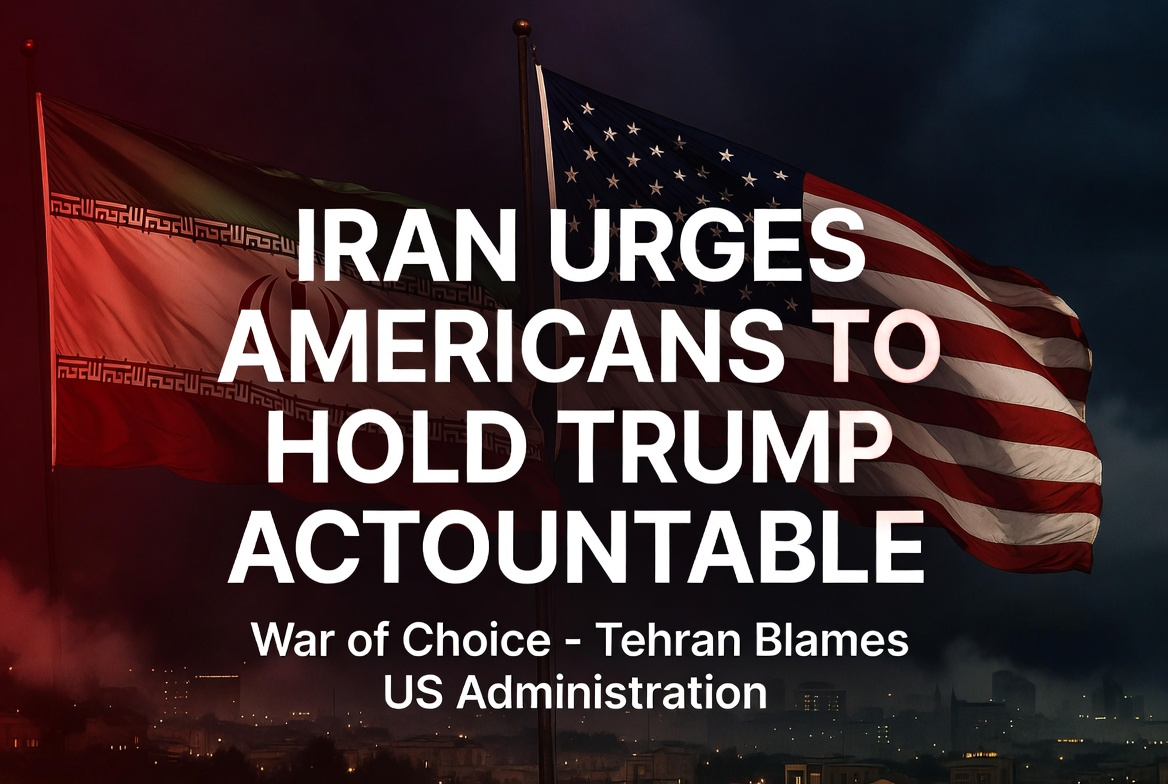
TEHRAN May 2, 2026 – Iran’s Foreign Ministry has called on the American public to demand accountability from the Trump administration, describing the recent US-Israeli military campaign as an unprovoked “war of choice.”
Foreign Ministry spokesman Esmaeil Baqaei stated that Americans have an “undeniable right and the solemn duty” to hold their leaders responsible for the conflict. “It is beyond dispute that the US administration’s ‘war of choice’ against Iran was a clear, unprovoked act of aggression,” Baqaei said in a post on X. He accompanied the statement with footage of US Senator Kirsten Gillibrand questioning the justification for the strikes during a recent Senate hearing, noting a lack of evidence that Iran planned an imminent attack on the United States.
The remarks come roughly one month after a fragile ceasefire ended major hostilities in the short but intense 2026 Iran War. On February 28, 2026, the United States and Israel launched coordinated airstrikes under Operation Epic Fury (US) and Operation Roaring Lion (Israel). The operation targeted Iranian leadership, nuclear-related sites, ballistic missile infrastructure, air defenses, and military command centers. It resulted in the death of Supreme Leader Ayatollah Ali Khamenei and dozens of other senior officials, severely degrading Iran’s military capabilities.
Iran responded with retaliatory missile and drone strikes on US and Israeli targets across the region, as well as attempts to disrupt shipping through the Strait of Hormuz, which caused global oil prices to spike and forced rerouting of energy shipments. A ceasefire took hold in early April 2026, with both sides claiming partial victories but leaving underlying tensions unresolved.
US officials have defended the operation as necessary to neutralize Iran’s nuclear ambitions and its support for regional proxies. President Trump and Israeli leaders described the strikes as defensive and decisive.
The Iranian statement has sparked sharp reactions online, with many dismissing it as regime propaganda. Critics point to Iran’s domestic crackdowns on protesters, its history of backing militant groups, and the irony of calling for accountability abroad while limiting it at home.
As diplomatic efforts continue— including recent talks between Iranian and South Korean officials—the region remains on edge. The Strait of Hormuz is partially reopened, but naval risks persist, and the long-term political fallout from the conflict is still unfolding.
Life News Agency will continue to monitor developments.
About The Author