TEHRAN July 1, 2026 — Iranian officials have stated that the Islamic Republic will not begin final agreement negotiations with the United States until Washington fully implements key preliminary clauses of the Islamabad Memorandum of Understanding (MoU) signed in mid-June.
The development comes as US and Iranian delegations continue technical talks, including recent meetings in Qatar, amid efforts to solidify the fragile ceasefire reached after months of conflict.
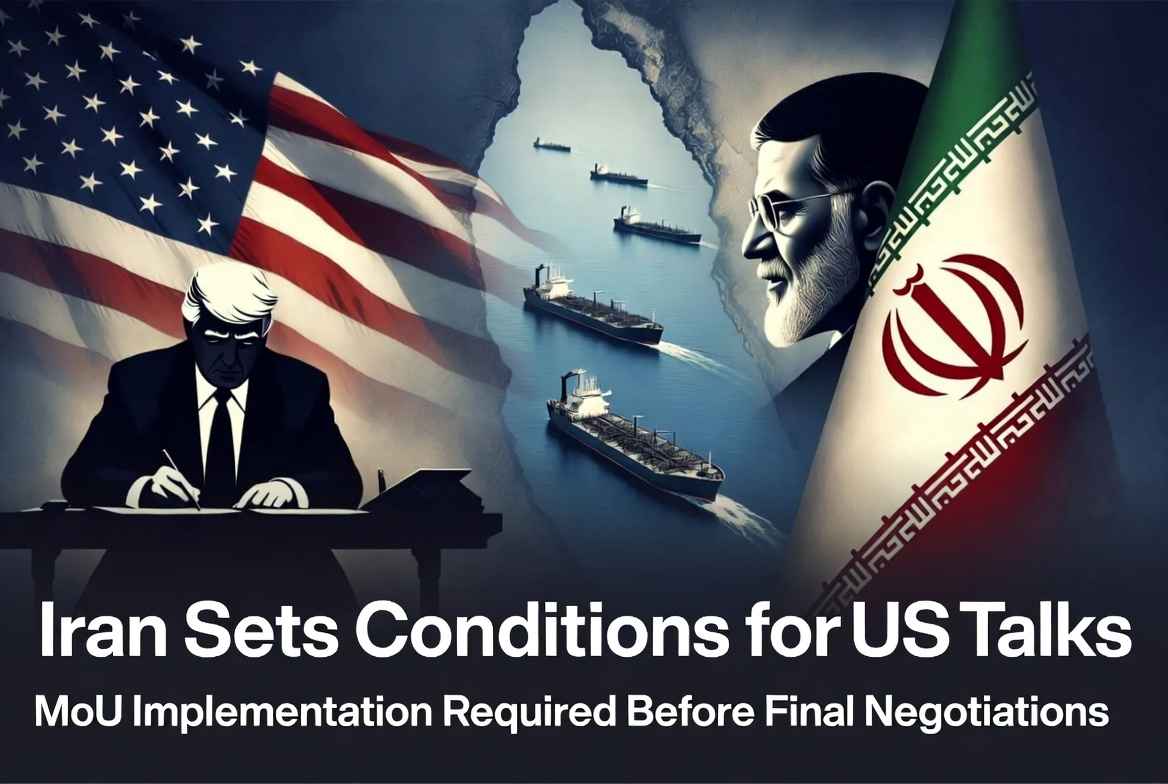
The 14-point Islamabad Memorandum of Understanding, signed digitally on June 17, 2026, by US President Donald Trump and Iranian officials (including Parliament Speaker Mohammad Bagher Ghalibaf), established an immediate and permanent end to hostilities on all fronts, including Lebanon. It also called for reopening the Strait of Hormuz to commercial shipping, lifting the US naval blockade on Iranian ports, and providing interim economic relief.
President Donald Trump signing documents related to the US-Iran agreement in June 2026 (file photo from the signing period).
Key provisions in the first phase of the MoU include:
- Termination of military operations
- Maritime de-escalation and safe passage through the Strait of Hormuz
- Immediate waivers for Iranian oil exports
- Steps toward unfreezing restricted Iranian assets
The agreement set a maximum 60-day window (extendable by mutual consent) for negotiating a final, comprehensive deal, primarily focused on Iran’s nuclear program, sanctions relief, and long-term arrangements for the Strait of Hormuz.
According to the MoU text, final negotiations on remaining issues can only proceed after the implementation of specific initial paragraphs (widely reported as covering ceasefire, Strait access, oil waivers, and asset access) begins and continues.
On June 30, Iranian statements aligned closely with this structure, with officials declaring that final talks would not start until the US delivers on:
- Full end of hostilities
- Maritime de-escalation
- Immediate oil waivers for Iran
- Unfreezing of Iranian assets
This stance has been widely reported in international media and social updates as Iran holding firm on the sequencing outlined in the MoU itself.
US officials have described the overall framework as “performance-based,” with benefits for Iran tied to compliance. Technical talks have reportedly shown some progress on inspections and sanctions issues, though significant gaps remain on nuclear limits and enforcement mechanisms.
As of July 1, 2026, delegations from both sides are engaged in follow-up discussions in Qatar. Direct high-level talks remain unlikely in the immediate term, with mediators (including Qatari and Pakistani officials) playing key roles.
The MoU has provided a temporary pause in direct conflict and helped stabilize global energy markets by facilitating the reopening of the Strait of Hormuz. However, analysts note that deep mutual distrust persists, with both sides watching closely for concrete implementation steps before advancing to a permanent agreement.
The situation remains fluid. Further developments are expected in the coming days as the 60-day negotiation clock continues to run.
About The Author