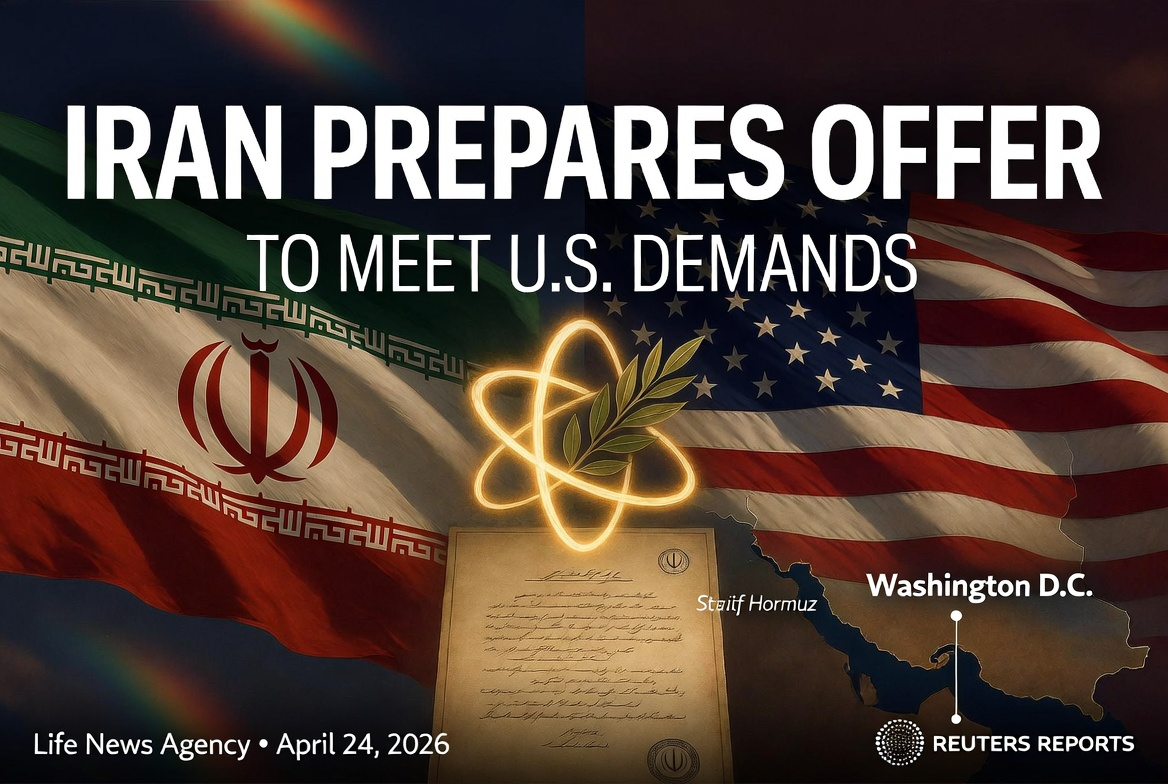
TEHRAN/WASHINGTON April 24, 2026 — Iran is preparing a formal offer designed to address key U.S. demands in the ongoing nuclear and regional security negotiations, according to a Reuters report cited by multiple sources on Friday.
The development comes as U.S. President Donald Trump’s administration dispatches senior envoys to Pakistan for a fresh round of indirect talks with Iranian officials, amid a fragile ceasefire that has halted direct hostilities but left core disputes unresolved.
Reuters, quoting informed sources, reported that Tehran intends to submit proposals that could satisfy American conditions related to its nuclear program, the reopening of the Strait of Hormuz, and the curbing of support for regional proxies. The exact details of the Iranian offer were not immediately disclosed, but the move signals a possible shift in Tehran’s negotiating stance following weeks of U.S. military pressure and economic sanctions.
President Trump has repeatedly stated that any agreement must prevent Iran from acquiring nuclear weapons capability. In recent remarks, he indicated optimism about reaching a deal while emphasizing that Washington would not accept anything short of full compliance on enrichment limits and regional de-escalation.
U.S. Special Envoy Steve Witkoff and senior adviser Jared Kushner are scheduled to travel to Islamabad for meetings with Iranian Foreign Minister Abbas Araghchi, mediated by Pakistani officials. The talks are expected to focus on a two-stage framework: an immediate extension of the ceasefire followed by a comprehensive accord addressing sanctions relief, nuclear safeguards, and maritime security in the Gulf.
Iranian officials have previously demanded guarantees against future U.S. or Israeli strikes, compensation for damages from earlier conflict, and recognition of Tehran’s right to peaceful nuclear enrichment. However, sources close to the negotiations told Reuters that the latest Iranian proposal appears calibrated to bridge some of these gaps.
The timing of the reported offer coincides with heightened market volatility over potential disruptions to global oil supplies. Energy prices have fluctuated in recent days amid uncertainty over the Strait of Hormuz, a critical chokepoint for roughly one-fifth of the world’s oil trade.
Analysts caution that previous rounds of talks have collapsed over similar sticking points, including Iran’s ballistic missile program and its alliances with groups such as Hezbollah and the Houthis. A senior Iranian official earlier this month told Reuters that Tehran rejects any temporary ceasefire and insists on a lasting peace agreement with ironclad guarantees.
The White House has not yet commented officially on the Reuters report, but press secretary Karoline Leavitt confirmed on Friday that the administration remains committed to diplomacy while maintaining maximum pressure through sanctions and naval deployments.
This latest development will be closely watched by regional allies, including Israel and Gulf states, as well as global powers involved in mediation efforts.
Life News Agency will continue to monitor the situation in Islamabad and provide updates as new details emerge.
About The Author