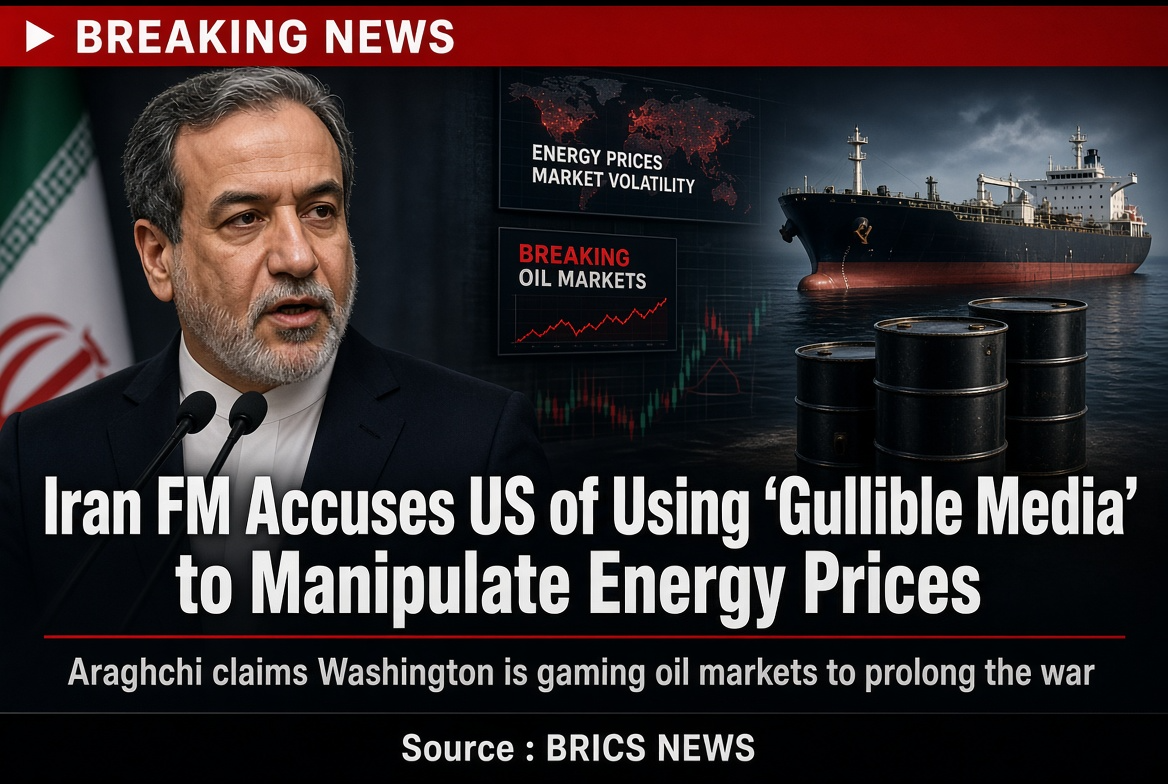
TEHRAN Aug 29, 2026 – Iranian Foreign Minister Abbas Araghchi accused elements of the U.S. government of using “gullible media” to manipulate global energy prices, claiming the effort serves personal financial interests and aims to keep President Donald Trump engaged in what Tehran calls a losing war.
In a post on X Saturday, Araghchi wrote: “Our intelligence shows major efforts to game energy markets. U.S. Govt elements use gullible media to influence prices for personal gain and keep POTUS mired in a losing war. Israel-aligned actors also promote war with rosy assessments. U.S. consumers feel the real bottom line.”
The remarks came six months after the U.S.-Israeli military campaign against Iran began on February 28, 2026. That conflict has centered on the Strait of Hormuz, the waterway that normally carries about one-fifth of the world’s oil and liquefied natural gas. Iran has restricted traffic through the strait, while the United States has imposed a naval blockade and tightened sanctions.
Araghchi did not release supporting evidence or name specific officials, media outlets, or market trades. Iranian state media amplified the statement the same day.
Energy markets have already felt the war’s effects. Oil prices spiked above $120 a barrel in the spring as Hormuz traffic collapsed. By late August they had eased on hopes of partial shipping recovery and mediation talks involving Oman and Qatar. Brent crude recently traded near $89 and U.S. West Texas Intermediate near $83, still well above pre-war levels but down from earlier peaks. Physical flows remain well below normal; Gulf exports have been running millions of barrels per day short of pre-conflict volumes.
Araghchi framed the price movements as the result of coordinated influence rather than supply disruption and geopolitics. He argued that American households, not the officials or commentators he blamed, ultimately pay the cost through higher energy bills.
The accusation arrives as both sides continue to trade diplomatic signals and military pressure. Washington has announced additional sanctions described as among the toughest ever imposed on Iran. Tehran has rejected those measures as ineffective and has kept the Hormuz question at the center of regional negotiations. No immediate U.S. government response to Araghchi’s specific claims was issued Saturday.
About The Author