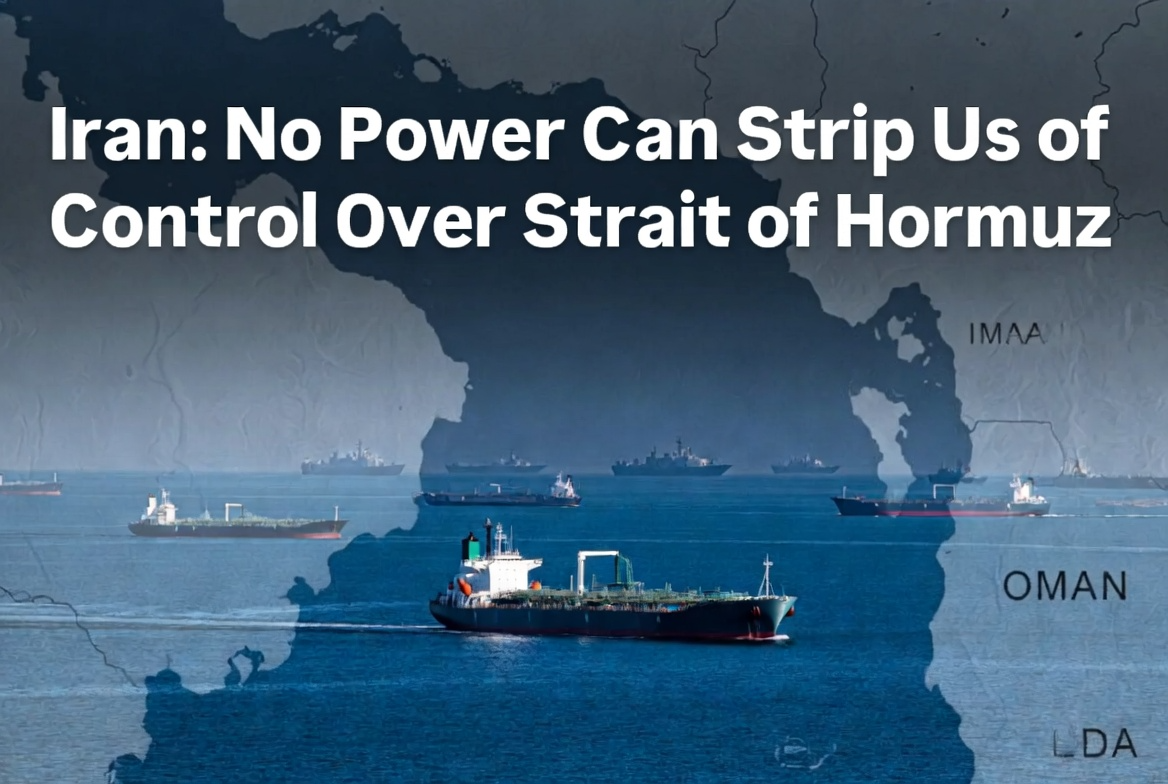
TEHRAN July 16, 2026 — Iran declared on Thursday that “no power in the world can strip us of our control over the Strait of Hormuz,” reinforcing its long-standing claim of sovereignty over the critical waterway as tensions with the United States continue to escalate.
The statement, reported by Iranian-aligned media outlets, comes amid renewed military exchanges in the region following the breakdown of a fragile June ceasefire agreement.
Map of the Strait of Hormuz — the narrow chokepoint between Iran (north) and Oman/UAE (south) that connects the Persian Gulf to the Gulf of Oman and the Arabian Sea.
The Strait of Hormuz is one of the world’s most vital maritime chokepoints. Before the current crisis, it carried approximately 20–25% of global seaborne oil trade and significant volumes of liquefied natural gas (LNG). Disruptions here have direct global economic consequences, including higher energy prices and supply chain strains.
Since late February 2026, when the US and Israel launched military operations against Iran, Tehran has repeatedly restricted or threatened to close the strait in retaliation. Iran’s Islamic Revolutionary Guard Corps (IRGC) Navy has insisted that ships must use routes approved by Iranian authorities and, at times, has attacked vessels it accused of violating those rules.
A brief memorandum of understanding in June 2026 aimed to ease tensions and reopen shipping lanes, but the deal collapsed in early July after Iran struck multiple commercial ships. The United States responded with airstrikes on Iranian military targets and reinstated a naval blockade of Iranian ports.
Conflicting Claims
- Iran’s position: Tehran maintains it has sovereign rights over the strait and will not allow foreign interference in its management. Iranian officials have repeatedly warned against any attempt to bypass their authority.
- US position: Washington insists the strait is an international waterway under the principle of freedom of navigation. The US military has stated that traffic continues under its protection and that Iran does not have the right to unilaterally close or control the passage.
President Donald Trump has publicly positioned the US as the “guardian” of the strait in recent days and has discussed measures to ensure safe passage for commercial shipping.
Shipping traffic through the strait has been severely disrupted for months, with insurance rates skyrocketing and many vessels rerouting or idling. Oil prices have remained elevated due to the uncertainty. Both sides have accused the other of endangering global energy security.
Iran’s latest assertion comes as the US continues military operations targeting Iranian capabilities in the region.
The situation remains fluid, with both Washington and Tehran trading accusations while global markets watch developments closely. International efforts to mediate a lasting de-escalation have so far yielded only temporary pauses in hostilities.
About The Author