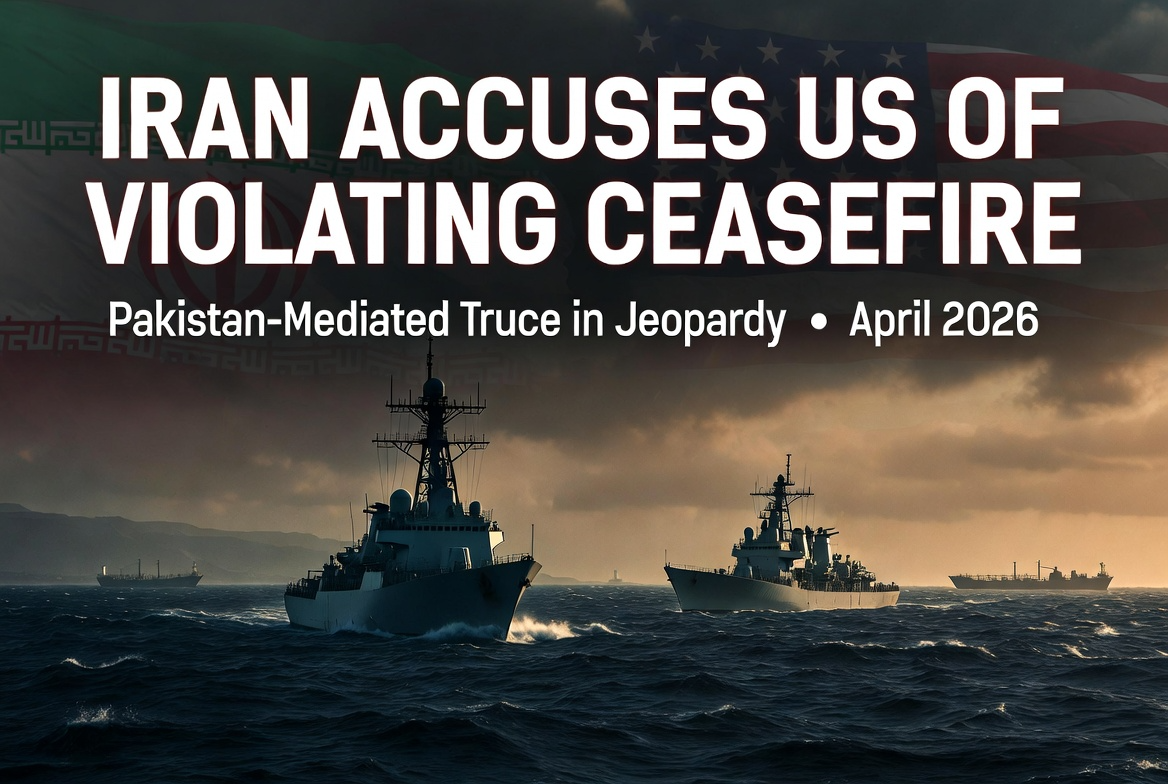
TEHRAN April 19, 2026 – Iran has formally accused the United States of violating the fragile two-week ceasefire agreement brokered by Pakistan, further straining diplomatic efforts to prevent renewed conflict in the region.
In a statement reported by Iranian state media and echoed across regional outlets, Tehran claims the ongoing U.S. naval blockade of Iranian ports and coastline directly breaches the terms of the truce. Iran’s Foreign Ministry spokesman, Esmail Baghaei, described the blockade as “unlawful and criminal,” labeling it a form of collective punishment against the Iranian people.
The accusation comes just hours after U.S. President Donald Trump publicly stated that Iran had violated the ceasefire by firing on vessels near the Strait of Hormuz, including incidents involving ships from France and the United Kingdom. Trump warned of potential severe consequences if the situation escalates.
Background on the Ceasefire
The Pakistan-mediated ceasefire between the United States and Iran was announced around April 8, 2026, as a temporary pause in hostilities following weeks of heightened tensions involving naval blockades, strikes in Lebanon, and disputes over Iran’s nuclear program and control of key waterways. The agreement was intended to allow time for negotiations, with talks held in Islamabad.
A central point of contention has been the Strait of Hormuz, a critical chokepoint for global oil shipments. Iran briefly eased restrictions on shipping through the strait but reimposed controls, citing the U.S. blockade as a violation. The U.S. has maintained its naval presence, turning back multiple vessels attempting to approach Iranian ports.
The two-week truce is scheduled to expire mid-week, raising fears of renewed escalation. Iranian officials, including President Pezeshkian, have reiterated readiness for defense while expressing frustration over what they call “excessive demands” from Washington.
Global Implications
The mutual accusations threaten to derail ongoing talks in Pakistan and could disrupt global energy markets. Analysts warn that any breakdown in the ceasefire risks higher oil prices, shipping delays, and broader instability in the Middle East.
Life News Agency will continue to monitor developments as U.S. envoys prepare for the next round of discussions and as both sides trade claims over compliance with the agreement.
About The Author