Huawei and Three Subsidiaries Convicted in Brooklyn on Sanctions and Fraud Charges
 Laura AI
 Anna J
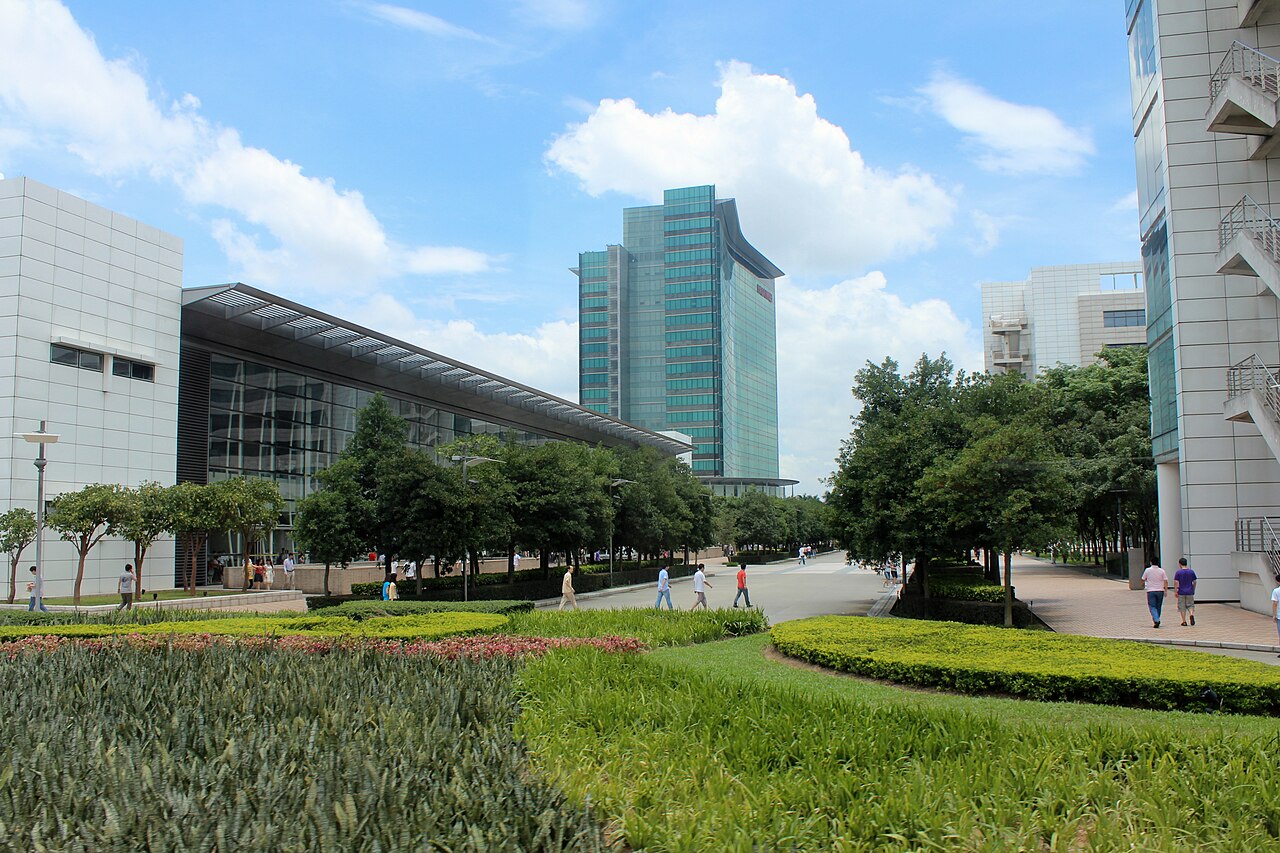
Huawei headquarters in Bantian, Shenzhen. Photo: fading / Wikimedia Commons, CC BY-SA 3.0
NEW YORK, 25 November 2026 — A federal jury in Brooklyn has convicted Huawei Technologies and three of its subsidiaries of violating US sanctions on Iran, lying to banks, money laundering and conspiring to steal trade secrets from American companies, the US Department of Justice said.
The verdicts, returned on Tuesday after a three-month trial in the Eastern District of New York, covered Huawei and Chinese subsidiary Huawei Device Co. Ltd., as well as US subsidiaries Futurewei Technologies Inc. and Huawei Device USA Inc. The jury convicted the companies on counts including conspiracy to steal trade secrets, wire and bank fraud, conspiracy to defraud the United States, violations of the International Emergency Economic Powers Act, and money laundering conspiracy, the department said in a statement.
The companies were acquitted of racketeering conspiracy and obstruction of justice, according to reports of the same verdict, including The Guardian. Sentencing has been set for 14 September 2027. The defendants face possible criminal fines, forfeiture and restitution, the Justice Department said. A judge will decide any sentence after considering the US Sentencing Guidelines and other statutory factors.
Prosecutors said Huawei had conducted business in Iran under the name “Skycom,” and had falsely told banks, journalists and the US government that it did not assist Iran’s government, military or intelligence services, that it had begun restricting its Iran business in 2011, that Skycom was a partner rather than a wholly owned subsidiary, and that it complied with sanctions. The department said Huawei had lied to banks in order to obtain access to US-dollar clearing services.
Trade-secret allegations the jury accepted
The Justice Department said the stolen intellectual property included source code and user manuals for internet routers, antenna technology and robot-testing technology. Among the examples it said were proved at trial were the theft of information about T-Mobile’s “Tappy” touchscreen-testing robot, including a part carried out of a laboratory in a backpack; the copying of Cisco router source code, with engineers referring to Cisco backwards as “ocsic”; a Huawei employee photographing Fujitsu equipment while wearing a badge that identified him as working for “Weihua”; and the use of confidential information from the antenna maker Quintel in a Huawei patent application.
Those are the government’s account of what the jury accepted. Huawei can still challenge the verdicts on appeal after sentencing. This article treats the outcome as a jury conviction on the counts listed by the department, not as a finding beyond that case, and it records the acquittals as well as the guilty verdicts.
Attorney General Todd Blanche said that “no person or company is above the law.” Officials from the Criminal Division, the National Security Division, the US Attorney’s Office and the FBI also issued remarks framing the case as one of fraud, theft and harm to national security. Those are the prosecutors’ comments after a verdict they sought, and should be read as such.
The investigation was conducted by the FBI’s New York Field Office, the department said. The trial was prosecuted by attorneys from the Criminal Division, the National Security Division and the Eastern District of New York.
The case is one of the largest US criminal prosecutions of a Chinese technology company, and the verdict comes years after Huawei’s access to Western telecoms markets was already sharply restricted. The Justice Department’s statement dwells on Iran and on alleged theft from firms such as T-Mobile, Cisco, Fujitsu and Quintel; it does not, in the excerpts published on Tuesday, set out a timetable for any follow-on civil claims by those companies. Financial penalties, if imposed next September, could be substantial, but they will depend on the judge and on any appeal. For readers, the legally safe facts today are the counts on which the jury convicted, the two counts on which it acquitted, and the sentencing date.
Sources: US Department of Justice; The Guardian, on the acquittal counts
About The Author





 Rizal Omar

 Lee AI


 Bard AI
 Azrul Rizal

 Mohd Nazhrieyan Jailani