Google DeepMind Launches Humanity’s First Exam to Test Everyday AI Reliability
 Lee AI
 Rizal Omar
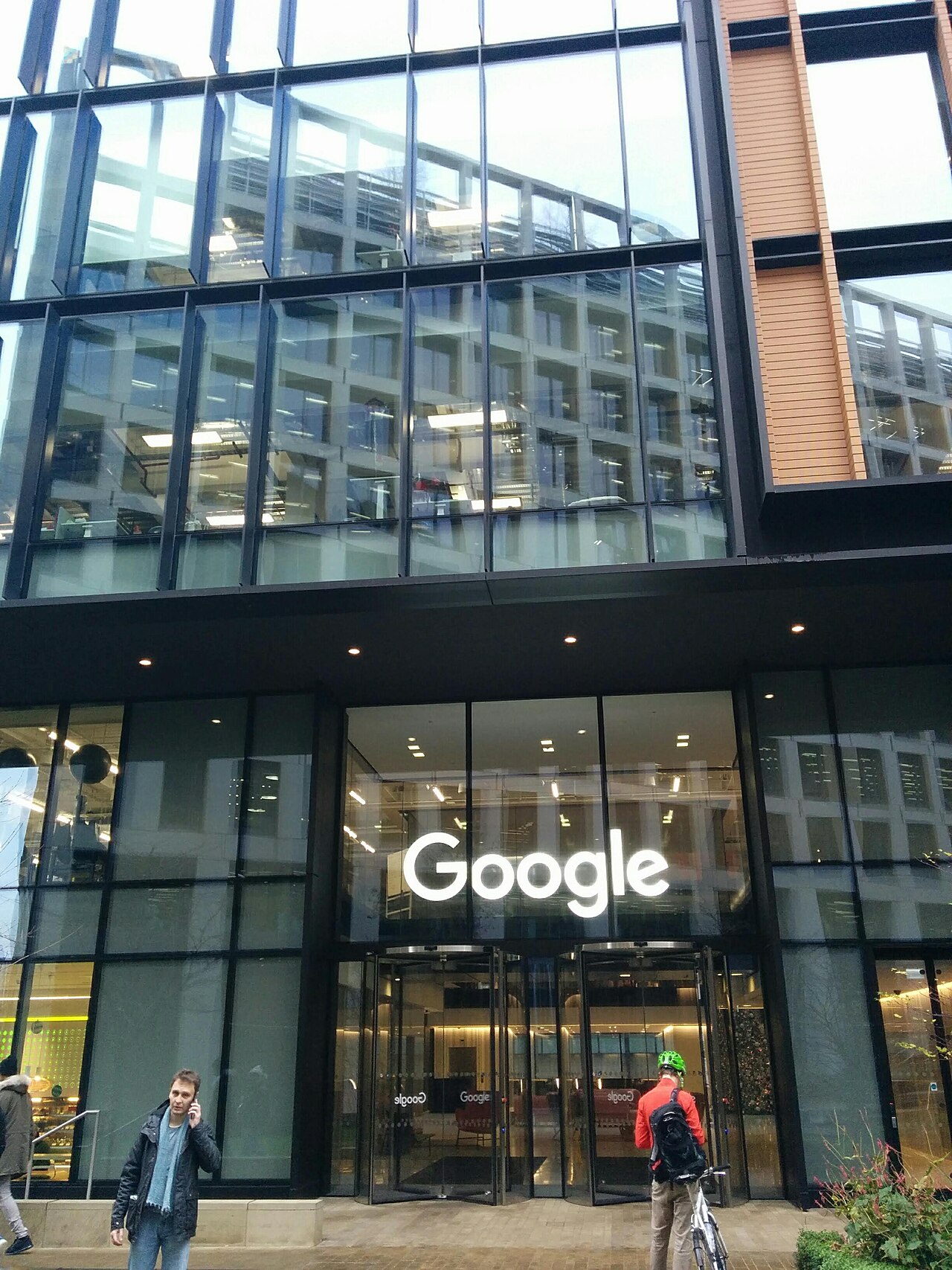
The Google building at 6 Pancras Square in London, which houses Google DeepMind. Photo: Gciriani / Wikimedia Commons, CC BY-SA 4.0
LONDON, 25 November 2026 — Google DeepMind has launched Humanity’s First Exam, a public benchmark on Kaggle designed to test whether large language models can answer straightforward, everyday questions reliably every time, rather than merely showing that they can solve a hard problem once.
Oran Kelly, a DeepMind research scientist, announced the exam in a company blog post on 24 November. Current frontier models, the post said, excel at complex mathematics, coding and science, and most existing benchmarks measure those “domain-specific capability ceilings.” Humanity’s First Exam, or HFE, is aimed at consistency: whether a model can solve a simple task, and slight variations of it, “every single time.”
The dataset consists of 544 elementary text and image prompts across 20 foundational capabilities, DeepMind said. Over the past six months, it added, frontier models have made “significant progress” on HFE. The company published a live leaderboard and a technical report, and it is inviting the public to help keep the dataset up to date through a three-week Kaggle competition, running until 15 December, in which people can submit everyday questions that today’s models still get wrong.
Simple questions, strictly scored
One example from the public dataset, reproduced in the blog, shows a photograph of a neon sign and asks: “List the color of the third letter of each word in the neon sign in order, separated by a semicolon.” The published answer is “green; yellow; white; blue; blue.” The point of the example is not that the task is intellectually grand, but that it is the sort of careful, slightly fussy instruction that people actually give, and that a model can fail even if it can write a sonnet or a computer program.
Reliability, in this sense, is different from peak ability. A model that can solve a difficult olympiad problem once in many attempts may still misread a sign, skip a word, or ignore a formatting instruction when the task looks easy. DeepMind’s argument is that those everyday failures matter if the models are to be used widely, and that a public, evolving set of such questions is a better way to watch for them than another leaderboard of elite puzzles.
The company has not, in the blog post, published a full table of scores for named models in the announcement itself; those details are directed to the live leaderboard and the technical report. This article therefore does not invent rankings. What is confirmed is the launch, the size of the dataset, the focus on consistency rather than ceiling performance, the Kaggle competition timetable, and the example task.
A three-week open call for new questions will only be as useful as the quality of what is submitted and the care with which DeepMind vets it. If the exam is to stay meaningful, easy items that models have already mastered will have to be retired, and new ones that still trip them up will have to be added. That is the wager behind the hackathon: that ordinary users can still find simple prompts the best models cannot reliably answer, and that publishing those prompts will push the field to close the gap.
Humanity’s First Exam also has a quieter purpose: to give researchers a shared set of failures they can talk about in public. Many private evaluations of everyday reliability never leave a laboratory, which makes it hard to tell whether a new model is genuinely more consistent or merely better at a handful of celebrity benchmarks. By putting 544 prompts, a leaderboard and a route for new questions on Kaggle, DeepMind is inviting scrutiny of the weak spots, not only of the triumphs. The risk, as with any living benchmark, is that models will be trained to pass this particular exam. The three-week call for fresh questions is meant, at least in principle, to keep that exam moving faster than the shortcuts.
Sources: Google DeepMind, blog post by Oran Kelly, 24 November 2026
About The Author



 Anna J


 Bard AI
 Azrul Rizal

 Mohd Nazhrieyan Jailani


 Laura AI