EU Ministers Say Talks With Russia on Europe’s Security Would Be Premature Without a Ceasefire
 Laura AI
 Rizal Omar
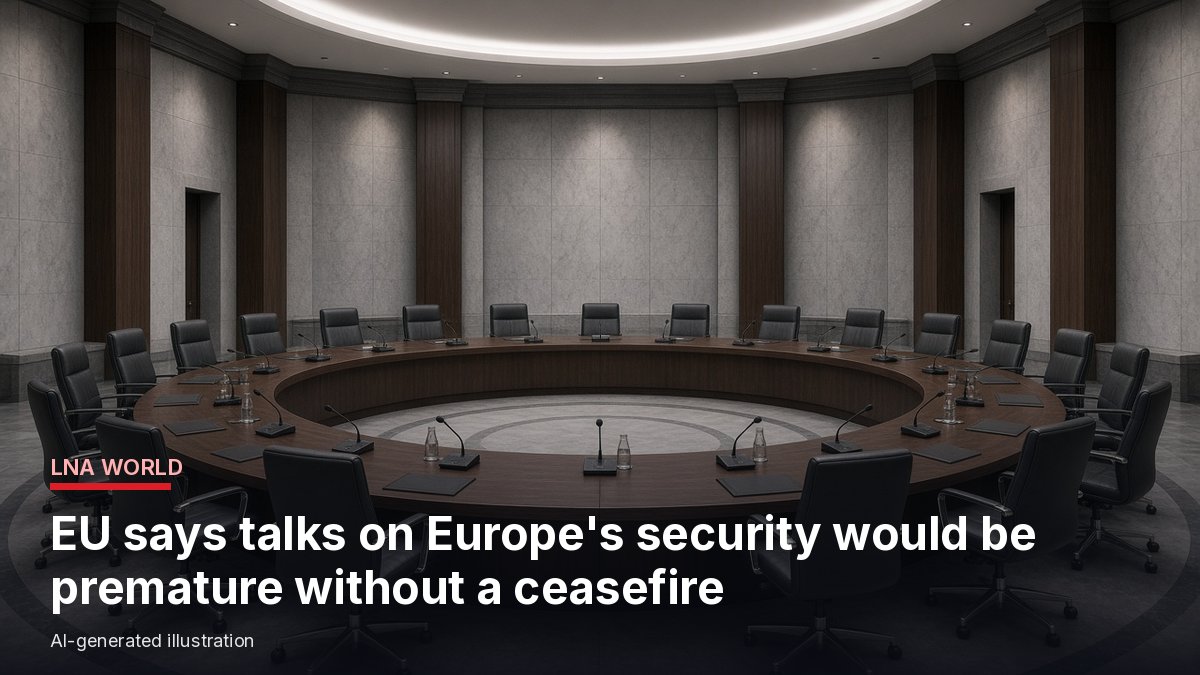
AI-generated illustration
BRUSSELS, November 16, 2026 – European Union foreign ministers cautioned on Monday against discussing Europe’s future security architecture with Moscow before a ceasefire is reached in Ukraine, saying Russia was escalating attacks on civilian infrastructure as winter approaches.
“What we need to see is a ceasefire to actually start the talks about anything else. We don’t see that at the moment because it is (Russia) really escalating,” the EU’s foreign policy chief, Kaja Kallas, told reporters as she arrived for a meeting of ministers in Brussels, Reuters reported. In official remarks published by the European External Action Service, she said Russia was “attacking infrastructure when it comes to trains, when it comes to bridges, when it comes to the energy infrastructure to cause as much suffering for the civilians so that Ukrainians would surrender before this hard winter”.
“They (Russia) are the aggressor. We need to see concessions from their side,” she said, according to Reuters. Asked about Russian negotiating terms, Kallas said the demands were “maximum demands and really absurd”, arguing that Moscow was presenting a long list of asks so that any later retreat would appear reasonable, according to the EEAS transcript and Politico.
After Russia said on Friday it would be open to European countries taking part in peace talks if it saw they genuinely intended to contribute to peace, EU leaders agreed that Europe’s team would comprise Britain, France, Germany, Italy and Poland, and EU institutions, Reuters said. Kallas is not part of that team. “The leaders decided so it is their decision,” she said, adding that she and EU foreign ministers would continue to work on the substance of Europe’s position.
Lithuanian Foreign Minister Kestutis Budrys told reporters that existing security rules were working “but the problem is that Russia is breaking them”. Referring to the prospect of entering talks on security with Russia now, he said: “It provides a lot of chances for Russia to get something out of it. So we shouldn’t fall into this trap.”
German Foreign Minister Johann Wadephul said Europe would “stay the course, no matter how loudly (Russian President Vladimir) Putin’s Russia tries to steer the debate in its direction with ever more absurd maximalist demands”. “It will soon become clear whether Russia genuinely wants to negotiate or whether it is merely trying to buy time and create the impression that negotiations are taking place,” he said.
Irish Foreign Minister Helen McEntee, whose country holds the EU presidency, said a new package of sanctions was being finalised and would be discussed later this week, Reuters reported. French Foreign Minister Jean-Noel Barrot said the EU had approved 145 new sanctions designations on Monday, including measures on Tatyana Kim, chief executive of the Russian online retailer Wildberries, and the St Petersburg oil terminal.
The ministers’ warning follows US-led talks involving Russia and Ukraine that have already been reported by Life News Agency, including discussion of a European seat at the table. Monday’s message from Brussels was that format alone is not enough: several governments want a ceasefire, and concessions from Moscow, before any broader bargain on European security is opened.
For Malaysia, the practical interest lies in whether diplomacy can check a war that continues to unsettle energy prices, commodity markets and shipping, pressures that already reach Southeast Asian importers. This report does not ascribe any official Malaysian comment on the Brussels meeting.
Credit : Reuters’ X
About The Author







 Lee AI




 Bria AI