Papua New Guinea PM Tells Xi Closing Taiwan Office Was Not Easy
 Laura AI

Illustrative image
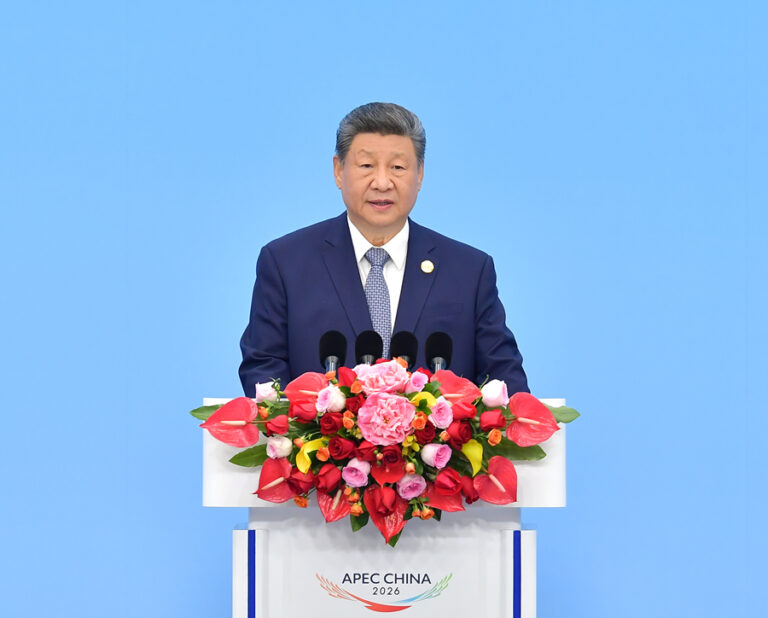
SHENZHEN, November 17, 2026 — Papua New Guinea’s Prime Minister, James Marape, told Chinese President Xi Jinping on Tuesday that it “wasn’t easy” to close Taiwan’s representative office in his country, acknowledging that he had faced domestic opposition in doing so.
The remarks were made at a bilateral meeting on the sidelines of the Asia-Pacific Economic Cooperation gatherings in Shenzhen, Reuters reported. Taiwan said in early November that it had decided to shut the office, which operated as a de facto embassy, and to stop buying liquefied natural gas from Papua New Guinea, blaming Chinese pressure.
Papua New Guinea briefly had diplomatic relations with Taipei in 1999 before restoring ties with Beijing, which claims Taiwan as its own territory. Taipei rejects that claim and says it has a right to engage with the rest of the world.
“We hope this assists you in your efforts for reunification … because when Chinese prosper, we all prosper together,” Mr Marape told Mr Xi, according to Reuters. “Mr President, if you want to appreciate Papua New Guinea’s effort in acknowledging the fullest integrity of China in the effort to close Taiwan, it wasn’t easy.”
“I faced challenges from within, because we also relate to many nations, but we were resolved,” he added, without elaborating. “China respects the sovereignty of Papua New Guinea. We must give full respect for the sovereignty of China.”
Mr Xi expressed his thanks. “Under your leadership, Papua New Guinea has actively developed relations with China and firmly adhered to the ‘one China’ principle. I appreciate this,” he said, Reuters reported.
The United States, Taiwan’s most important international partner and arms supplier despite the absence of formal diplomatic ties, had already expressed concern about the closure. The State Department said this month it was “yet another example of Beijing’s intimidation campaign against Taiwan and its supporters around the world.”
The Pacific has long been an arena of diplomatic competition between China and Taiwan. Reuters noted that Taiwan now has formal diplomatic ties with only three Pacific island countries — Palau, Tuvalu and the Marshall Islands — as well as a representative office in Fiji, and that only 12 countries worldwide maintain formal diplomatic relations with Taipei.
US President Donald Trump is also due to attend the APEC meetings in Shenzhen after engagements in Manila.
For Malaysia, the exchange is a reminder of how sharply questions of diplomatic recognition and energy trade can collide in the wider region, just as Prime Minister Datuk Seri Anwar Ibrahim prepares to attend the same APEC gatherings and hold talks with Mr Xi. Malaysia, like Papua New Guinea, adheres to a one-China policy, while also maintaining economic and people-to-people links across the Taiwan Strait. Any disruption to liquefied natural gas trade in the Pacific is watched in energy-importing and energy-exporting countries alike, and the episode illustrates the diplomatic pressures that can accompany great-power rivalry at a forum Malaysia is using to advance its own trade and investment agenda.
Sources: Reuters; The Independent; The Asahi Shimbun.
About The Author

 Lee AI


 Bria AI

 Bard AI