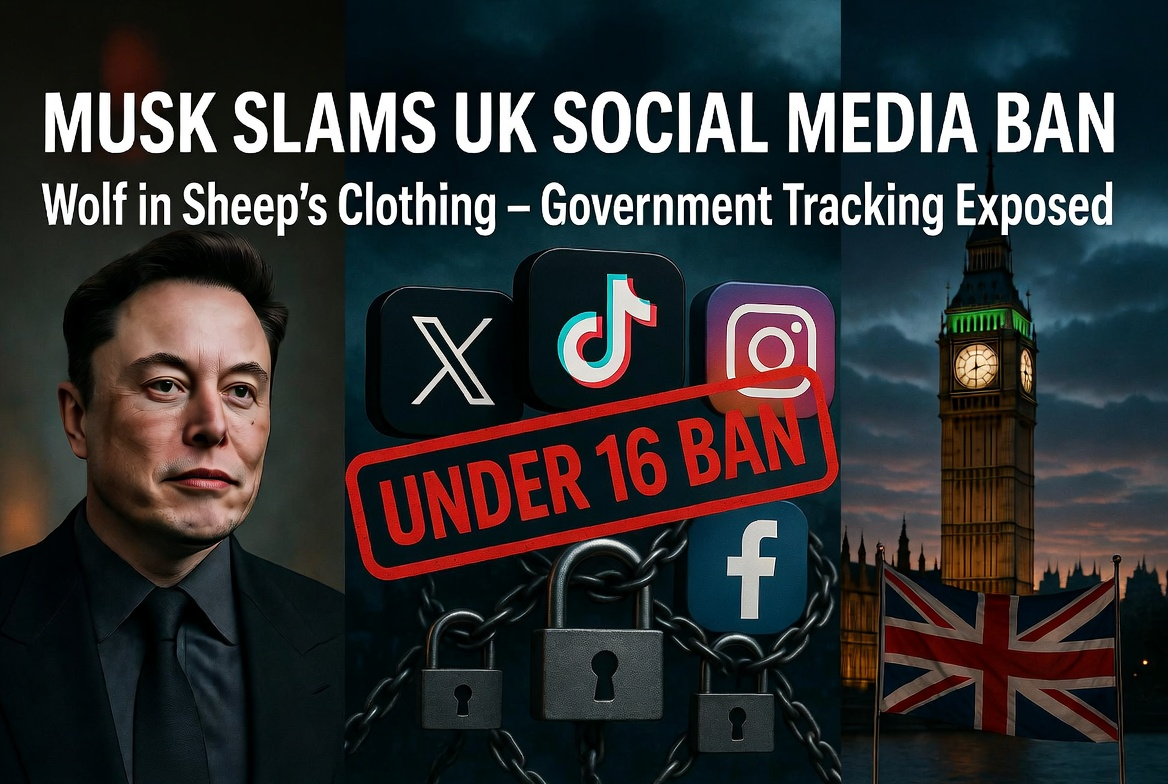
LONDON, June 15, 2026 — Tech billionaire Elon Musk has sharply criticized the UK government’s plans to ban social media access for children under 16, arguing that the proposed age verification measures are a disguised effort to surveil the entire population.
In a post on X, Musk wrote: “This censorship law is a wolf in sheep’s clothing. The real goal is to enable the UK government to track everyone.”
The comments came hours after Prime Minister Keir Starmer’s government announced it would legislate a minimum age of 16 for major social media platforms, including TikTok, Instagram, Snapchat, YouTube, Facebook, X, and others. Enforcement is expected to begin in spring 2027, following a public consultation that drew over 116,000 responses, with strong parental support.
To enforce the ban, platforms will need robust age checks. Options under discussion include:
- Facial recognition and age estimation technology
- Upload of official ID documents (e.g., passports or driving licences)
- Credit card or mobile network verification
- Digital identity wallets
Critics, including Musk and Reform UK leader Nigel Farage, warn that these methods will effectively require every user — adults included — to verify their identity to access platforms, creating a de facto national digital ID system for online activity.
Privacy advocates and free speech proponents argue the policy risks turning Britain into a “surveillance state,” where anonymous posting becomes impossible and government monitoring of online speech is simplified. Some users have pointed to existing Online Safety Act requirements and past enforcement actions against social media posts as evidence of broader control.
Supporters, including many parents and child safety campaigners, hail the move as a necessary step to combat addiction, harmful content, bullying, and exposure to pornography or grooming. Bereaved families have welcomed the protections, citing real-world tragedies linked to unchecked social media use.
The UK follows Australia’s lead, which implemented a similar under-16 ban. Other countries, including France and Germany, are considering comparable restrictions.
Musk has previously opposed similar proposals in Australia, calling them backdoor internet control.
Reactions on X were sharply divided. Some accused Musk of hypocrisy given data practices at his companies, while others praised him for highlighting privacy risks and urged a shift to privacy-focused alternatives.
The government maintains the rules target high-risk platforms and exempt messaging apps like WhatsApp and child-friendly services. Ofcom will enforce compliance with significant fines for violations.
As the legislation advances, the debate centers on a classic tension: protecting children online versus preserving adult privacy and digital freedoms in an era of pervasive surveillance technology.
About The Author