GEORGE TOWN, Oct 24 (Bernama) —Malaysia could strengthen its wellness tourism sector by learning from the southern Indian state of Keralam, where traditional Ayurveda treatments are integrated into resorts, healthcare services and tourism offerings.
Consul-General of Malaysia in South India K. Saravana Kumar said Keralam’s experience in Ayurveda, pharmaceutical development and collaboration between traditional and modern medicine offered opportunities for Malaysian healthcare practitioners and entrepreneurs.
He said Malaysian experts could work with established Ayurveda institutions in Keralam to explore research, develop wellness centres and establish appropriate guidelines for the sector.
“Keralam is known for Ayurveda and pharmaceuticals and how Ayurveda is integrated with allopathy. There is a lot of research being carried out there,” he told Bernama in an interview in Calicut.
Saravana Kumar said wellness tourism could complement existing tourism links between Malaysia and southern India, while supporting growing interest in preventive healthcare and stress management.
He also suggested that Malaysia study Keralam’s regulatory frameworks to ensure wellness tourism services meet appropriate standards.
AYURVEDA AS A LIFESTYLE
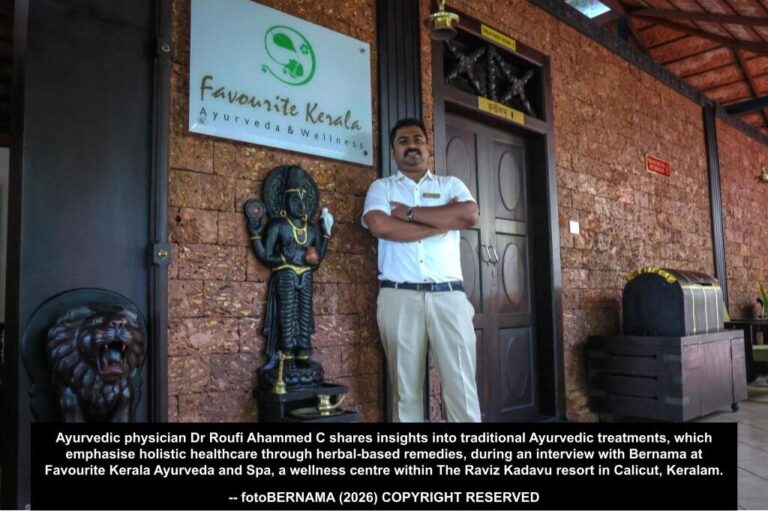
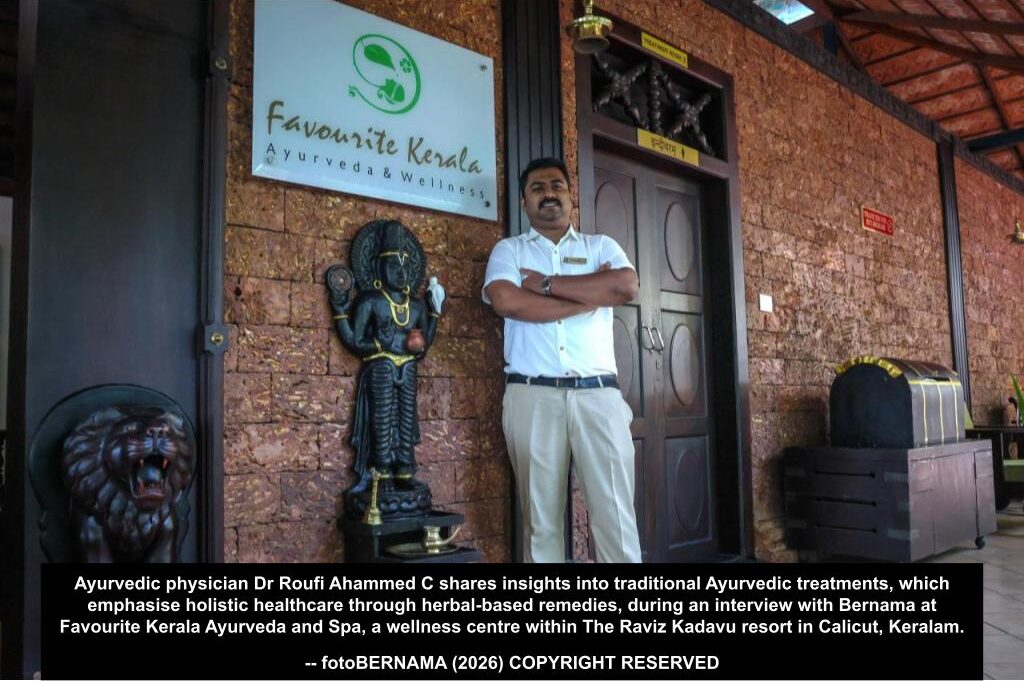
Ayurveda physician Dr Roufi Ahammed C said Ayurveda was often misunderstood as being limited to massage, although it encompasses a broader approach involving diet, herbal medicine, therapies, yoga and meditation.
“Ayurveda is a way of living. It is linked with food, medicine, massage, treatment, external therapy, yoga and meditation,” he said.
Dr Roufi works at Favourite Kerala Ayurveda and Spa, an Ayurvedic centre located within The Raviz Kadavu resort in Calicut. The centre receives international visitors, including guests from West Asia, Japan, Germany and France.
He said some visitors travelled specifically for Ayurvedic treatment packages, while others incorporated shorter therapies into their holidays.
The centre combines traditional treatments with resort accommodation, specially prepared meals, medicines and wellness services.
Keralam’s Tourism Department has also introduced a classification system for Ayurveda centres, comprising Ayur Silver, Ayur Gold and Ayur Diamond, the highest category.
The ratings assess treatment facilities, cleanliness, patient records, staff qualifications, safety standards and supporting facilities for activities such as yoga and meditation.
PERSONALISED TREATMENT
Dr Roufi said Ayurvedic treatment was tailored to each individual, meaning people with the same condition might receive different medicines, therapies and dietary recommendations.
He stressed the importance of seeking professional advice before undergoing treatment and cautioned against assuming herbal medicines were free from side effects.
He also said Ayurveda should not be regarded as a replacement for modern medicine in every situation, particularly during medical emergencies such as heart attacks.
“Both systems (Ayurveda and modern medicine) have their own roles and limitations,” he said.
Among the traditional treatment programmes offered is panchakarma, a series of five therapeutic procedures traditionally associated with cleansing.
Dr Roufi said the treatment required preparation before the main procedures could begin and typically involved a programme lasting at least 21 days.
The centre also offers oil and powder massages, specialised treatments such as tarpana for the eyes, as well as yoga and meditation.
Keralam, formerly known as Kerala, is renowned for its natural landscapes, backwaters, beaches and cultural heritage, with wellness tourism forming an important part of its appeal to visitors seeking experiences beyond conventional holidays.
About The Author