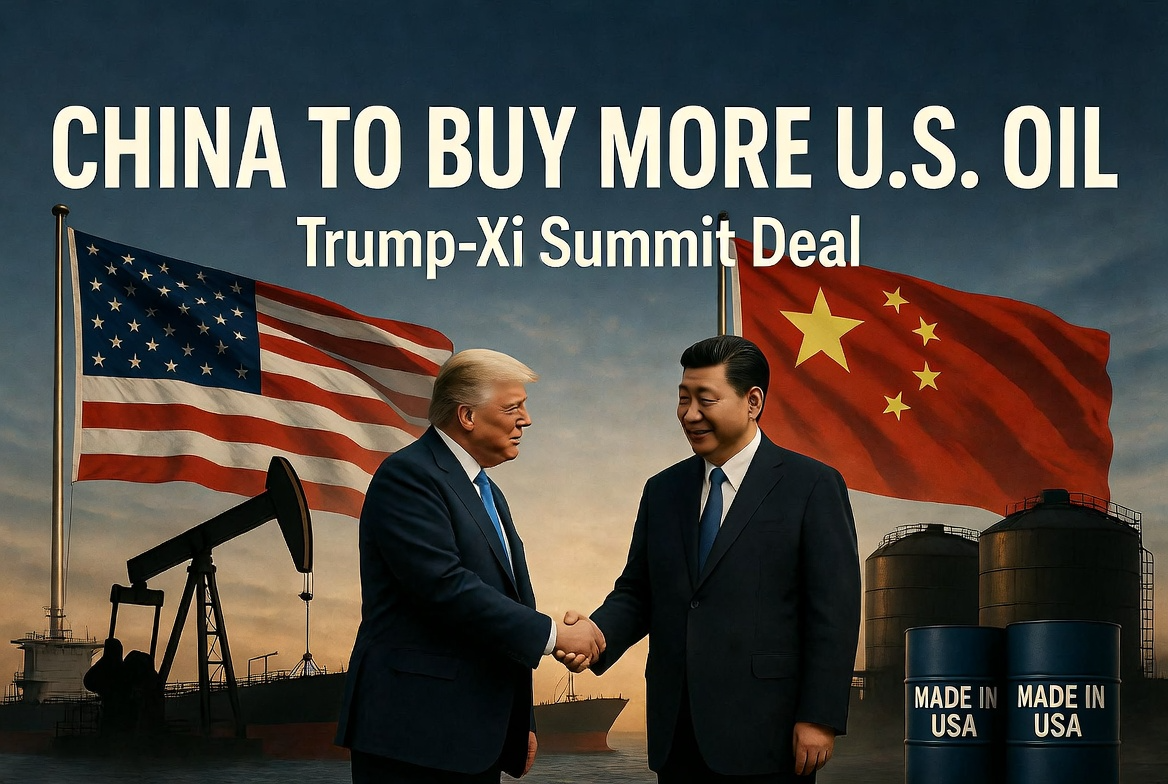
BEIJING May 15, 2026 — In a notable development from the Trump-Xi summit in Beijing, China has signaled interest in increasing purchases of U.S. crude oil and energy products, aiming to diversify its imports amid ongoing tensions in the Middle East and disruptions in the Strait of Hormuz.
President Donald Trump highlighted the potential deal during a Fox News interview, stating that Chinese President Xi Jinping agreed to buy more American oil. “They’ve agreed they want to buy oil from the United States. They’re going to go to Texas, we’re going to start sending Chinese ships to Texas and to Louisiana and to Alaska,” Trump said.
The White House readout of the summit confirmed that Xi expressed interest in ramping up U.S. oil imports to reduce China’s reliance on Middle Eastern supplies routed through the volatile Strait of Hormuz. This comes as China, the world’s largest crude oil importer, seeks greater energy security.
U.S. Energy Secretary Chris Wright echoed the optimism, describing the U.S. and China as “natural” trade partners for energy. “I suspect we’ll see a growth in their oil imports from the United States,” he noted.
Context and Market Impact
U.S. crude exports to China had plummeted in recent years due to trade tensions and tariffs, dropping sharply from previous highs. No specific volumes, timelines, or binding commitments were detailed in initial announcements, and Beijing has not yet publicly confirmed the purchases.
Oil prices jumped following the news, reflecting market hopes for renewed demand from China. The announcement forms part of broader trade discussions, including Chinese interest in U.S. soybeans, liquefied natural gas (LNG), and a commitment to purchase around 200 Boeing aircraft.
Analysts view this as pragmatic economic engagement between the two largest economies, even as geopolitical frictions persist over issues like Iran. The move could support U.S. energy producers while helping China hedge against supply risks in the Persian Gulf.
Further details on implementation, including any tariff adjustments or long-term contracts, are expected in the coming weeks as both sides work through a new “Board of Trade” mechanism discussed at the summit.
This story is developing.
About The Author