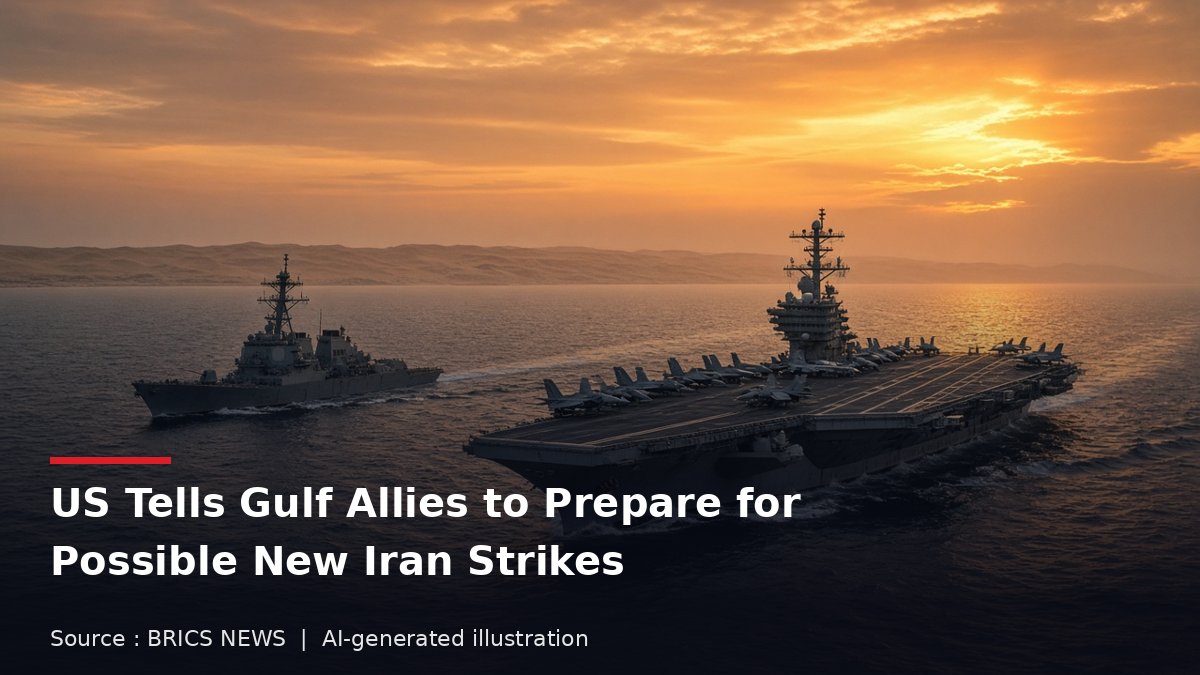
The United States has told Gulf and other regional allies to be prepared for possible renewed military action against Iran after the US midterm elections on November 3, as well as for Iranian retaliation, according to reports by The Wall Street Journal and the Associated Press.
The news was highlighted by the news aggregator BRICS News, which reported on X early on October 31, 2026, Malaysia time, that the US had told Gulf allies to prepare for possible new strikes on Iran after November 3. The Wall Street Journal first reported earlier in the week that the US had told several Gulf Arab countries to be prepared for a short, intense military campaign after the midterms, citing people briefed on the conversations.
The Associated Press, citing two diplomats briefed on the matter, said US officials had warned several Middle East countries and regional allies of potential renewed military action, and of the possibility that Iran would attempt to retaliate against them. Both diplomats stressed that President Donald Trump had not made a final decision on new strikes, though he has repeatedly said he is weighing new military action once the elections are over.
Warnings over energy facilities
According to the AP, the US told regional allies that the new round of military action could last for several days, but regional officials are bracing for Iran and its proxy groups to retaliate, which could prolong the fight. Allies were urged to take precautionary measures in anticipation that Iran’s response would include strikes on energy facilities and other crucial infrastructure.
The Wall Street Journal reported, as summarised by India Today, that the US military was moving a Patriot missile defence system from Texas to the region, had moved personnel away from bases considered vulnerable to Iranian attack and was restocking ammunition. An additional aircraft carrier strike group and a Marine expeditionary unit were expected to join the roughly 20 US warships in the Middle East next month. The AP said the Pentagon had deployed the USS Theodore Roosevelt and amphibious ships carrying about 9,000 troops in all from San Diego to the Persian Gulf.
The White House declined to discuss what it called “sensitive military plans that may or may not exist”, saying: “President Trump keeps all options on the table to ensure that Iran can never have a nuclear weapon.”
Diplomacy continues
The US has not carried out a strike against Iran since early September, the AP reported, but the conflict has spread, with Iran-backed Houthi rebels attacking Saudi Arabia’s oil infrastructure and airports. The United Arab Emirates foreign ministry urged the sides to “exercise wisdom and pursue political solutions” to prevent a return to full-scale operations in the war that began in late February, and Iranian Foreign Minister Abbas Araghchi said Tehran “continues to give diplomacy a chance to succeed”.
The warnings come as Qatari mediators, working in coordination with Washington, pursue a deal between the US and Iran, Reuters reported. The Financial Times reported that Israeli Prime Minister Benjamin Netanyahu had planned new strikes on Iran earlier this month, but that Trump opposed restarting the conflict ahead of the midterms. Netanyahu later denied that report, calling it incorrect.
Source : BRICS NEWS, with reporting from The Wall Street Journal, the Associated Press, Reuters, the Financial Times and India Today.
About The Author