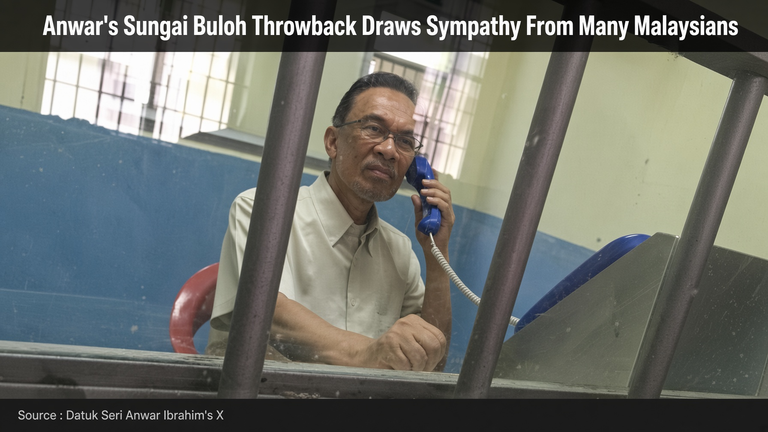
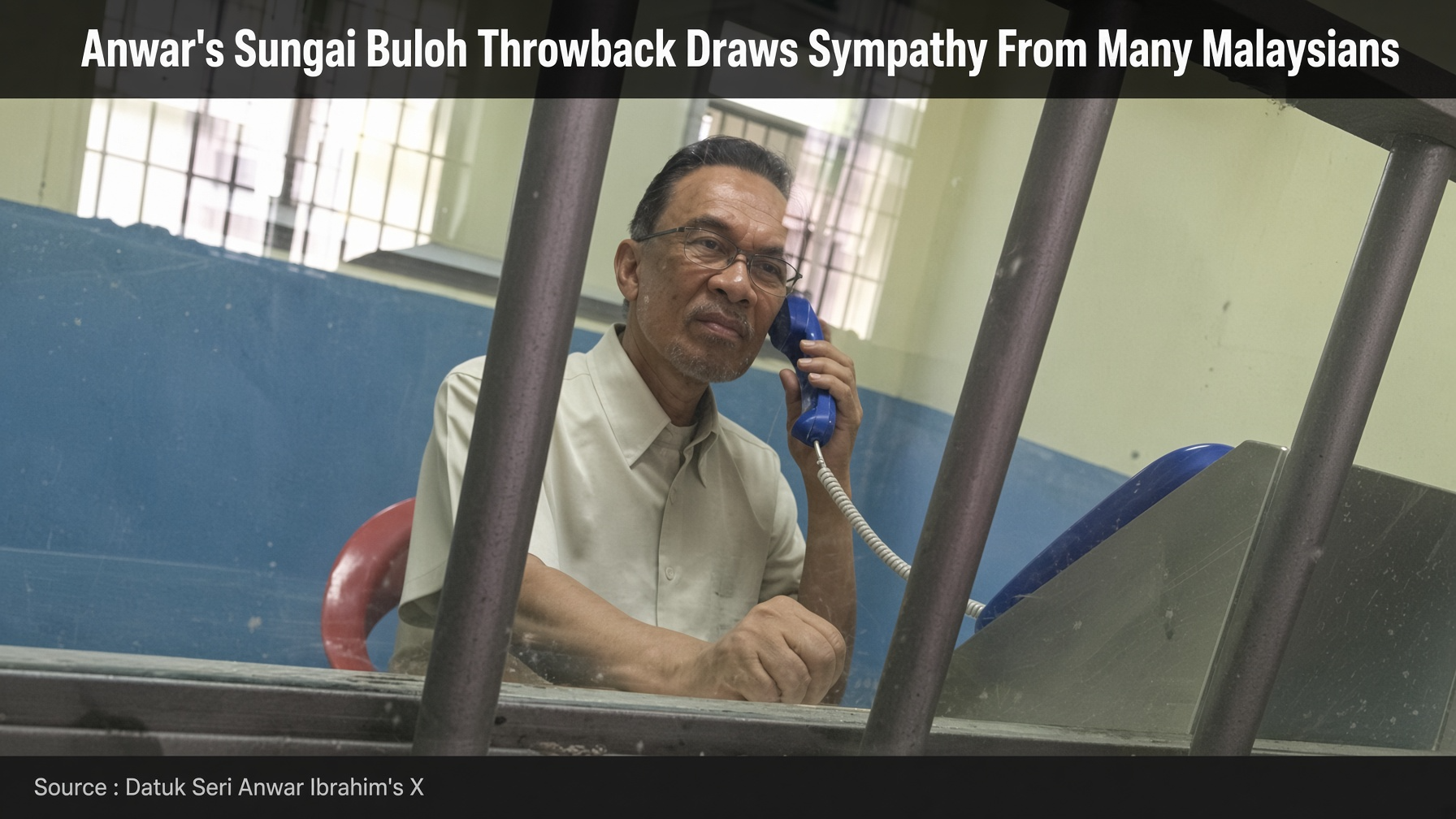
KUALA LUMPUR Sept 22, 2026 — Prime Minister Datuk Seri Anwar Ibrahim’s throwback post of a glass-partition family visit at Sungai Buloh Prison has prompted expressions of sympathy from many Malaysians, particularly those who remember the constraints placed on his family during his imprisonment.
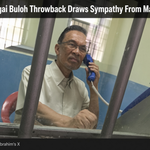
The photograph, posted Monday evening, shows Anwar seated behind a barred glass screen holding a telephone receiver. His caption read: “Kenangan di Sungai Buloh. Bertemu keluarga di sebalik kaca, hanya melalui telefon. Momen yang kekal dalam ingatan.” (#throwback)
The post quickly circulated widely, attracting more than 6,200 likes and hundreds of shares. On social media, numerous users described the image as a reminder of the emotional cost of the restricted visits, when physical contact was denied and conversation was limited to a prison telephone. Some supporters called it a “moment that stays in the memory” not only for Anwar but for families who endured similar separations.
One widely shared reply praised Anwar’s later decision, as prime minister, not to pursue personal retaliation against those associated with his past detention. Others simply wrote that the picture brought back the hardship of the Reformasi years and the pain of seeing a parent or spouse through glass.
Anwar served two terms at Sungai Buloh Prison — first after 1998 and again from 2015 to 2018. During the later period, family visits occurred through a glass barrier. Relatives later went to court seeking the right to physical contact; the Court of Appeal upheld the prison’s restriction in 2018.
While reactions on X were not uniform — some users questioned the timing or relevance of a prime minister posting a prison throwback — a large share of visible comments focused on the human aspect of the photograph: a father speaking to his family only by phone, separated by glass. That element appears to have generated the strongest emotional response among those who engaged with the post.
Anwar did not add further political commentary. The image itself, and the simple recollection of a lasting memory, has been enough to prompt many Malaysians to express sympathy for the conditions under which those visits took place.
About The Author