Source : Reuters | AI-generated illustration
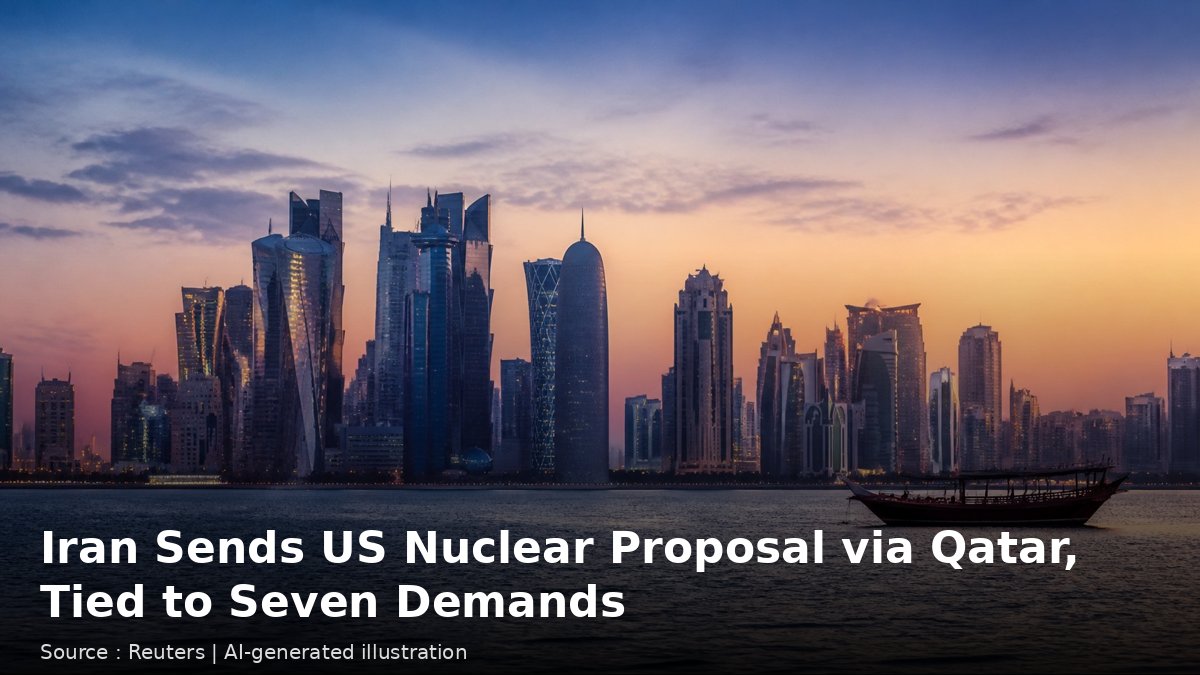
DUBAI, November 5, 2026 — Iran has sent the United States a nuclear proposal through Qatar, but a senior Iranian official told Reuters that Tehran will discuss it only after Washington meets seven conditions previously set by Iranian leaders.
The official, who spoke on condition of anonymity, said the United States was reviewing the proposal and declined to disclose its contents. The disclosure came as mediators pressed both sides to prevent a return to open conflict after months of confrontation that has unsettled energy markets and shipping through the Gulf.
Iran’s top security official, Mohsen Rezaei, said earlier on Thursday during a visit to Russia that Tehran had announced seven conditions to the Americans. “As long as they do not execute our seven conditions, we will neither open the Strait of Hormuz nor have negotiations,” he said, according to Iranian and international reporting carried by Reuters and regional outlets.
Among the conditions publicly associated with Iran’s position are the lifting of United States sanctions, the release of frozen Iranian assets and demands for war reparations. Washington has said nuclear issues must form part of any initial negotiations, a stance that has repeatedly clashed with Tehran’s insistence that broader political and economic demands come first.
Qatar has for years acted as a go-between in talks involving Iran and Western governments. Diplomats say Doha’s role has grown as other channels have narrowed and as both sides weighed whether to resume contacts after the United States midterm elections.
President Donald Trump said this week that he would not rule out a resumption of combat operations after the vote, while Iranian officials have warned of wider retaliation if fighting restarts. Independent outlets including Arab News, Iran International and Devdiscourse carried the Reuters account of the anonymous official’s comments on Thursday.
Energy traders and shipping companies have watched the Strait of Hormuz closely throughout the crisis. Any lasting closure or serious interruption would tighten oil markets further and raise costs for importers across Asia and Europe. Rezaei’s linkage of Hormuz access to the seven conditions underlined how tightly Tehran has tied diplomacy to economic leverage.
No United States government response detailing the proposal’s text was immediately available. Officials in Washington have previously said they are prepared to talk about nuclear restraints but reject sequencing that would require major concessions before negotiations begin. Analysts said the midterm results could alter the political room for manoeuvre on both sides, though the core dispute over sanctions, verification and regional security remains unresolved.
Mediators have intensified quiet contacts in recent weeks amid fears that a pause in fighting could break down. Whether the Qatar channel produces a substantive exchange will depend on whether Washington accepts Iran’s sequencing and whether Tehran is prepared to put verifiable nuclear limits on the table once its conditions are addressed.
Source: Reuters on X, with background from Arab News, Iran International, Devdiscourse and earlier public statements by Iranian officials.
About The Author