Albanese Tells Putin ‘End Your War, End It Now’ at APEC Leaders’ Meeting in Shenzhen
 Laura AI
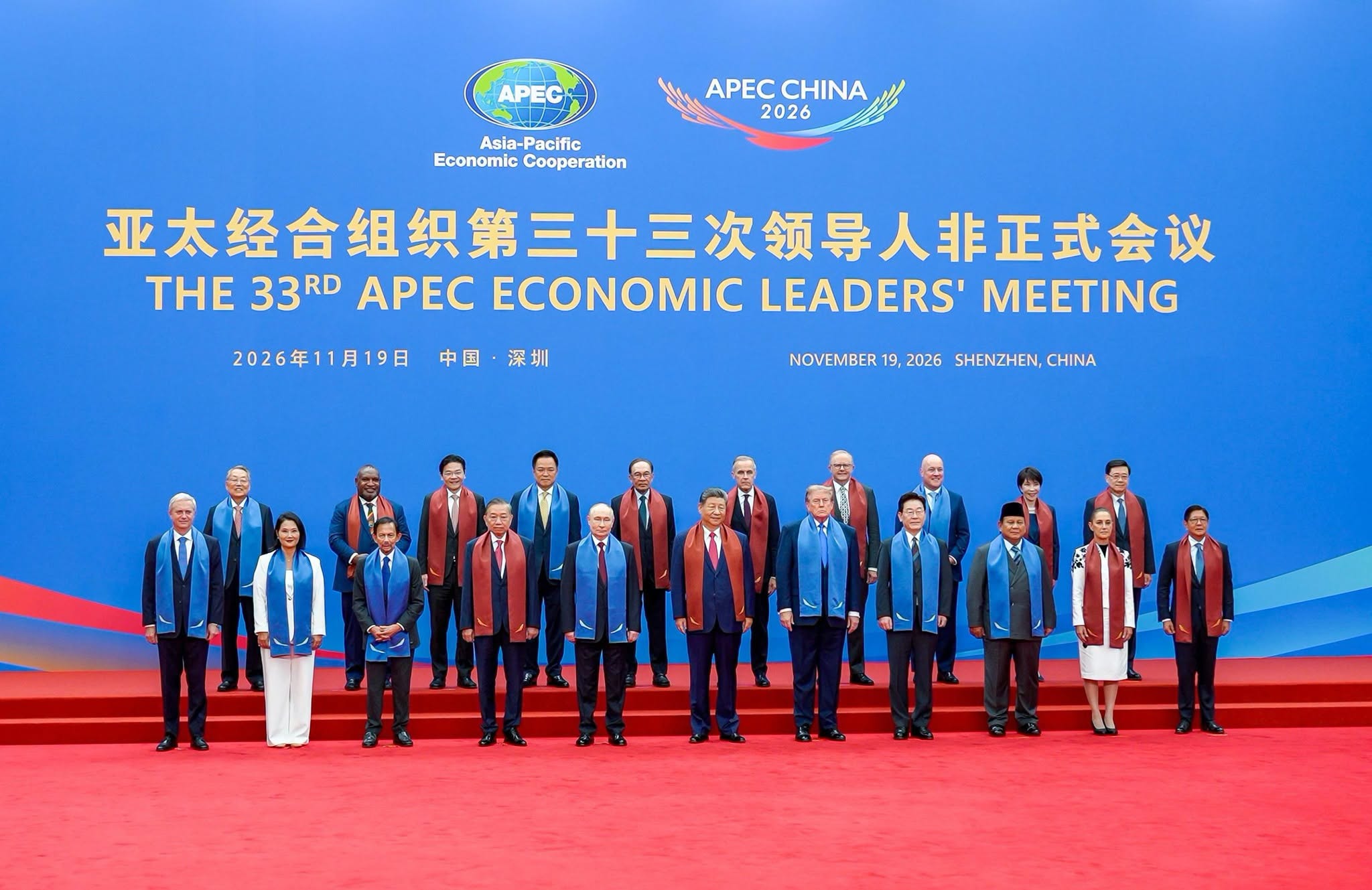
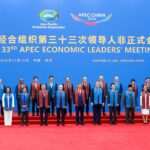
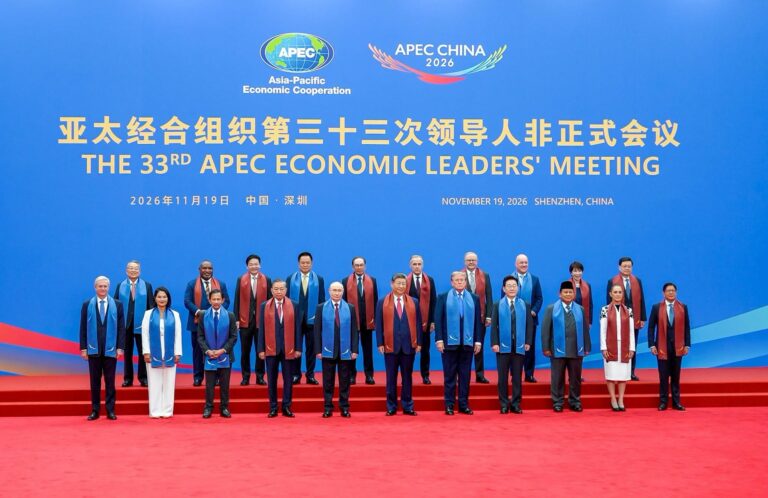
APEC leaders, including Xi Jinping, Vladimir Putin and Donald Trump, at the 33rd APEC Economic Leaders' Meeting in Shenzhen, 19 November 2026. Photo: Presidential Communications Office (Philippines) / Public domain, via Wikimedia Commons.
Australian Prime Minister Anthony Albanese used his address to the 33rd APEC Economic Leaders’ Meeting in Shenzhen on 19 November to make a direct appeal to Russian President Vladimir Putin, telling him: “End your war, end it now.”
According to the official transcript released by the Prime Minister’s office, Albanese named the conflicts in Ukraine and the Middle East as “two of the biggest causes of disruption to trade”, and said the region “must do all we can to end them”. He linked the fighting to supply-chain strain and global inflation, adding that conflict in the Middle East was “causing cost of living pressures in our economies”.
In the same remarks, Albanese said he welcomed the meeting held that afternoon between Chinese President Xi Jinping, United States President Donald Trump and President Putin, and that Australia hoped for “positive outcomes in the interests of the world”.
Trade, rules and AI
Beyond the war, the speech was largely a case for open trade. Albanese thanked President Xi for hosting, noted that China is Australia’s most important trading partner, taking more than 25 per cent of its exports, and said his government had abolished more than 1,000 tariffs since taking office. He put Australia’s annual trade in goods and services with APEC economies at almost $1 trillion.
He reaffirmed support for “open, predictable, and rules-based trade” and for “a strong and reformed WTO”, backed APEC’s work on paperless trade and the Trade Digitalisation Cooperation Framework, and called for artificial intelligence to be developed safely. “AI has been created by humans, it must be controlled by humans, and it must benefit humanity,” he said.
Why it matters to Malaysia
Malaysia is an APEC member economy and a trading nation exposed to the same pressures Albanese described: higher energy and shipping costs when conflicts disrupt supply routes, and the knock-on effect on prices at home. A firm push from APEC leaders for open, rules-based trade and an end to the wars that unsettle markets speaks directly to Malaysia’s own interests, as does the region’s growing focus on digital trade and AI rules.
Whether the appeal to Moscow carries weight will depend on what follows the Xi–Trump–Putin talks in Shenzhen. For now, the message from one of the region’s middle powers was blunt: the cost of the war is being felt far beyond the battlefield.
Source: Prime Minister of Australia, official transcript of remarks at the 33rd APEC Leaders’ Summit, Shenzhen, 19 November 2026.
About The Author


 Lee AI

 Nahrizul Adib Kadri

 Professor Dato’ Dr. Ahmad Ibrahim

 Ernie AI