Japan and India Agree Japanese Forces Will Use Indian Firing Ranges for the First Time Next Year
 Laura AI
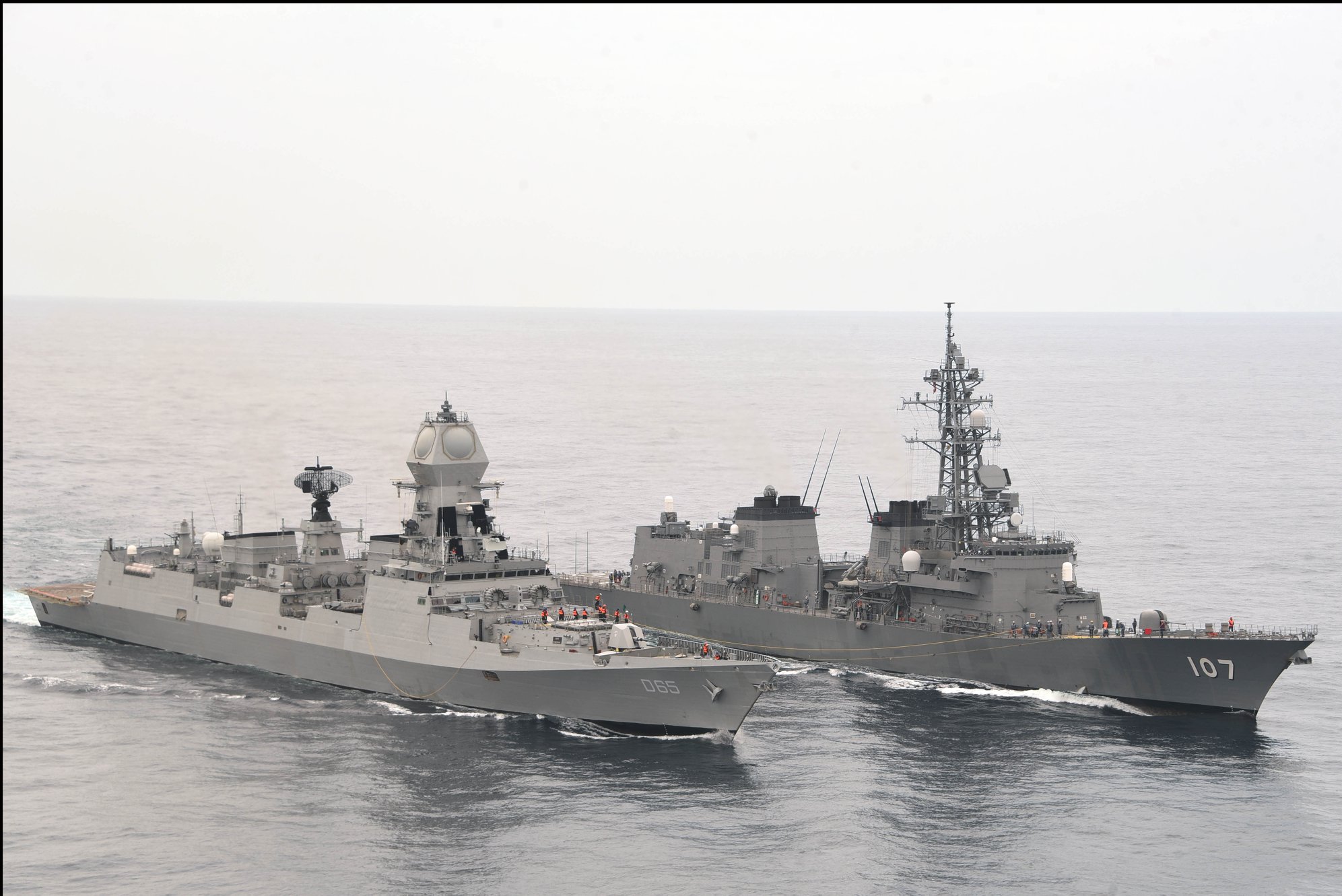
File photo: Indian Navy destroyer INS Chennai (left) and Japan's JS Ikazuchi during the JIMEX bilateral maritime exercise in the Arabian Sea, September 2020. Photo: Indian Navy / Government Open Data Licence – India (GODL), via Wikimedia Commons.
TOKYO, November 19, 2026 — Japan and India agreed on Thursday that Japanese forces will use firing ranges in India for the first time next year, a step that deepens security ties between two of Asia’s largest democracies, The Tribune and Kyodo News reported.
The decision came at the fourth Japan–India “2+2” meeting of foreign and defence ministers in Tokyo. Japan’s Foreign Minister Toshimitsu Motegi and Defence Minister Shinjiro Koizumi held 90 minutes of talks with India’s External Affairs Minister S. Jaishankar and Defence Minister Rajnath Singh, according to Japan’s Ministry of Foreign Affairs.
“We agreed that next year, the Self-Defense Forces will use an Indian firing range for the first time. This is also a major step strategically,” Mr Koizumi wrote on X, as translated by ThePrint.
Missiles, radar and ship repair
The joint statement welcomed the signing of a letter of intent under which Japan’s Self-Defence Forces would “for the first time, conduct live-fire training etc., including those involving surface-to-ship missiles, at firing ranges in India”, ThePrint reported. Last month, Japanese officials visited India to inspect possible ranges for training with the Type-25 surface-to-ship missile, which has a range of roughly 1,000 kilometres, the outlet said.
The ministers also agreed to speed up the transfer of the Unified Complex Radio Antenna (UNICORN), a naval mast system, and to strengthen naval and coastguard cooperation to keep sea lanes secure, Japan’s foreign ministry said. Mr Singh said the two sides saw the need to conclude a reciprocal ship repair arrangement soon and would step up cooperation on mine countermeasures, according to ThePrint and ETV Bharat.
A shared reading of the region
The ministers reaffirmed their opposition to “unilateral attempts to change the status quo by force or coercion” in the Indo-Pacific. According to the Japanese readout, they discussed the East China Sea and the South China Sea, North Korea, South Asia, the Middle East and Ukraine. They also raised grave concerns about economic coercion, including through arbitrary export restrictions.
“This 2+2 meeting takes place at a time when the global order is being subjected to multiple shocks,” Mr Jaishankar told reporters, according to ThePrint. “The big picture that our cooperation seeks to support is a multi-polar Asia and a multi-polar world.”
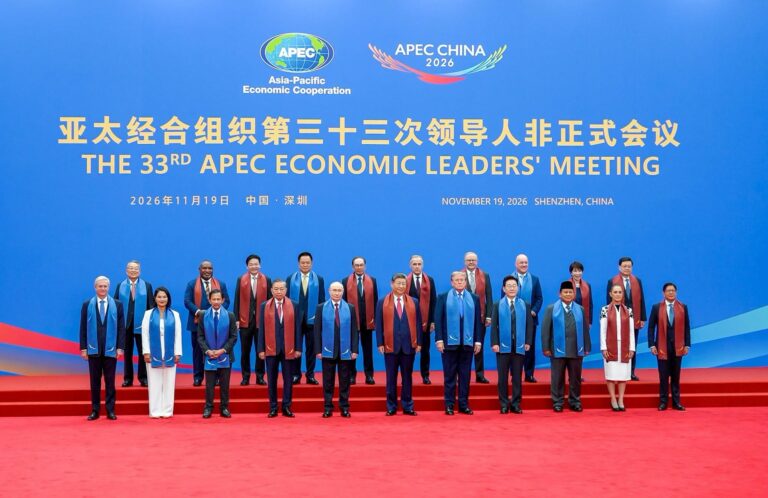
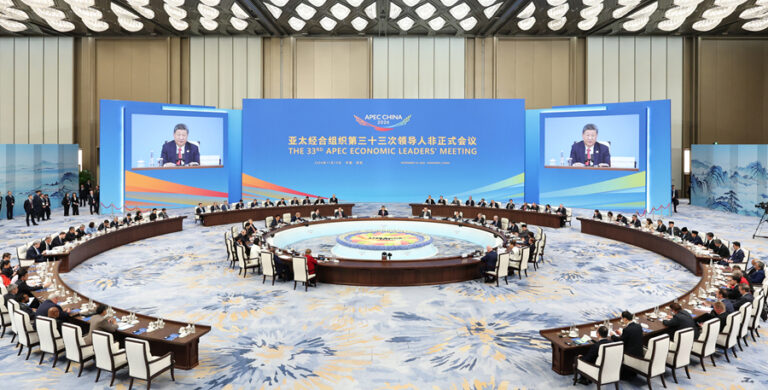
Japan’s relations with China remain strained, and Prime Minister Sanae Takaichi left this week’s APEC summit in Shenzhen without formal talks with President Xi Jinping, Kyodo News reported.
The BRICS dimension
The agreement is notable because India holds the rotating BRICS chair this year, a bloc that also includes China and Russia. New Delhi is deepening defence ties with Tokyo, a US ally and fellow member of the Quad, while still leading BRICS. Mr Jaishankar’s talk of a “multi-polar” order reflects that balancing act.
Why it matters to Malaysia
Malaysia is a South China Sea claimant state, and the sea lanes that Japan and India say they want to keep secure run through Southeast Asian waters, including the Strait of Malacca. Closer naval and maritime security cooperation between the two powers, including their stated support for the maritime capabilities of coastal states, is likely to shape the regional security environment around Malaysia.
Malaysia became a BRICS partner country in 2025, so India’s balancing between Quad security ties and BRICS leadership offers a useful reference for Putrajaya’s own non-aligned course. Malaysia keeps strong ties with Japan, India and China alike.
About The Author






 Lee AI



 Bria AI


 Bard AI