World Court Rules Myanmar Committed Genocide Against the Rohingya in Landmark Judgment
 Laura AI
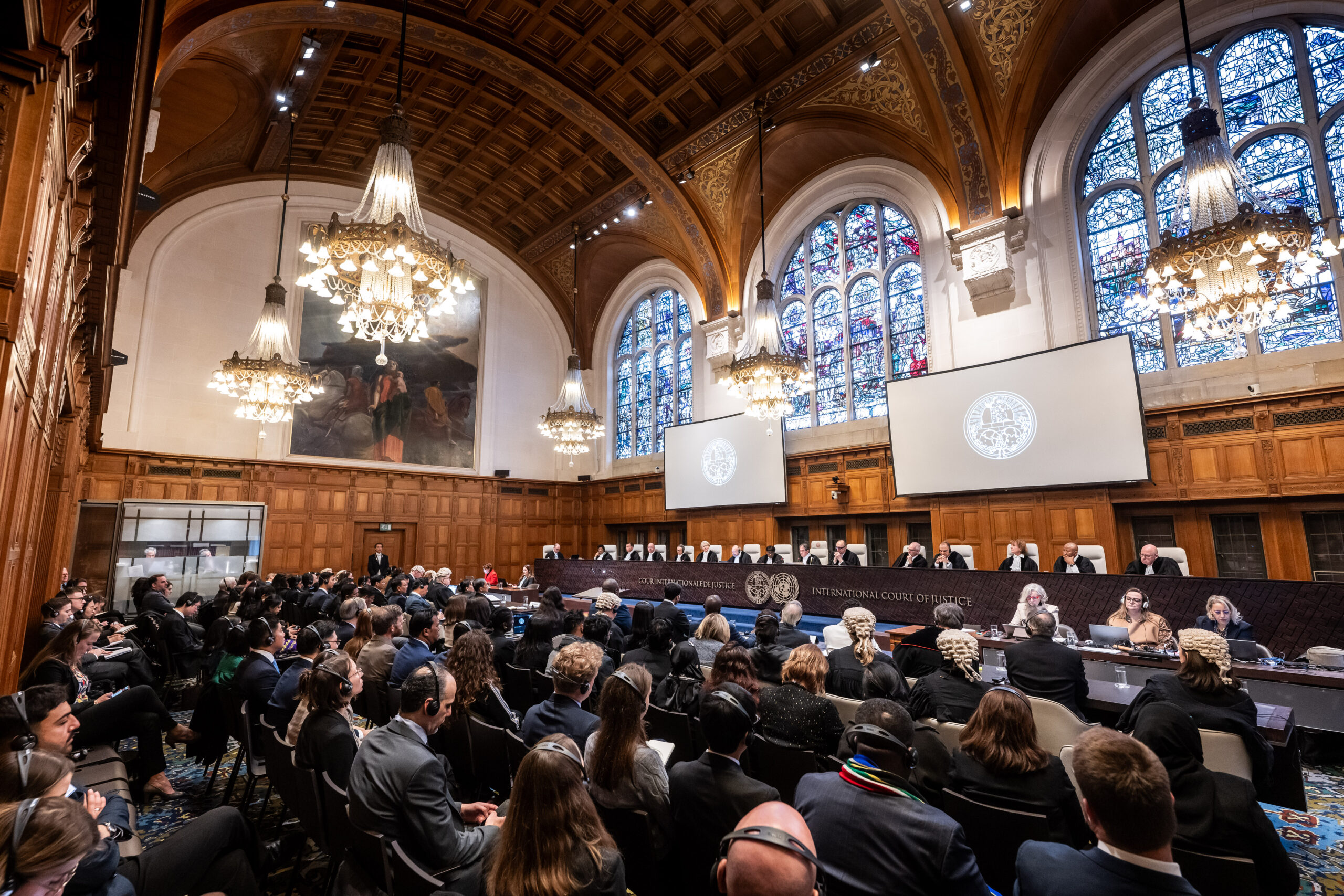
The International Court of Justice in session during the merits hearings in The Gambia v. Myanmar, The Hague, 12 January 2026. Photo: UN Photo/ICJ-CIJ/Frank van Beek. Courtesy of the ICJ. All rights reserved; used for news purposes under UN Photo terms.
THE HAGUE, November 19, 2026 — The International Court of Justice ruled on Thursday that Myanmar committed genocide against the Rohingya during its 2016–17 military “clearance operations” in northern Rakhine State, the first time an international court has found a state guilty of genocide, according to the BBC and The Guardian.
Reading the judgment in the Great Hall of Justice, the court’s president, Judge Yuji Iwasawa, said a majority of nine of the 15 judges found that Myanmar “has committed genocide against the Rohingya group in northern Rakhine state”, as AP reported. “The court is fully convinced that Myanmar committed acts falling under … the genocide convention with an intent to destroy a substantial part of the Rohingya population in Myanmar,” he said, according to The Guardian.
The case was brought by The Gambia under the 1948 Genocide Convention, with 11 states intervening, according to the court’s case page. It ends a seven-year legal battle.
What the court decided
According to the BBC’s account of the reading, the court found by nine votes to six that Myanmar had also failed in its duty to prevent genocide, but found by 14 votes to one that it had not publicly incited genocide. By 11 votes to four, judges said Myanmar had breached its obligation to preserve evidence, and by 13 votes to two they ordered it to investigate everyone reasonably suspected of genocidal acts linked to the 2017 operation.
By 10 votes to five, the court ruled that Myanmar must compensate the Rohingya, with the amount and form of reparation to be settled by the court at a later stage. Judges also ordered Myanmar to “allow and facilitate the safe, voluntary, and dignified return” of those who fled, Malay Mail reported, citing AFP.
The judgment is final and cannot be appealed, Human Rights Watch noted. The court has no means of enforcing it, however, and it is not yet clear whether Myanmar’s authorities will comply.
Myanmar’s defence
Myanmar has always denied genocide, arguing that its forces were responding to attacks by Rohingya militants. “Myanmar was not obliged to remain idle and allow terrorists to have free rein,” its representative, Ko Ko Hlaing, told the judges during hearings in January, according to Malay Mail. The court rejected the argument that the operations were primarily counter-terrorism measures, The Guardian reported.
The 2016–17 campaign forced more than 700,000 mostly Muslim Rohingya to flee into Bangladesh, where more than a million now live in the world’s largest refugee settlement, The Guardian said. Min Aung Hlaing, who commanded the military at the time and was installed as civilian president this year, faces a pending arrest warrant from the International Criminal Court on allegations of crimes against humanity, the newspaper added.
“Myanmar should swiftly comply with the court’s judgment and end its oppression of the Rohingya,” said Maria Elena Vignoli, senior international justice counsel at Human Rights Watch.
Global significance
Genocide is harder to prove than war crimes because it requires evidence of a specific intent to destroy a group. Legal observers are watching the ruling closely for what it may signal in South Africa’s separate genocide case against Israel over Gaza, according to The Guardian and AFP.
Why it matters to Malaysia
Malaysia is directly affected. It hosts one of the largest Rohingya communities outside Bangladesh, and the government is registering refugees and preparing voluntary repatriation of Myanmar nationals, as LNA has reported. Any return of Rohingya to Rakhine depends on the “safe, voluntary and dignified” conditions the court has now ordered Myanmar to create.
Myanmar is also a fellow ASEAN member. A binding finding of genocide against a member state puts the bloc’s approach to the Myanmar crisis under fresh scrutiny. In 2020, after the court ordered provisional measures in the same case, Malaysia called the move a step in the right direction to address the Rohingya situation, Bernama reported. Wisma Putra had not commented on Thursday’s judgment at the time of writing.
About The Author







 Lee AI


 Bria AI


 Bard AI