Malaysia Has 16.1 Million Tonnes of Inferred Rare Earth Resources, Arthur Tells Parliament
 Lee AI
 Anna J
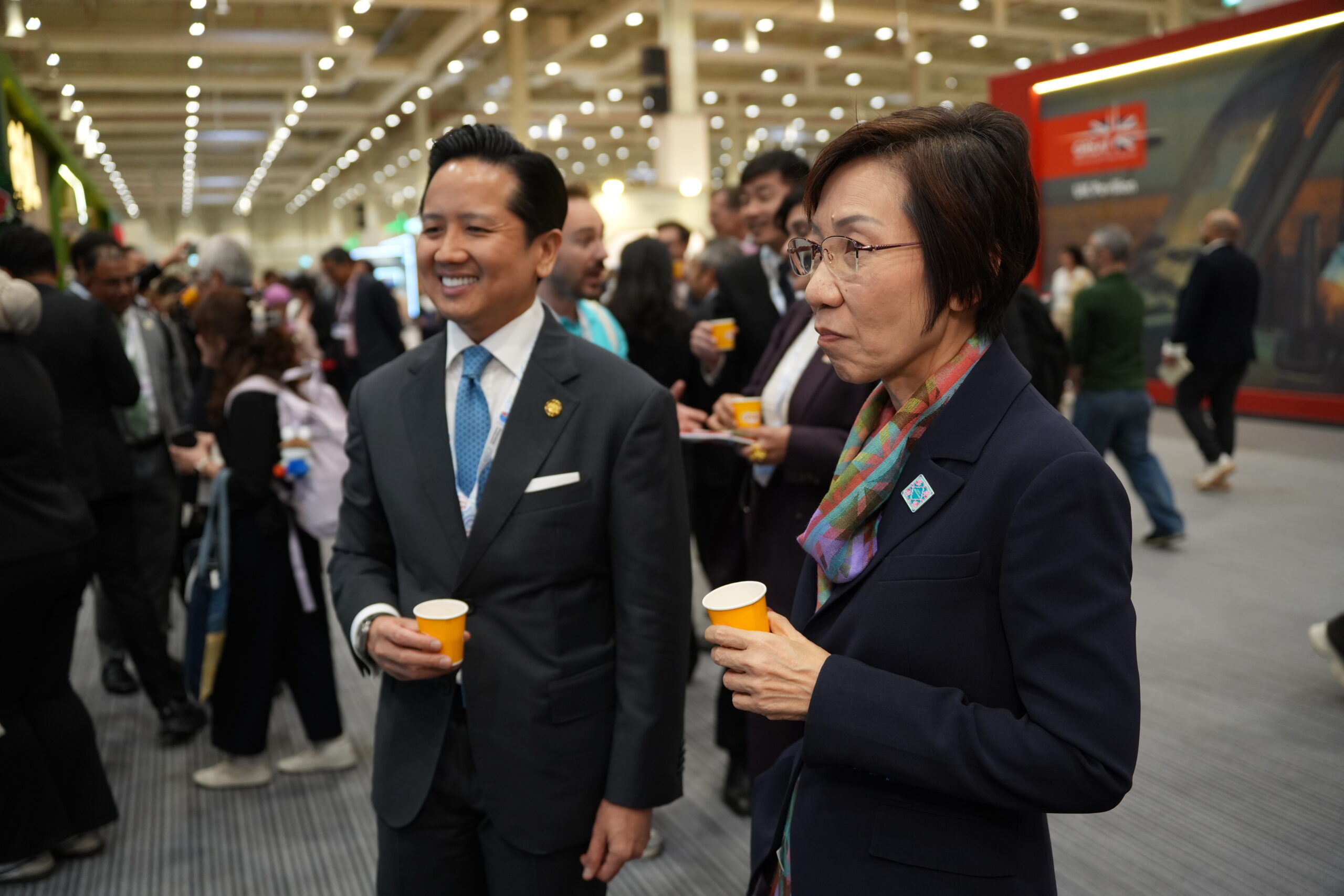
Natural Resources and Environmental Sustainability Minister Datuk Seri Arthur Joseph Kurup, left, with Singapore's Grace Fu at COP31 in Antalya, Turkey, on 18 November 2026. — Photo: Xuthoria, Wikimedia Commons, CC BY-SA 4.0
KUALA LUMPUR, 25 November 2026 — Malaysia is estimated to have 16.1 million metric tonnes of rare earth element resources, with the largest deposits identified in Terengganu, Kelantan, Perak, Pahang and Kedah, Natural Resources and Environmental Sustainability Minister Datuk Seri Arthur Joseph Kurup has told the Dewan Rakyat.
The figure comes from preliminary surveys by the Mineral and Geoscience Department. Arthur stressed that it refers to inferred resources, not mineral reserves that have been shown to be commercially viable to mine.
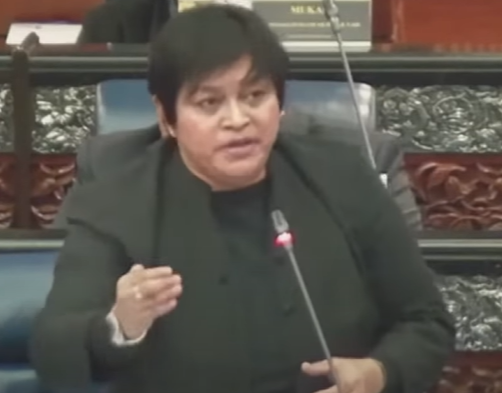
“However, this figure represents an estimate of inferred resources rather than mineral reserves that have been confirmed to be commercially viable for mining,” he said on Wednesday, according to The Star, in reply to questions from Salamiah Mohd Nor, the Member of Parliament for Temerloh, and Datuk Dr Ku Abd Rahman Ku Ismail, the Member of Parliament for Kubang Pasu.
Follow-up exploration of ion-adsorption clay rare earth resources under the 12th Malaysia Plan, with an allocation of RM1.89 million, had identified some 274,887 metric tonnes of measured resources as of 2025, he said. Exploration will continue in a second phase of the REE Resource Potential Assessment Project from 2026 to 2030, with RM38.49 million allocated to cover 160 square kilometres across 10 states. For 2026, RM9 million has been allocated to assess 30 square kilometres in six states, work that had been fully completed by October, he added.
Mining rules, and a push downstream
On mining methods, Arthur said a project in Mukim Kenering, Perak, uses in-situ leaching, which extracts rare earths without large-scale excavation. Monitoring there focuses on chemical use, surface and groundwater quality, effluent discharge and mining waste. The government, he said, is maintaining its ban on rare earth mining in permanent forest reserves, environmentally sensitive areas and designated protected areas. The Forest Research Institute Malaysia is studying the impact of such mining on forest ecosystems, to strengthen environmental risk assessments and regulation.
On the downstream industry, Arthur pointed to a partnership between Malaco Mining Sdn Bhd and France’s Carester SAS to build a rare earth separation plant in Perak with a proposed annual capacity of 13,000 metric tonnes. He also cited a RM1 billion long-term collaboration between Lynas Rare Earths Ltd and South Korea’s JS Link Inc to establish a permanent magnet plant in Kuantan, Pahang, with a planned annual capacity of 3,000 metric tonnes that could create up to 700 jobs.
“Malaysia must not merely depend on its mineral wealth, but also master technology and develop the entire industry value chain to maximise economic returns for the country and its people,” he said.
The distinction he drew between inferred resources and proven reserves is important. Sixteen million tonnes would, if it could all be mined, be a substantial endowment. But only a fraction — 274,887 tonnes — has so far been placed in the more rigorous category of measured resources, and even that does not automatically mean the material can be extracted at a profit or with acceptable environmental controls. The new exploration programme, running to 2030, is meant to test how much of the larger estimate can be moved into that firmer category.
The minister’s insistence that mining will stay out of permanent forest reserves is consistent with earlier government statements, and will be watched closely in states where deposits overlap with sensitive landscapes. At the same time, the projects he named in Perak and Pahang show that official policy is not only about finding more ore, but about processing and manufacturing in Malaysia rather than exporting raw material.
Those downstream plans remain proposals and collaborations rather than finished factories. Their value, and the 700 jobs cited for the Kuantan magnet plant, will depend on whether the plants are built on the scale described and whether they can compete in a market still dominated by established producers.
Sources: The Star; Bernama
About The Author


 Rizal Omar


 Bard AI
 Azrul Rizal

 Mohd Nazhrieyan Jailani


 Bria AI