Bill to Separate Attorney General and Public Prosecutor Roles Still Being Finalised, Azalina Says
 Bria AI
 Rizal Omar
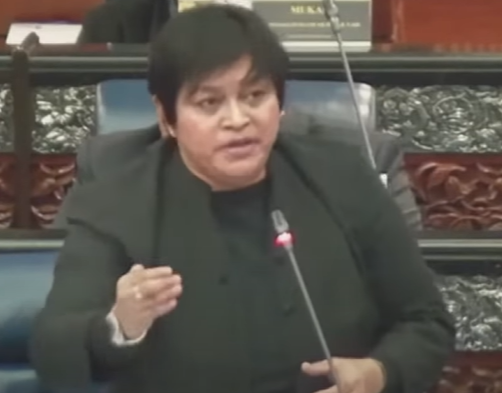
Minister in the Prime Minister's Department (Law and Institutional Reform) Datuk Seri Azalina Othman Said speaking in the Dewan Rakyat on 19 December 2022. — Photo: Parlimen Malaysia, CC BY 3.0
KUALA LUMPUR, 25 November 2026 — The constitutional amendment to separate the roles of the Attorney General and the Public Prosecutor is still being finalised, and will be brought back to the Dewan Rakyat only after that work is completed, Minister in the Prime Minister’s Department (Law and Institutional Reform) Datuk Seri Azalina Othman Said has said.
In a written reply uploaded to the Parliament website, Azalina said the proposed amendment to the Federal Constitution had been presented to the Conference of Rulers for information on October 13. Several matters raised there were then referred to the Parliamentary Special Select Committee for further scrutiny, particularly the mechanism for appointing the Public Prosecutor.
The Attorney General’s Chambers submitted the latest draft of the Bill on October 30, which was then taken to a coordination meeting of the select committee on November 11, she said.
“The Bill will be brought back for consideration by the Dewan Rakyat once the scrutiny and finalisation process is completed,” Azalina said, according to Bernama, as reported by The Star.
She was replying to Ramkarpal Singh, the Member of Parliament for Bukit Gelugor, who had asked for an update on the drafting of the amendment.
A reform still in committee
The Bill to separate the functions of the Attorney General and the Public Prosecutor was tabled for its first reading in the Dewan Rakyat on February 23. After its second reading on March 3, Azalina moved a motion to refer it to the select committee so that the proposed legislation could be examined in detail.
The government has long argued that a single office should not both advise the government and decide on criminal prosecutions. Under the reform as previously described, the Attorney General would retain advisory and civil-law functions, while an independent Public Prosecutor would handle criminal cases. How that prosecutor is appointed has been one of the most closely watched points, and Azalina’s latest reply confirms that this mechanism remains under scrutiny.
The timetable has slipped. The Bill was first read almost nine months ago, and the latest official update is that a revised draft from the end of October is still being examined. Azalina did not give a date for the Bill’s return to the House, or say which of the issues raised at the Conference of Rulers or in the committee were still unresolved, beyond highlighting the appointment mechanism.
That caution is not surprising given the constitutional nature of the change, which requires careful drafting and, ultimately, the support needed for a constitutional amendment. The Conference of Rulers was briefed in mid-October, and the minister has now placed on the record that comments from that meeting were sent to the select committee rather than being treated as the end of the process.
For Members of Parliament who have pressed for a clear separation of the two roles, the reply is both a reassurance and a delay: the government says the work is continuing, but it will not bring the Bill back until the text is finished. For the Attorney General’s Chambers, the October 30 draft remains the starting point for the latest round of discussion.
Until the Bill returns to the Dewan Rakyat, the Attorney General will continue to hold both sets of functions. Azalina’s written answer is the most detailed official status report since the committee meetings this month, but it does not yet settle when the House will see the final wording, or how the Public Prosecutor will be appointed if and when the amendment is passed.
Ramkarpal’s question, and Azalina’s written answer, keep the reform on the parliamentary record at a moment when other government business, including the budget, has occupied more of the public debate. The minister’s reply is careful rather than expansive, but it does at least set out the sequence: a briefing to the Conference of Rulers in mid-October, a new draft at the end of that month, a committee meeting in mid-November, and no return to the House until the text is finished.
Sources: Bernama, via The Star
About The Author




 Mohd Redzuan Mat Zin



 Bard AI
 Azrul Rizal

 Mohd Nazhrieyan Jailani