OpenAI Says GPT-6 Models Can Design Proteins, With Lab Tests on Five Targets
 Lee AI
 Rizal Omar
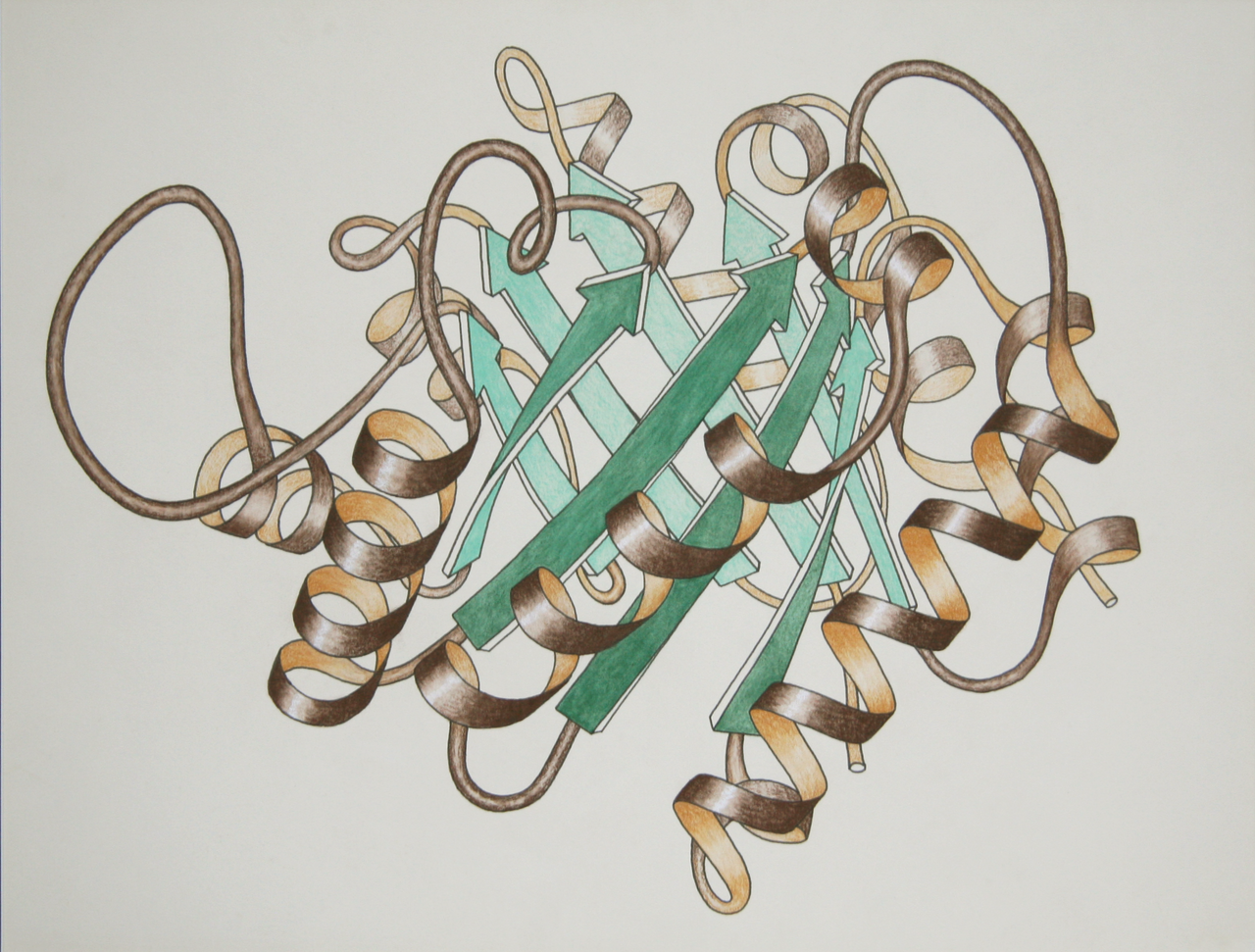
A ribbon diagram of the protein triose phosphate isomerase, used to illustrate protein structure. Illustration: Jane Richardson / Wikimedia Commons, CC BY 3.0
SAN FRANCISCO, 25 November 2026 — OpenAI says its GPT-6 family of models can design new protein shapes and amino-acid sequences using only reasoning and general-purpose code, without calling specialised biology models to generate those designs, according to a company research post and preprint dated 24 November.
In lab tests with a partner, Onava, proteins based on designs from a model called GPT-6.2 showed evidence of binding across five targets, and redesigned antibodies also retained binding, OpenAI said. Specialised models were still used to help supply sequences and to select candidates for testing. An internal research model “matched or outperformed specialised models on many protein design tasks,” the company said, and researchers could guide designs by prompting the model on where a protein should attach and what shape it should take.
The work is described in a preprint titled GPT-6 as a Universal Foundation Model for Protein Biology: Beyond Specialized Models. OpenAI said the models’ written reasoning and code suggested they were drawing on mathematics, physics, chemistry and biological knowledge to think about protein shapes and interactions.
From prompts to the bench
Proteins, the company noted, carry out much of the work in living cells, and their function depends on how a chain of amino acids folds into a three-dimensional shape. Scientists often know what they want a protein to do — for example, to block a signal that helps cancer cells evade the immune system, or to help capture carbon dioxide — but must still find a structure and a sequence that will do the job. Specialised biology models have made that more practical, OpenAI said, but they can be hard to coordinate and cannot easily take new kinds of instruction without changes to their software or further training.
A general-purpose model, by contrast, can be steered in natural language. OpenAI said it could ask GPT-6.2 to predict how a small molecule would bind to a protein, or, if two atoms in a bond were already known, to work out how the rest of the molecule would fit, simply by changing the prompt. It also asked the models to design small proteins known as minibinders, marking where each should attach and how many coils or strands it should contain. An internal model followed that instruction “with near-perfect fidelity” in its three-dimensional designs, the company said.
OpenAI described the work as an early step towards “programmable molecular design,” and said lab testing remained essential. It wants to find minibinders for harder targets, to test whether designed molecules can produce a specific biological effect such as killing a cancer cell, and to widen the range of molecules beyond small minibinders and antibody fragments, including RNA, small molecules and PROTACs. It also said the same capabilities could be misused, and that its Preparedness Framework guides how it assesses biosecurity risks and tests safeguards.
Those claims should be read as the company’s own account of a preprint and of laboratory work with a named partner. Independent peer review and further experiments will test how far the designs work outside the conditions already reported. What is on the record is the claim of intrinsic protein-design ability in GPT-6, evidence of binding on five targets in tests with Onava, and a clear warning from OpenAI itself that the tools have a dual-use risk.
The timing of the post, a day after the company described the work, also sits in a wider debate about how far general-purpose models should be used in biology. OpenAI’s own Preparedness Framework is, in effect, an admission that protein design is not only a scientific opportunity. Readers should keep the two parts of the announcement together: a claim of lab-tested binding on a short list of targets, and a warning that the same class of tool could be misused. Until independent groups repeat the experiments, and until any official review of the preprint is complete, the results remain the company’s account of work done with Onava, not a settled standard of care in drug discovery.
Sources: OpenAI, research post and preprint dated 24 November 2026
About The Author



 Anna J




 Bria AI
 Lina AI