SST Brings In as Much as GST Did With a Lighter Burden on the Poor, Says Liew; Global Minimum Tax Revenue Only From Mid-2027
 Lee AI
 Anna J

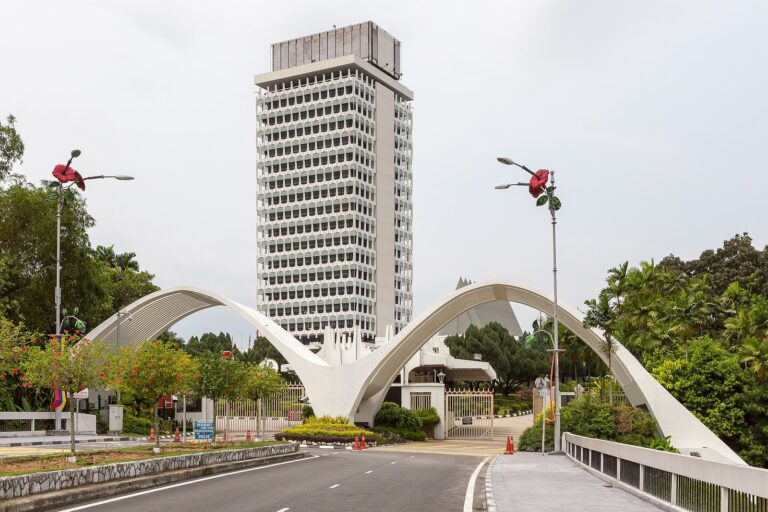
Photo: United States Embassy Kuala Lumpur / Safuan Abdullah / Wikimedia Commons (Public Domain)
Malaysia’s Sales and Service Tax (SST) now raises about as much revenue as the Goods and Services Tax (GST) did at its peak, while placing a lighter burden on lower-income households, Deputy Finance Minister Liew Chin Tong told the Dewan Rakyat on Monday.
In separate remarks in the House the same day, Liew also said Malaysia will only begin collecting revenue from the Global Minimum Tax (GMT) after June 2027, even though the regime took effect on 1 January 2025.
His comments come as the future of consumption tax becomes a live political question ahead of the 16th general election, after Barisan Nasional chairman Datuk Seri Ahmad Zahid Hamidi announced that the coalition would bring back GST if it forms the next government, the New Straits Times reported.
SST versus GST: the numbers
First, the jargon. GST, which Malaysia used from 2015 to 2018, is a broad tax charged at each stage of the supply chain, with businesses claiming back the tax they pay on their own inputs (the “input-tax credit”). SST is narrower: a sales tax on certain goods and a service tax on listed services.
According to the New Straits Times, Liew said SST revenue is projected at 3.07 per cent of gross domestic product (GDP) in 2026 and 3.16 per cent in 2027, comparable to the 3.30 per cent and 3.23 per cent of GDP recorded under GST in 2016 and 2017.
He acknowledged that businesses may favour GST because of the input-tax credit, but argued that it could weigh more heavily on ordinary Malaysians. Consumption taxes are generally regressive, he said, because lower-income groups spend a bigger share of their earnings on consumption than wealthier households.
“In an economy where 8.5 million Malaysians qualify for and receive targeted government cash assistance, SST is less regressive than GST, and thus less harmful to the middle class and the poor,” he said.
Liew also pushed back on the argument that Malaysia needs GST because too few people pay income tax, saying it overlooks low wages. He cited a national median wage of RM2,940 in 2025, noting that most people would not start paying income tax on monthly earnings below RM4,000 after reliefs. “Imposing GST on a population whose wages remain suppressed exacerbates inequality,” he said, adding that the goal should be “to raise income across the board so that more Malaysians become part of the middle class, and qualify to pay income tax eventually”.
Scope and compliance
Liew set out how much wider a GST net would be. In 2018, 687,938 businesses were registered to collect GST on the government’s behalf; he estimated that the figure could reach 980,548 in 2026, compared with 132,838 businesses now covered by SST.
He said 1,836 tariff lines currently carry zero tax under SST, against 607 under the old GST regime, while 286 categories of services are now subject to service tax, compared with 420 under GST between 2015 and 2018. That, he suggested, means a return to GST could make a wider range of goods and services taxable.
On the argument that GST or value-added tax gives the authorities better visibility of transactions, Liew said the roll-out of e-invoicing had already improved that visibility, reducing the need to rely on GST to curb tax avoidance.
Global Minimum Tax: why the wait
On the Global Minimum Tax, The Star reported that Liew was responding to Lim Guan Eng, the Member of Parliament for Bagan, who asked how much had been collected since the tax was introduced and whether taxes on micro, small and medium enterprises (MSMEs) would be cut to 15 per cent to ensure fair competition with multinationals.
The GMT, backed by the G20 and the Organisation for Economic Co-operation and Development (OECD), is meant to stop multinationals shifting profits to low- or zero-tax jurisdictions. Groups with annual global revenue of at least €750 million (about RM3.38 billion) must pay an effective tax rate of at least 15 per cent in every jurisdiction where they operate, with a “top-up” tax making up any shortfall.
Liew said collection timing depends on the groups’ financial reporting periods, with filing and payment due 18 months after the end of their consolidated financial statement period, so revenue will flow only after June 2027. “The implementation of GMT is expected to have a positive impact on the country’s financial position,” he said, adding that more than 135 countries and jurisdictions agreed to introduce the tax in October 2021, with about 65 having implemented it as of October 2026.
On MSMEs, he pointed to the one-percentage-point cut in income tax rates announced in Budget 2027, which he said would save each MSME up to RM6,000.
Lim also raised concerns about long-term tax holidays for foreign investors, claiming they had hurt the domestic steel industry: local operators controlled 85 per cent of the industry in 2016, he said, but foreign firms now held 85 per cent. Liew replied that the New Incentive Framework, introduced on 1 March 2026, assesses investments against six scorecards, including economic complexity and the hiring of more local workers, with incentives granted only when the required scores are met.
What to watch
Watch for the first GMT collections in the second half of 2027 and how much they add to federal revenue; whether GST becomes a campaign issue between unity government partners as the general election nears; and how the Budget 2027 tax cut for MSMEs feeds through to small businesses’ costs.
Sources: New Straits Times, The Star.
About The Author



 Rizal Omar



 Bria AI


 Lina AI

 Bard AI
 Azrul Rizal

 Mohd Nazhrieyan Jailani