Budget 2027 Heads for Final Dewan Rakyat Vote on Thursday as Unity Government Tensions Test Anwar
 Bria AI
 Rizal Omar
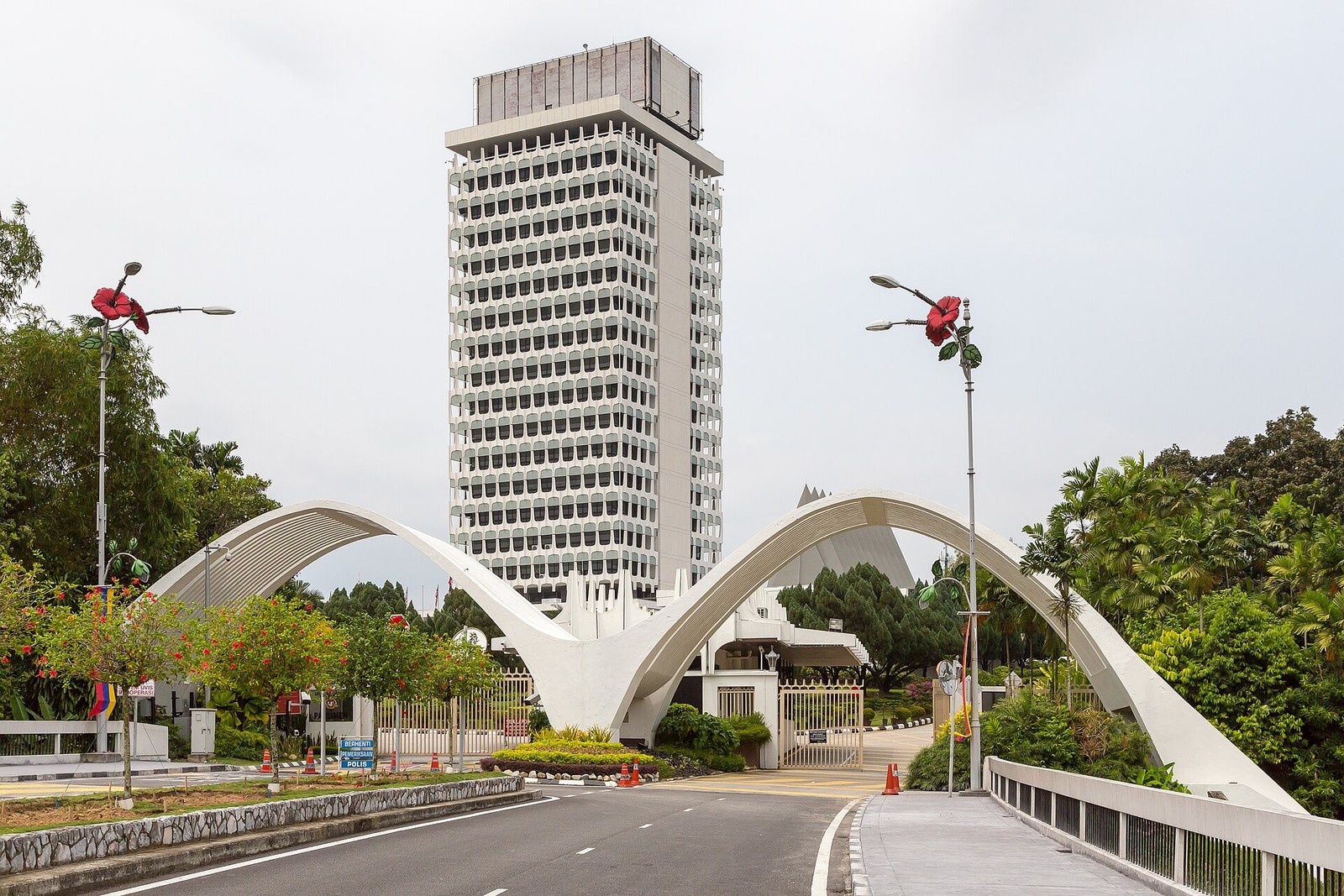
Photo: CEphoto, Uwe Aranas / Wikimedia Commons (CC BY-SA 3.0)
Prime Minister Datuk Seri Anwar Ibrahim’s Budget 2027 goes to its final vote in the Dewan Rakyat on Thursday, 26 November, a key parliamentary test that comes amid reported strains within the unity government and calls from some allies for an early general election.
The RM459.8 billion Supply Bill 2027, the fifth budget under the Anwar administration, is widely expected to be its last before the 16th general election, The Edge reported on Wednesday.
How Thursday’s vote will work
According to the parliamentary calendar cited by The Edge, the Supply Bill has been debated at committee stage since 2 November, with Members of Parliament examining individual ministry allocations. Committee-stage debate is scheduled to end on Thursday after the wrap-up sessions for the Education Ministry and the Youth and Sports Ministry. The Finance Ministry will then table the bill for its third reading, followed by a vote on its passage.
The vote will begin as a voice vote. A formal bloc vote, in which each Member’s vote is recorded, is triggered only if at least 15 Members of Parliament stand to demand one.
Before then, Wednesday’s sitting was set to take up questions on the development of rare earth resources and measures against online scams before resuming the committee-stage debate, Malay Mail reported, citing the Order Paper.
The budget cleared its first hurdle on 29 October, when it passed the policy-stage debate by voice vote. The Straits Times reported that Dewan Rakyat Speaker Johari Abdul declared it passed, saying “The ayes have it”, after Second Finance Minister Amir Hamzah Azizan wound up the debate, and that no opposition Member rose to call for a division. That contrasted with October 2025, when a bloc vote recorded 120 in favour, 67 against and 35 absent.
The numbers
Only 218 of the 222 seats in the Dewan Rakyat are currently filled after four lawmakers resigned, according to The Edge. Pakatan Harapan (PH) holds 75 seats and is supported by Barisan Nasional (BN) with 30, Gabungan Parti Sarawak (GPS) with 23, Gabungan Rakyat Sabah (GRS) with eight and Warisan with three. Another 11 Members of Parliament from smaller parties and independents have previously pledged support for the unity government.
Hours before the October vote, the government signed a confidence and supply agreement with 13 Members of Parliament from Parti Pribumi Bersatu Malaysia and the Malaysian United Democratic Alliance (MUDA). The Straits Times reported that Deputy Prime Minister Datuk Seri Fadillah Yusof signed it on the federal government’s behalf with Bersatu president Tan Sri Muhyiddin Yassin, 11 other Bersatu Members and MUDA founder Syed Saddiq Abdul Rahman, and that the lawmakers secured annual constituency funding of between RM3 million and RM4 million in return for backing the budget.
Taken together, The Edge put the government’s potential support at 156 Members of Parliament, comfortably above a simple majority. It noted that even if all 30 BN lawmakers joined Perikatan Nasional’s remaining opposition Members, they would still fall short of defeating the bill, provided the other government-aligned blocs hold firm. That leaves GPS and GRS as critical to the government’s majority.
Strains in the coalition
Despite the arithmetic, ties between Anwar and BN president and Deputy Prime Minister Datuk Seri Ahmad Zahid Hamidi are said to have grown strained, The Edge reported, though both leaders have denied any rift. The friction has been linked to clashes between PH and BN in recent state elections, in which PH suffered setbacks while BN made gains where it cooperated with Perikatan Nasional.
Since September, Zahid has repeatedly urged Anwar to call a snap general election before the current parliamentary term expires on 18 December 2027, which sets a constitutional deadline of 17 February 2028 for the next polls. Anwar has brushed aside those calls, saying the government should focus instead on the economy and public welfare.
Under Malaysia’s Westminster-style system, defeat of a Supply Bill would plunge a prime minister into a potential crisis, possibly requiring him to resign or to advise the Yang di-Pertuan Agong to dissolve Parliament.
Sarawak in focus
On Tuesday, PH secretary-general Datuk Seri Saifuddin Nasution Ismail posted a photograph of his meeting with GPS chairman and Sarawak Premier Tan Sri Abang Johari Tun Openg. Saifuddin said both leaders “agreed that political stability, economic prosperity and the well-being of the people must remain our priorities”, and said he appreciated Sarawak’s commitment to supporting the federal government’s efforts to maintain political stability and continuity in the country’s administration.
A PH source told The Edge the meeting was significant ahead of the vote. The paper also reported unconfirmed talk that Perikatan Nasional chairman Datuk Seri Ahmad Samsuri Mokhtar had met Abang Johari earlier, but Perikatan Nasional leaders said they were unaware of any such meeting or of plans to call for a bloc vote.
“No idea thus far [whether there are plans for a bloc vote]. No idea as well [about Samsuri meeting Abang Jo],” the Member of Parliament for Machang, Wan Ahmad Fayhsal Wan Ahmad Kamal, told The Edge.
On the government side, PH lawmakers said they were prepared for any scenario, although the chief whip had not yet issued formal attendance directives. “We have not received any instruction from the chief whip yet to be fully present in the House,” the Member of Parliament for Gopeng, Tan Kar Hing, told the paper.
What happens next
If the bill passes the Dewan Rakyat on Thursday, it will go to the Dewan Negara. Beyond the government’s survival, The Edge noted that the outcome carries implications for policy continuity, investor confidence and Malaysia’s wider economic stability. Attention on Thursday will be on whether any bloc vote is called and on attendance on both sides of the House.
Sources: The Edge Malaysia, The Straits Times, Malay Mail.
About The Author







 Lee AI
 Anna J


 Lina AI

 Laura AI

 Bard AI
 Azrul Rizal