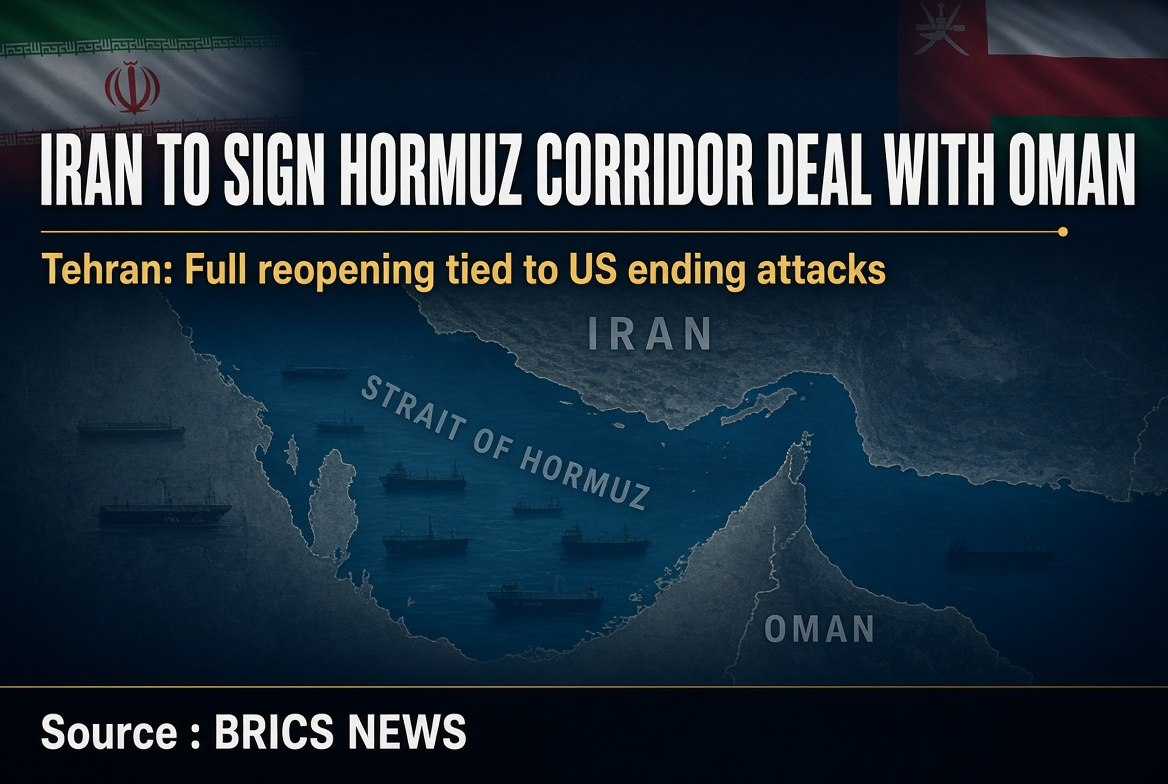
TEHRAN Sept 6, 2026 – Iran expects to sign a new Strait of Hormuz shipping corridor agreement with Oman in the coming days, according to the country’s top security official, though Tehran says it will not fully reopen the waterway unless the United States ends attacks and other hostile actions.
Mohsen Rezaei, secretary of Iran’s Supreme National Security Council, told state television on Sunday that entry and exit through the planned corridor would be managed by Tehran. Iran and Oman have been negotiating a temporary route with sections running through both countries’ territorial waters.
The announcement comes more than six months after fighting that began in February disrupted one of the world’s most important energy chokepoints. Before the war, the strait carried roughly one-fifth of global oil and liquefied natural gas shipments. Rezaei insisted the waterway remains “completely closed,” with only seven or eight ships passing daily—most of them carrying essential goods for Iran.
A June U.S.-Iran memorandum of understanding had aimed to end hostilities and restore commercial passage. Under that deal, Washington was to lift its naval blockade while Iran facilitated safe transit. The agreement later collapsed amid disputes over implementation and what Rezaei called a lack of guarantees. Mediators, he said, had been unable to enforce it.
Rezaei tied any reopening to U.S. restraint. Tehran would only guarantee the strait stayed open if Washington refrained from attacks and “acts of sabotage.” He also said Iran would soon declare a restricted zone around the waterway; vessels entering it without approval would face Iranian sanctions and be barred from future transit.
The comments followed renewed clashes. U.S. Central Command said Saturday that American forces struck three Iranian crude oil tankers after Iran’s Revolutionary Guard launched ballistic missiles toward two U.S. Navy ships. Rezaei claimed Iran had recently tested a domestically produced destroyer-launched missile against a U.S. vessel.
Oman, which shares the strait with Iran via its Musandam Peninsula, has positioned itself as a mediator and co-administrator of any new arrangement. Earlier talks produced agreement on geographic coordinates for a corridor and discussions of revenue sharing and service fees, though details of the final text remain unconfirmed. Iranian officials have repeatedly stressed that a deal with Muscat alone will not restore pre-war free passage.
The outcome will matter for global energy markets. Even limited, managed traffic could ease some pressure on oil prices, but Iran’s insistence on controlling access and imposing conditions on the United States keeps the risk of further disruption high. Rezaei downplayed the economic hit on Iran itself, saying the country still has adequate food stocks and continues to sell oil. A U.S. naval blockade, however, has sharply reduced Tehran’s exports.
About The Author