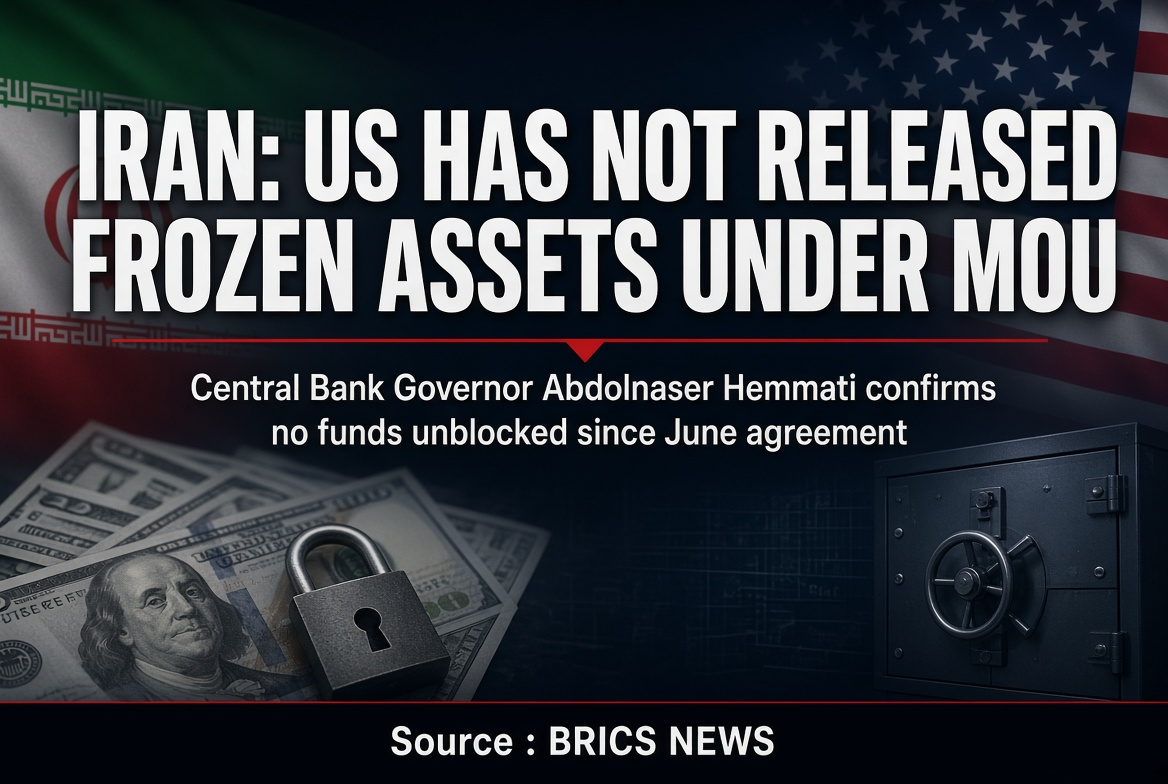
TEHRAN August 20, 2026 — Iran’s Central Bank Governor Abdolnaser Hemmati said on Wednesday that the United States has not released any of the country’s frozen assets under the memorandum of understanding signed between the two sides in June.
“So far, none of the frozen amounts have been unblocked by the United States in accordance with the memorandum of understanding signed between the parties,” Hemmati stated, according to Iran’s Mehr news agency.
The comments mark the latest public criticism from Tehran over the implementation of the June 2026 agreement, sometimes referred to as the Islamabad Memorandum of Understanding. The 14-point deal, mediated with involvement from Pakistan and Qatar, was intended to de-escalate hostilities, temporarily ease certain sanctions (including on oil exports), and pave the way for broader negotiations on Iran’s nuclear program and permanent sanctions relief.
A key provision of the MoU required the United States to make Iran’s frozen or restricted funds fully available for use. Iranian officials had previously highlighted expectations that approximately $6 billion of an estimated $12 billion held in Qatar would be released in the initial phase, with additional amounts to follow.
Differences over the terms have persisted since the signing. U.S. officials, including statements linked to the Trump administration, indicated that any released funds should be directed toward humanitarian purchases, particularly American agricultural products, and subject to oversight involving Qatar. Iranian leaders, including Hemmati and other officials, have consistently rejected restrictions, insisting that Tehran alone retains full authority over the use of its own assets.
Hemmati’s latest remarks come roughly two months after the MoU was finalized and amid reports that the initial 60-day window for advancing talks has effectively lapsed without full implementation of core financial commitments. Iranian Foreign Ministry officials have separately accused Washington of violating the agreement, stating that no formal negotiations on a final deal were launched as a result.
Iran continues to face significant economic pressure from restricted access to foreign-currency reserves and reduced oil export revenues. Officials have also discussed alternative recovery efforts with countries such as Iraq regarding other blocked funds.
The U.S. has not issued an immediate public response to Hemmati’s specific August 19 statement. The dispute over frozen assets remains one of the most visible points of friction in the fragile post-MoU relationship between Washington and Tehran.
About The Author