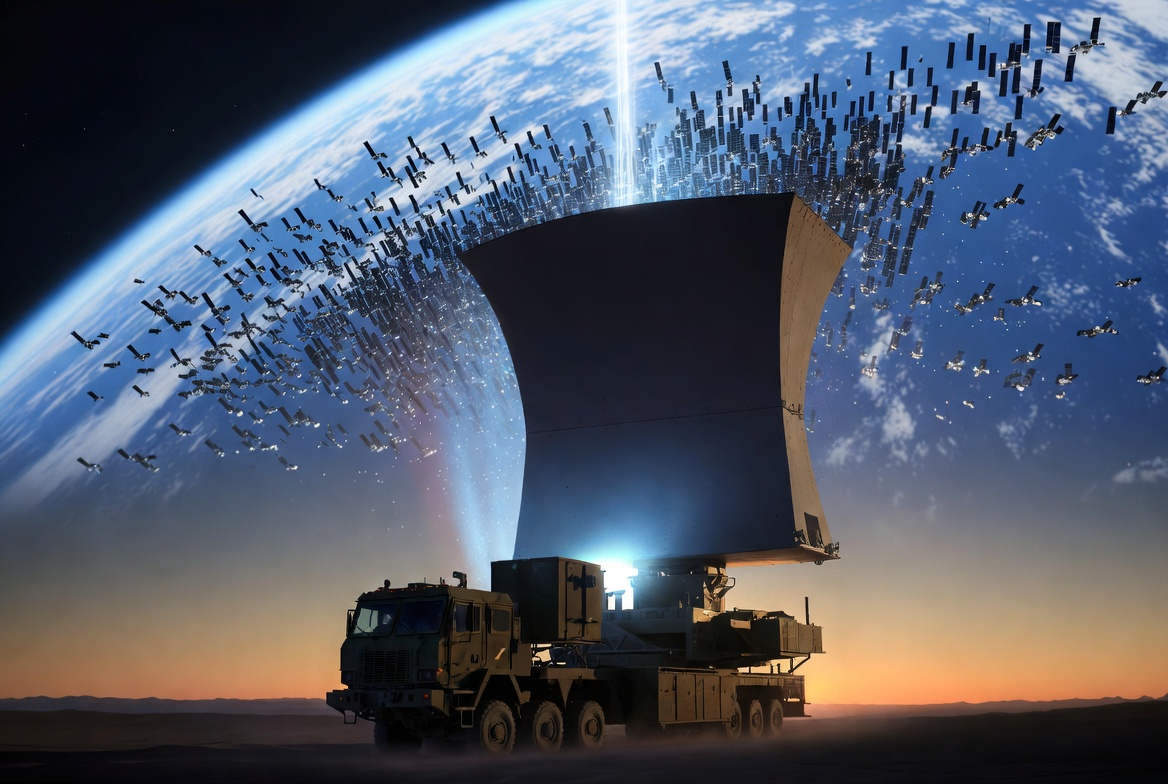
BEIJING July 16, 2026 — Chinese defense researchers have publicly detailed a major breakthrough in high-power microwave (HPM) weapons, achieving output levels of up to 100 gigawatts — a development that could significantly alter the future of electronic warfare and space security.
In a paper published this month in the journal High Power Laser and Particle Beams, scientists from China’s National University of Defense Technology (NUDT), led by Professor Zhang Jun, described advanced pulsed-power systems developed by the Chinese military. The researchers stated that China’s pulsed-power technology has advanced rapidly due to national strategic priorities and now ranks among the world’s leading efforts in the field.
“Pulsed-power drivers for HPM generation have transitioned from laboratory prototypes to practical applications,” the authors wrote, evolving from basic functional systems to high-performance and durable military-grade weapons.
Defense scientists highlighted that these ultra-high-power microwave weapons could threaten expensive low-Earth orbit (LEO) satellite networks — such as SpaceX’s Starlink — at extremely low cost. Unlike kinetic anti-satellite weapons that create dangerous debris, HPM systems aim to overload and disable satellite electronics through invisible microwave pulses.
The paper notes that even systems in the gigawatt range could severely interfere with or damage satellites in orbit, making large constellations potentially vulnerable if targeted.
The disclosure marks one of the rare public insights into China’s HPM arsenal. According to the research, several gigawatt-class systems have already moved beyond testing and been delivered to users. Earlier Chinese HPM systems, such as the Hurricane 3000 and truck-mounted platforms unveiled at defense exhibitions, have demonstrated capabilities against drone swarms at ranges of several kilometers.
These newer 100 GW-class systems represent a significant leap in power output, achieved by synchronizing multiple compact pulse generators to overcome previous technical limitations.
The development comes amid growing global competition in space and directed-energy weapons. While the paper focuses on technical achievements, analysts note it provides valuable reference material for other nations evaluating the resilience of large satellite constellations used for communications, reconnaissance, and military operations.
Chinese researchers emphasized that the technology could also drive advancements in civilian high-power applications, though the primary focus remains on national defense needs.
The full details emerged through the peer-reviewed journal, offering a rare window into China’s progress in this sensitive area of military technology.
About The Author