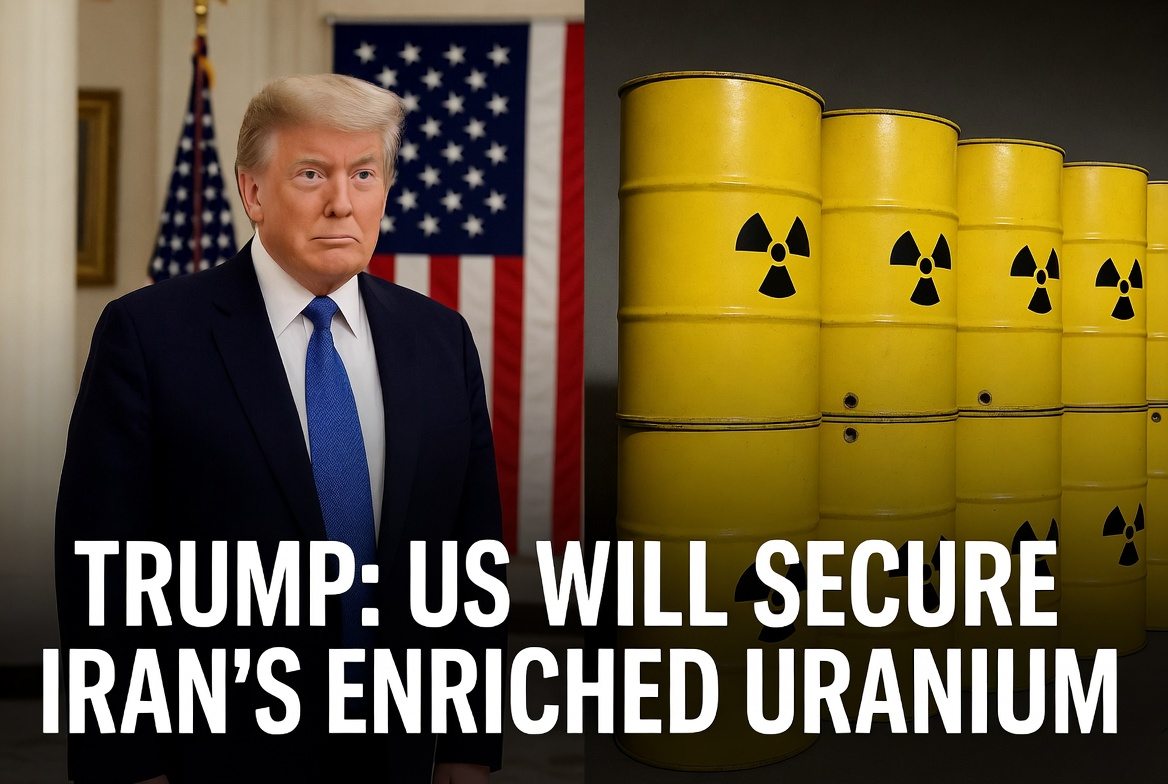
WASHINGTON D.C. July 6, 2026 – President Donald Trump stated that the United States will secure Iran’s stockpile of enriched uranium, describing it as a key priority in ongoing nuclear discussions. The remarks echo similar comments he has made repeatedly since May 2026 as part of efforts to address Tehran’s nuclear program following U.S.-Israeli strikes last year.
Speaking to reporters, Trump emphasized that the U.S. would retrieve the material — which he has referred to as “nuclear dust” in prior statements — even if it is buried deep underground at sites like Isfahan. “We will get it. We don’t need it, we don’t want it. We’ll probably destroy it after we get it, but we’re not going to let them have it,” he said in earlier remarks that align with his latest position.
Iran’s enriched uranium stockpile, estimated by the IAEA to include significant quantities of near-weapons-grade material (up to 60% U-235), remains a central sticking point in negotiations. Much of it is believed to be located in underground facilities damaged during 2025 strikes. Iranian officials have maintained that the material is under rubble and have rejected any handover, asserting their right to a peaceful nuclear program.
Trump has framed the removal of the stockpile as essential to preventing Iran from developing nuclear weapons. In recent months, he has indicated that technical discussions could begin immediately under a potential framework deal, with options including down-blending the material under international supervision.
The statement comes as:
Broader talks aim to formalize a ceasefire, reopen the Strait of Hormuz, and address sanctions relief, though the uranium issue is expected to require detailed follow-up negotiations.
Iranian officials have consistently pushed back, with Foreign Minister Abbas Araghchi and others describing any forced handover as a violation of national rights. Analysts note that retrieving deeply buried material would be technically complex and could require close cooperation — something Tehran has so far ruled out.
Public reaction on social media and in international commentary has been mixed, with some expressing skepticism about the feasibility and others viewing it as leverage in high-stakes diplomacy.
The White House has not released new details on timelines or mechanisms for any potential transfer. Negotiations remain fluid amid regional tensions.
About The Author