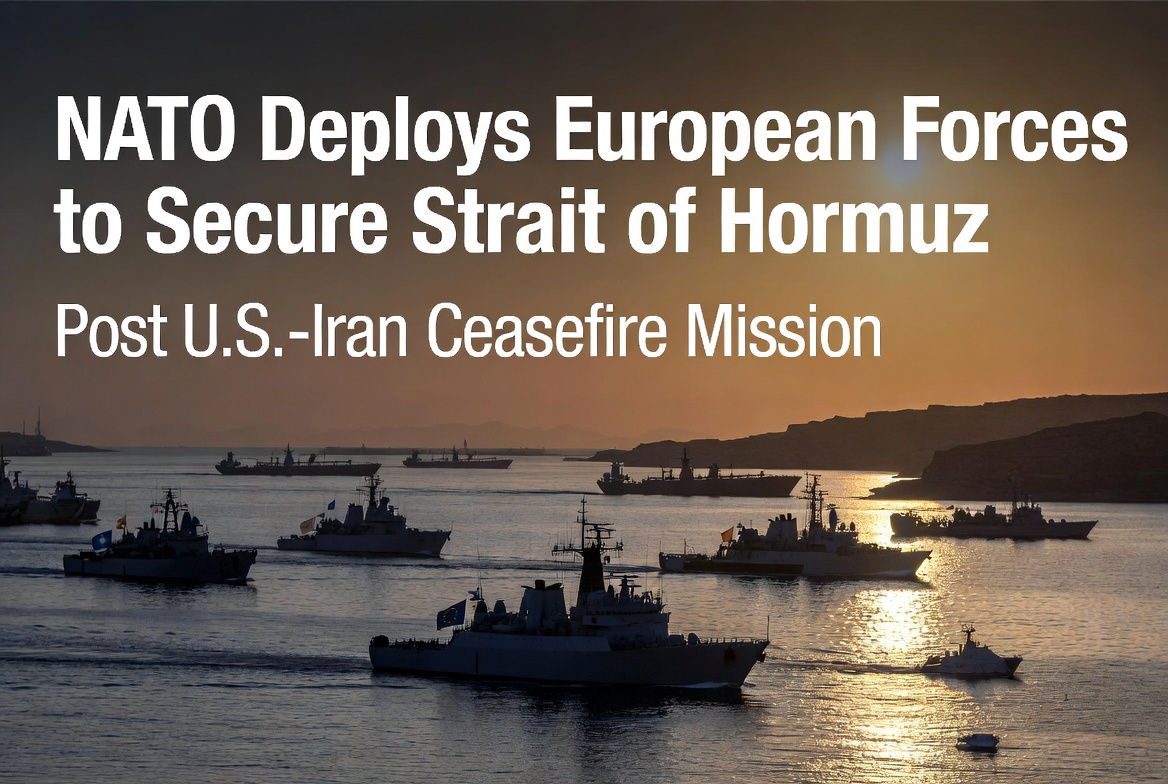
BRUSSELS/WASHINGTON June 24, 2026 — NATO Secretary General Mark Rutte announced that European allies are actively deploying military assets near the Strait of Hormuz, aiming to safeguard freedom of navigation following a landmark U.S.-Iran ceasefire agreement that seeks to reopen the critical waterway.
The narrow strait, which handles roughly 20% of global oil trade, was heavily disrupted during recent regional conflicts involving naval blockades and mines. The U.S.-Iran deal, signed earlier this month, includes provisions for demining, lifting restrictions on shipping, and a 60-day extension of the ceasefire to facilitate broader negotiations, including on Iran’s nuclear program.
Rutte highlighted increasing European contributions, including pre-positioning of ships, minehunters, and other capabilities, particularly from the UK, France, and the Netherlands. “European allies heard the Americans,” Rutte stated, noting that countries are responding to calls for support in securing the route vital to the global economy.
Coalition Efforts Underway
- UK and France are leading initiatives for a multinational escort and demining mission.
- Additional allies, including Germany, Italy, the Netherlands, and non-NATO partners like Japan and Canada, have signaled readiness to contribute logistical support and naval assets.
- A broader coalition of around 22 nations is coordinating to ensure safe passage, addressing both immediate technical obstacles and long-term maritime security.
The moves come after U.S. pressure on allies to commit resources, with President Trump previously emphasizing the need for shared responsibility in reopening the strait. Rutte has described the European response as addressing capabilities the U.S. may lack in mine countermeasures.
The Strait of Hormuz connects the Persian Gulf to the Gulf of Oman and remains a global chokepoint. Its closure earlier in the year triggered spikes in oil prices and energy market volatility. Successful reopening is expected to stabilize supplies, with recent reports indicating improved flows following the truce.
NATO officials stress that the operation focuses on collective security and international law rather than direct involvement in prior hostilities. “Allies, as always, will do everything possible to protect our common interests,” Rutte said in recent remarks.
Analysts view the deployments as a test of NATO cohesion outside its traditional North Atlantic focus and a signal of European willingness to shoulder more maritime responsibilities amid shifting U.S. priorities.
As demining and escort operations ramp up, the coming weeks will be critical in determining whether commercial shipping fully resumes without incident.
About The Author