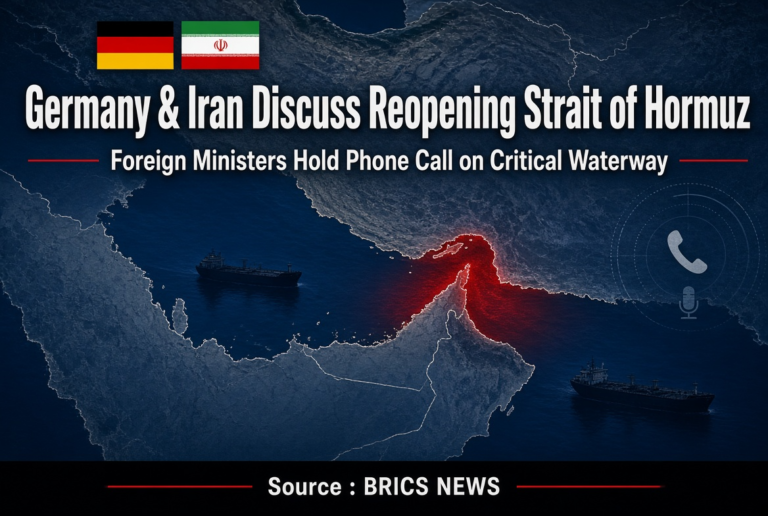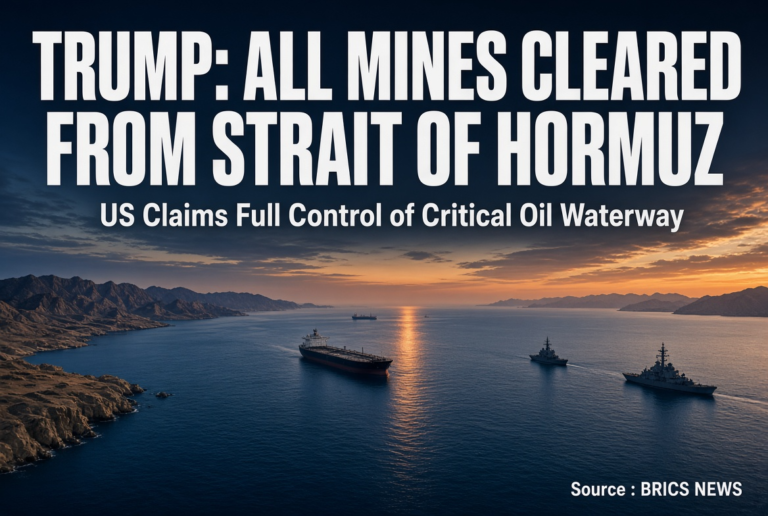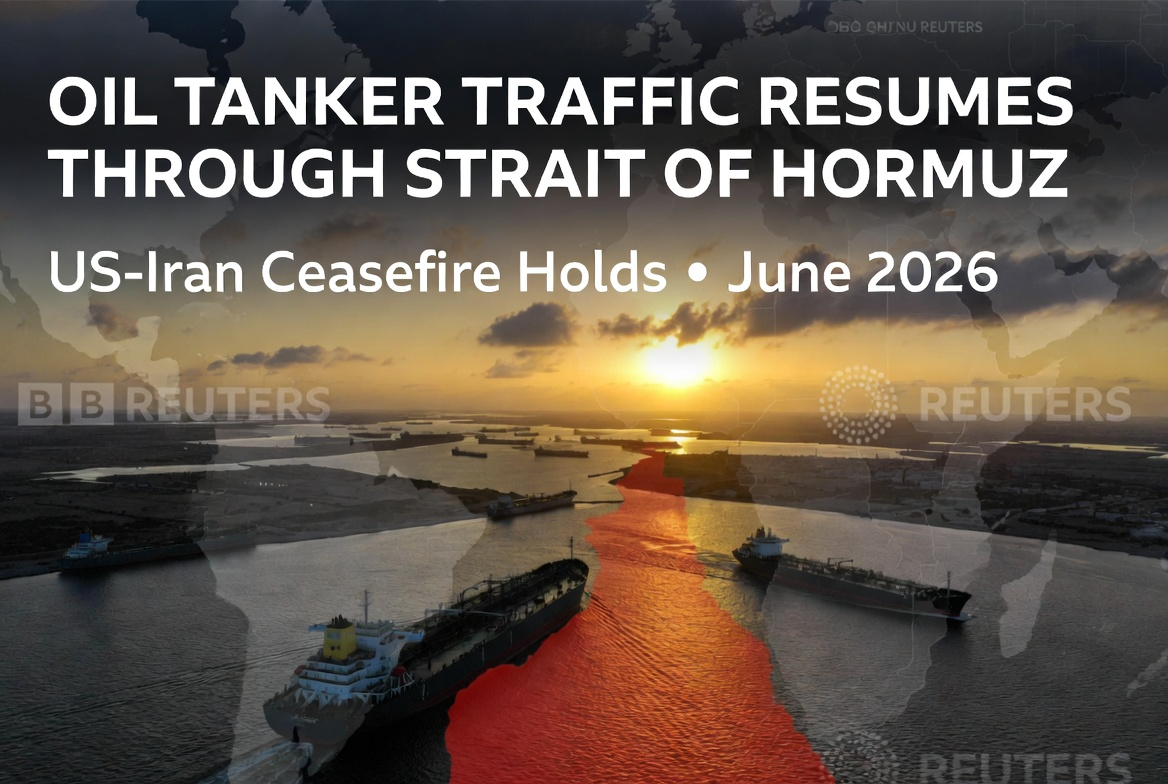
DUBAI/WASHINGTON June 22, 2026 — Shipping data shows a noticeable increase in oil tanker traffic through the Strait of Hormuz, the vital chokepoint for roughly 20% of global oil trade, following the US-Iran ceasefire memorandum signed earlier this month.
The account @BRICSinfo, which tracks geopolitics and BRICS-related developments, reported Monday that tanker movements are rising, aligning with vessel tracking platforms showing gradual normalization after months of severe disruption during the 2026 Iran conflict.
The strait was largely closed or heavily restricted since early March 2026 amid US-Israeli military actions against Iran and Iranian countermeasures, including threats to block the waterway. Pre-war traffic averaged over 100 vessels daily, but flows dropped sharply due to risks, insurance spikes, and a US naval blockade of Iranian ports.
On June 17, US President Donald Trump and Iranian President Masoud Pezeshkian signed a 14-point memorandum of understanding. Key provisions include:
- Immediate halt to hostilities, including in Lebanon.
- Lifting of the US blockade.
- Reopening the Strait of Hormuz to commercial traffic with toll-free passage for 60 days.
- Launch of negotiations on Iran’s nuclear program, sanctions relief, asset unfreezing, and long-term administration of the strait involving Oman and other Gulf states.
Despite Iran’s subsequent claims of re-closing the strait over alleged violations by Israel and the US, shipping data indicates continued transits, with US Central Command and analytics firms like Kpler and MarineTraffic reporting dozens of vessels moving in recent days.
Recent figures show daily transits climbing toward — though not yet at — pre-conflict levels. On peak days post-deal, over 50 vessels crossed, carrying millions of barrels, including Saudi, Iranian, and other Gulf crude and products. Many tankers previously idled in the Persian Gulf have begun exiting.
Industry observers note persistent caution: high insurance rates, lingering mine risks, and incomplete demining efforts mean full recovery could take weeks. However, the uptick signals growing market confidence in the ceasefire’s durability.
Oil prices have eased somewhat on the news, relieving pressure on global energy markets strained by the conflict.
Switzerland-mediated talks continue in the coming weeks to convert the interim memorandum into a lasting peace deal. Topics include nuclear inspections, reconstruction funding, and safe navigation guarantees.
US officials, including Vice President JD Vance, have emphasized the deal’s success in reopening the strait and restoring leverage, while Iranian sources stress commitments to sovereignty and phased sanctions relief.
The Strait of Hormuz remains one of the world’s most strategically sensitive waterways. Its stabilization marks a significant de-escalation after over 100 days of disruption that trapped tankers, spiked energy costs, and heightened global economic risks. Further increases in traffic will be closely watched as a barometer for broader regional stability.
About The Author