
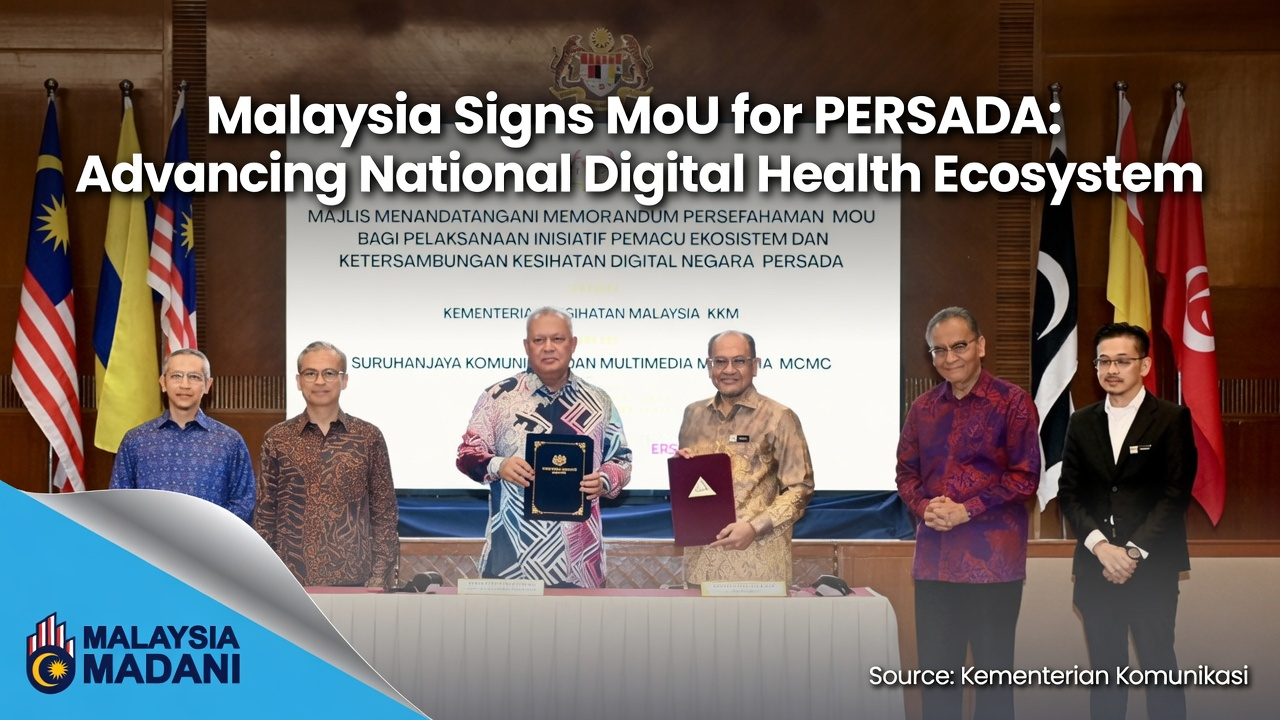
PUTRAJAYA, June 15, 2026 — Malaysia’s Ministry of Communications and Ministry of Health today signed a Memorandum of Understanding (MoU) to implement PERSADA, the National Digital Health Ecosystem and Connectivity Driver initiative. The signing was witnessed by the respective ministers in Putrajaya.
The agreement between the Ministry of Health (KKM) and the Malaysian Communications and Multimedia Commission (MCMC) aims to accelerate the digitisation of public healthcare services. It seeks to deliver more efficient, cost-effective care while reducing travel time for patients, especially those in rural areas.
Key Highlights of PERSADA
- Infrastructure Upgrades: MCMC will strengthen broadband connectivity and digital infrastructure across healthcare facilities.
- Electronic Medical Records: Expansion of digital patient records for better data sharing and coordination.
- Telehealth Enhancement: Integration with platforms like the Malaysia Virtual Health Assistant System (MyVAS) to enable remote consultations.
- Targeted Outcomes: The initiative targets faster service delivery, with ambitions for 81% of patients to receive treatment within an hour at participating facilities. It forms part of a broader RM650 million investment in digital health transformation.
MCMC will focus on technology readiness and nationwide connectivity to ensure all Malaysians, particularly in underserved regions, benefit from the ecosystem.
Senior officials present included:
- Datuk Abdul Halim Hamzah, Secretary-General of the Ministry of Communications
- Datuk Seri Hasnol Zam Zam Haji Ahmad, Secretary-General of the Ministry of Health
- Datuk Aminurrahim Mohamed, Senior Secretary (Management)
- Tan Sri Mohamad Salim Fateh Din, Chairman of MCMC
The move aligns with the government’s broader Malaysia Madani vision to leverage digital technology for inclusive public service delivery. PERSADA is expected to modernise Malaysia’s public healthcare system significantly, improving efficiency and accessibility for millions of citizens.
This initiative builds on ongoing digital health efforts and marks a key step in integrating communications infrastructure with healthcare delivery.
About The Author