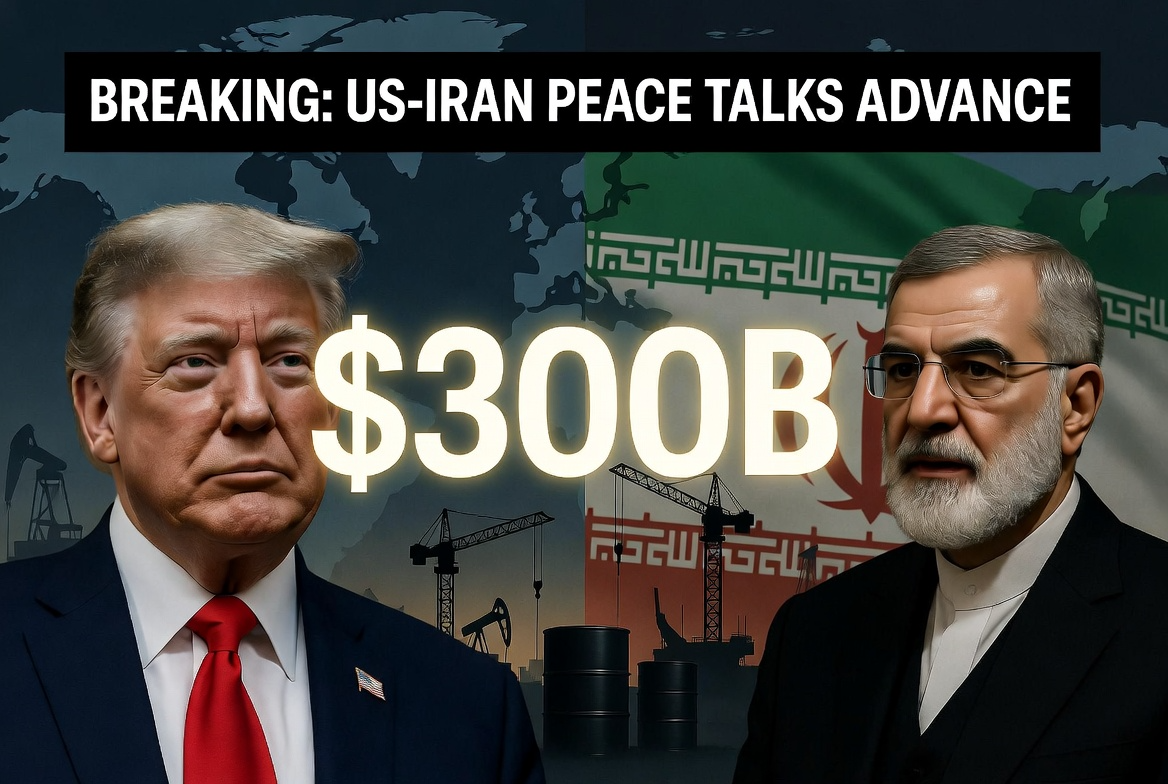
TEHRAN June 15, 2026 – Negotiations between the United States and Iran have reached a critical stage, with reports of a draft Memorandum of Understanding (MoU) aimed at ending recent hostilities, reopening the Strait of Hormuz, and addressing sanctions and nuclear issues. The talks, mediated in part through Pakistan and other channels, come after months of conflict that disrupted global energy markets and regional stability.
According to multiple reports citing Iranian officials and diplomats, the proposed framework includes a potential international investment or reconstruction fund valued at around $300 billion to support Iran’s postwar recovery. Iranian sources have described this as a “reconstruction program,” while U.S. and mediating officials frame it as a broader investment initiative that the U.S. would help facilitate—potentially drawing from Gulf states, private investors, and international partners rather than direct U.S. taxpayer funds.
Key Elements of the Draft Deal
- Ceasefire and Hormuz: A 60-day extension of the ceasefire, immediate reopening of the Strait of Hormuz without tolls, and lifting of the U.S. naval blockade on Iranian ports.
- Sanctions and Assets: Phased, performance-based sanctions relief, including temporary oil export waivers. Release of approximately $24 billion in frozen Iranian assets (with some versions citing partial upfront access, though U.S. officials emphasize conditions).
- Nuclear Talks: 60 days of negotiations on Iran’s uranium stockpile and enrichment program, with U.S. demands for strong verification and limits.
- Reconstruction Fund: The $300 billion figure originated from Iranian demands for war damages compensation (estimated up to $1 trillion by some in Tehran). U.S. envoys have discussed an international fund, with American companies potentially involved in joint ventures.
President Donald Trump has signaled readiness for a deal but pushed back against Iranian-leaked versions, stressing no upfront cash to Iran and full compliance requirements. U.S. officials, including allies like Senator Lindsey Graham, have criticized the reconstruction fund idea as overly concessionary.
Iranian state media and officials have presented a more maximalist view, including a reported 14-point draft that emphasizes sanctions suspension and exclusion of certain programs from immediate talks. A signing ceremony was reportedly eyed for mid-June in Switzerland, though progress remains fluid.
The proposals have drawn sharp criticism from U.S. hawks, who compare them unfavorably to the 2015 JCPOA, and from Israeli officials concerned about long-term threats. Markets have shown volatility on conflicting signals, with oil prices reacting to prospects of resumed Iranian exports.
As of June 15, 2026, no final agreement has been confirmed. Both sides report being “close,” but historical precedents show deals can collapse in final stages. Details continue to evolve through indirect channels.
This developing story highlights the high stakes for regional security, energy markets, and U.S. foreign policy. Further updates are expected in the coming days.
About The Author