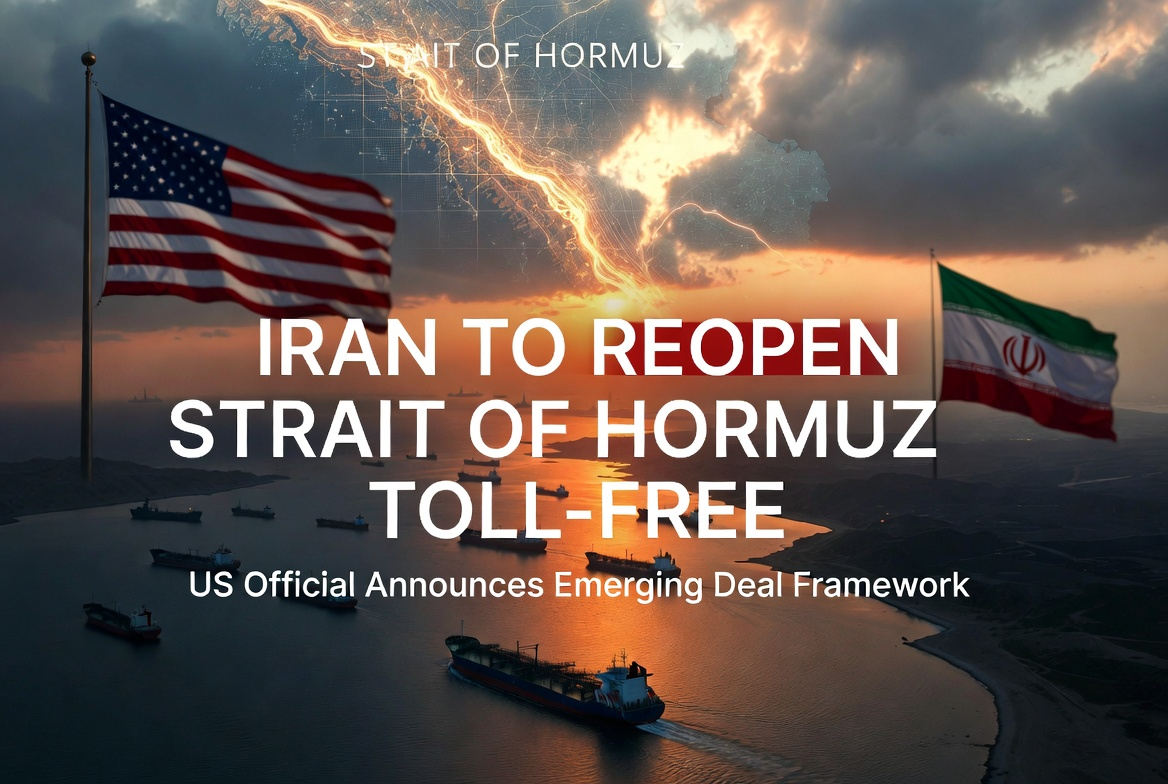
WASHINGTON, D.C. June 13, 2026 — A senior U.S. administration official told Fox News on Saturday that Iran has agreed to reopen the Strait of Hormuz without charging transit fees as part of a broader framework to end months of conflict, with the United States prepared to lift its blockade on Iranian ports.
The development, reported amid high-stakes negotiations, comes after Iran restricted access to the critical waterway earlier in 2026, mined sections of it, and signaled plans to impose “service fees” for navigation, security, and environmental protection. The strait carries about 20% of global oil flows, and disruptions have driven up energy prices worldwide.
“We think we have a deal. It’s a great deal and a very strong deal,” the official said during a background call. Iran would reopen the strategic chokepoint “with no tolls,” meeting a core U.S. demand.
President Donald Trump stated Saturday that a full agreement with Iran is scheduled to be signed as soon as Sunday, after which the strait would immediately open to all traffic.
The proposed framework follows a conflict that erupted in late February 2026, triggered by U.S. and Israeli strikes on Iranian targets. Iran responded by tightening control over the strait, leading to a U.S. naval blockade of Iranian ports and intermittent shipping disruptions.
Iranian officials have previously pushed back on the “toll” label while insisting that passage through the waterway would no longer be free, citing costs for services rendered. Talks mediated by Oman and others have sought to bridge the gap, though skepticism remains high on both sides.
The Strait of Hormuz links the Persian Gulf to the Gulf of Oman and serves as the primary export route for oil from Saudi Arabia, Iraq, the UAE, Kuwait, and Iran itself. Disruptions have ripple effects on global markets, with recent oil price volatility reflecting ongoing uncertainty.
U.S. officials have repeatedly emphasized that unrestricted, toll-free access is non-negotiable, while warning of consequences for any vessels paying unauthorized fees to Iran.
Many observers remain cautious. Social media and analyst commentary have noted past discrepancies between U.S. and Iranian statements on the same issues. Iran has not yet publicly confirmed the latest details, and some posts suggest Tehran may push back or deny elements of the reported framework.
If finalized, the deal could mark a significant de-escalation, potentially including further discussions on Iran’s nuclear program. However, enforcement, mine clearance, and long-term security guarantees will be key tests in the coming weeks.
Global shipping companies and energy markets are watching closely for confirmation and the resumption of safe, unrestricted transit.
About The Author