By Professor Dato Dr Ahmad Ibrahim
On Tuesday, 12 May 2026, students and staffs at UCSI University were given a masterclass not in textbooks, but in turbulence. The occasion was a podcast series featuring Malaysia’s top CEOs. The guest was Capt Dato Izham Ismail, the just-retired CEO of Malaysian Aviation Group (MAG). The moderator was the ever-insightful KJ of *Keluar Sekejap*. His probing was masterclass.
On paper, the story of MAS sounds like a recipe for disaster. Here was a man handed the controls of a national airline buried under RM25 billion in debt. He had never led an aviation group. He was a pilot by trade, a master of the cockpit but a novice in the labyrinths of finance and corporate management. By all conventional wisdom, he should have failed. Instead, by 2025, he had erased that debt and steered the national carrier onto a path of profitability. How? Not with an MBA, but with a motto.
Talk about the myth of the perfect resume. We live in an age that worships credentials. We assume that to fix a broken balance sheet, you need a former banker. To restructure debt, you need a numbers savant. Capt Izham’s tenure shatters that illusion. When he was asked to helm Malaysia Airlines, he admits he knew very little about the financial engineering required to save a dying giant. He had spent most of his career in the left-hand seat of a cockpit, not a corner office. Though he did spend time working with 17 of MAS divisions. That must have been when he picked up the necessary knowledge about MAS dynamics. His strength was not spreadsheets; it was systems, discipline, and most critically, trust.
He took over a ghost airline. Not literally, but spiritually. Morale was in a death spiral. Workers were exhausted, embarrassed, and hopeless. A company with a RM25 billion liability doesn’t just suffer a cash crisis; it suffers an identity crisis. People stop believing the plane can fly. Most turnaround specialists would have locked themselves in a room with actuaries and lawyers. Capt Izham did the opposite. He understood that before he could fix the debt, he had to fix the dialogue.
He embarked on a “strategic communication” campaign—a phrase that sounds corporate but, in practice, was deeply human. He didn’t send memos. He met people. He engaged in direct, unfiltered conversations with the low-morale workers. He didn’t talk about yield management or hedging. He talked about change.
His motto, repeated in the podcast, is deceptively simple: “If there is no change, there will be no change possible.” It is a tautology that cuts through the fog. It is a leadership principle that says: waiting is not a strategy. Hope is not a plan. The first and only step is to move. What Capt Izham demonstrated is that in a crisis, soft skills become hard assets. You cannot erase RM25 billion through spreadsheets alone; you need a workforce willing to bleed for a second chance. He built that willingness by being transparent about his own limitations. He didn’t pretend to know finance. He pretended to know people. This was expected coming from a difficult childhood as he described it.
He leveraged his pilot’s credibility: the steady hand, the calm voice during storms, the checklists that prevent disaster. But he expanded that metaphor to the entire airline. He convinced engineers, cabin crew, and ground staff that they were not victims of history, but architects of a future. By the end of his tenure, the debt was gone. But the real profit was cultural: a national airline that remembered how to stand tall.
What students learned that day was beyond the classroom. For the students at UCSI, the lesson was stark. Leadership is not about the absence of weakness. It is about the presence of will. Capt Izham could have said, “I’m just a pilot, I don’t know debt.” Instead, he said, “I don’t know debt, but I know how to lead people who do.” He surrounded himself with financial experts, but he never outsourced the soul of the company.
In an era where we obsess over technical skills—coding, finance, analytics—this podcast served as a vital reminder: transformation begins with trust. It begins with the courage to look a demoralized team in the eye and say, “Change is coming, and it starts with me.”
Capt Dato Izham Ismail retired not as a finance wizard, but as a pilot who landed the impossible. And for the students who listened on that Tuesday in May, they walked away with the most valuable takeaway of all: you don’t need all the answers to lead. You just need the nerve to change the question.
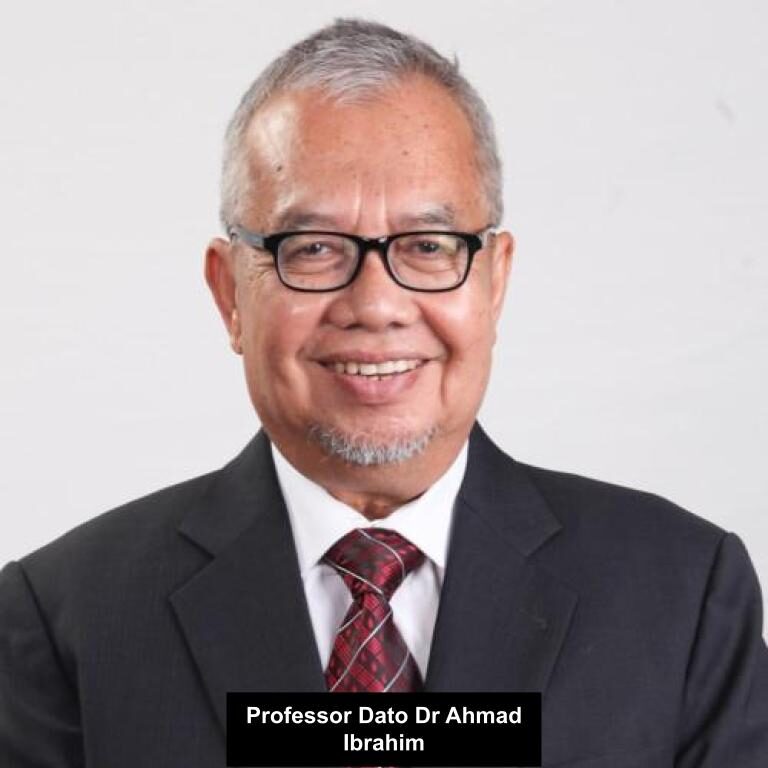
The author is affiliated with the Tan Sri Omar Centre for STI Policy Studies at UCSI University and is an Adjunct Professor at the Ungku Aziz Centre for Development Studies, Universiti Malaya.
About The Author