TEHRAN June 10, 2026 — The United States conducted multiple rounds of precision strikes against Iranian military targets on Tuesday evening, marking the latest escalation in the ongoing 2026 Iran conflict. U.S. Central Command (CENTCOM) described the operation as a “proportional self-defense” response to Iran’s downing of a U.S. Army AH-64 Apache helicopter near the Strait of Hormuz the previous day.
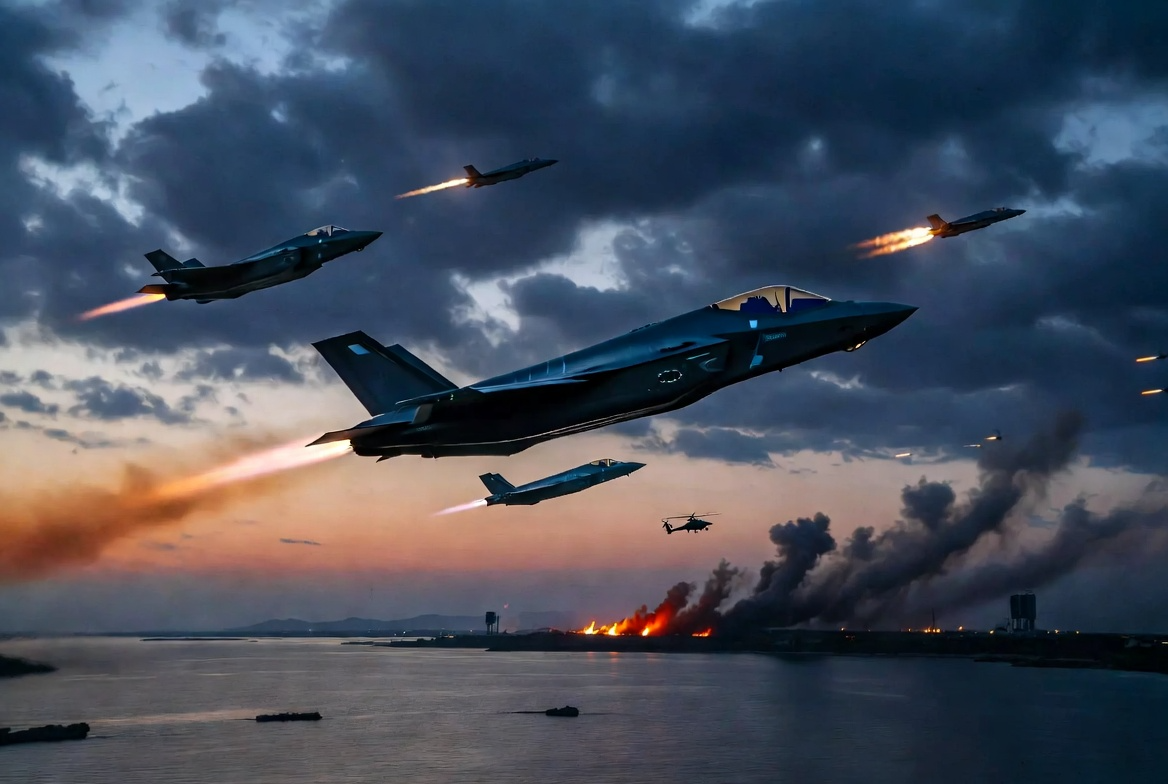
According to CENTCOM, American Air Force and Navy fighter jets struck Iranian air defense systems, ground control stations, and surveillance radar sites in areas including Jask, Sirik, and Qeshm Island in Hormozgan province. Iranian sources reported damage to a telecommunications tower and water infrastructure, with explosions confirmed in the region.
The two crew members from the downed Apache were rescued and are in stable condition. A U.S. official told Axios that an Iranian drone was responsible for the incident, though it remains unclear if the strike was intentional.
President Donald Trump had vowed a strong response, stating on Truth Social that the U.S. “must, of necessity, respond” and describing planned strikes as “very powerful.” This action comes as diplomatic efforts to finalize a deal to end the war—centered on reopening the Strait of Hormuz, nuclear concessions, and sanctions relief—continue but face significant hurdles.
Iran’s military and Foreign Minister Abbas Araghchi condemned the strikes, warning of retaliation. Tehran claimed it targeted U.S. bases in the region, including one in Jordan, and vowed “more severe and widespread attacks” if aggression continues. Bahrain reported repelling related Iranian threats.
This exchange fits into a pattern of tit-for-tat actions since the war erupted in late February 2026 with major U.S.-Israeli strikes on Iranian leadership, nuclear, and military sites. A ceasefire took hold in early April, but repeated incidents—particularly around the critical Strait of Hormuz oil chokepoint—have strained it.
Markets reacted immediately, with oil prices spiking and Asian stocks tumbling on renewed risk-off sentiment.
The incident underscores the fragility of ongoing U.S.-Iran negotiations, even as both sides express interest in de-escalation. Analysts warn that further cycles of retaliation could derail peace talks and widen the conflict across the Middle East.
This is a developing story. Updates will follow as more details emerge from U.S., Iranian, and regional officials.
About The Author