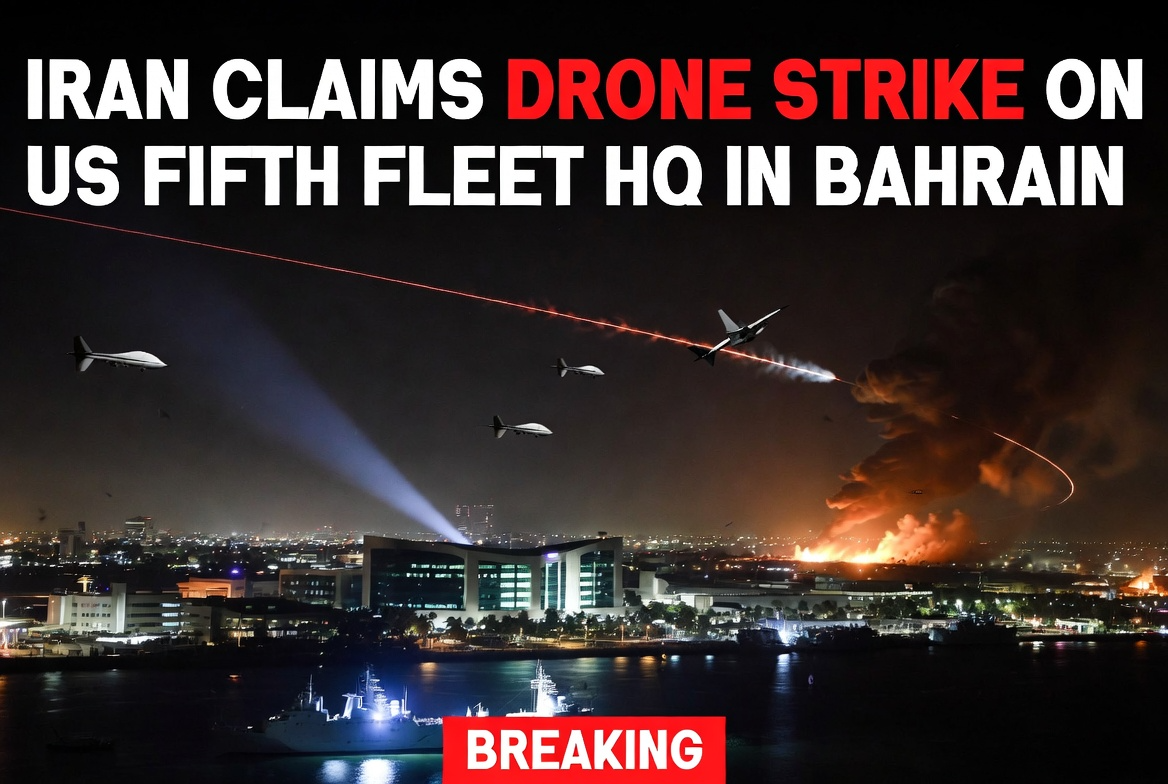
MANAMA, BAHRAIN June 10, 2026 — Iran’s Islamic Revolutionary Guard Corps (IRGC) announced early Wednesday that it launched a drone attack on the US Navy’s Fifth Fleet headquarters in Bahrain, describing the operation as retaliation for recent US strikes on Iranian targets.
According to Iranian state media and the IRGC statement, the strike occurred around 2:30 a.m. local time. It targeted the US facility in response to what Tehran calls ongoing American “aggression,” including reported strikes on southern Iran and a communications tower south of Qeshm Island. The IRGC warned of further, heavier measures if US actions continue.
US Central Command (CENTCOM) pushed back against the claims, stating that all Iranian projectiles aimed at Bahrain and other regional sites were intercepted, with no damage to US personnel or assets. Bahrain activated air raid sirens, and residents reported hearing explosions, but official Bahraini sources indicated successful interceptions by air defenses.
This latest exchange fits into a volatile cycle of retaliation in the Persian Gulf:
- It follows US strikes on Iranian coastal radar sites and other targets after an Iranian drone downed a US Apache helicopter over the Strait of Hormuz.
- Earlier incidents included Iranian missile and drone barrages toward US-allied bases in Bahrain, Kuwait, and elsewhere, many of which were intercepted.
- Both sides have characterized their actions as defensive, while accusing the other of violating a fragile ceasefire.
The Fifth Fleet, headquartered in Manama, Bahrain, oversees critical US naval operations across the Persian Gulf, Red Sea, and Arabian Sea. Any direct threat to it raises alarms about potential disruptions to global oil shipping through the Strait of Hormuz.
Bahrain and Kuwait have condemned the Iranian actions as violations of sovereignty. Gulf states remain on high alert, with past similar attacks leading to widespread siren activations and partial intercepts.
No independent confirmation of significant damage at the Bahrain base has emerged from Western or neutral sources so far. Analysts note that Iranian claims often emphasize symbolic or maximum-impact messaging, while US and allied defenses have proven effective in prior waves.
The situation risks drawing more Gulf nations into direct confrontation and could spike global energy prices if shipping lanes face sustained threats.
This story is developing. Official statements from the US, Iran, and Bahrain are expected as more details emerge.
About The Author