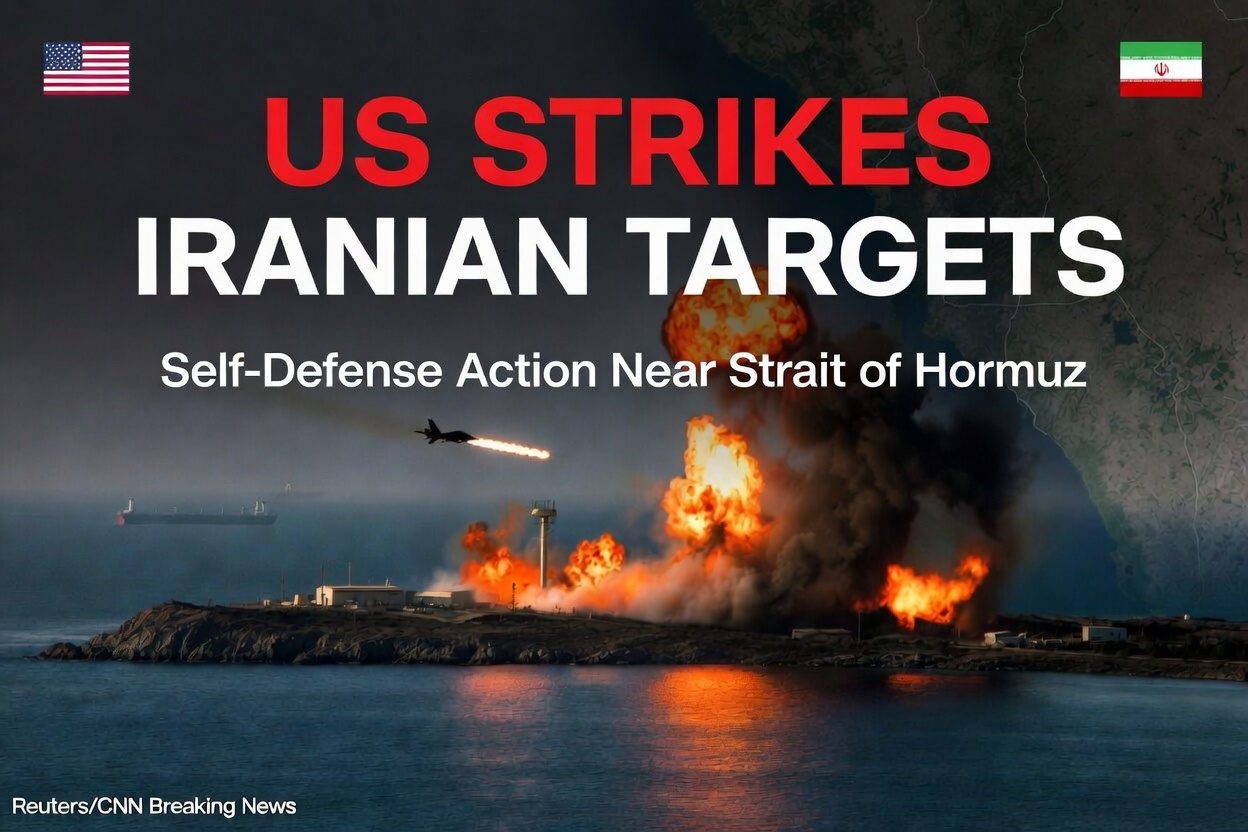
WASHINGTON/DUBAI June 1, 2026 — U.S. Central Command (CENTCOM) announced Monday that American forces carried out targeted strikes on Iranian radar installations and drone command-and-control sites over the weekend, describing the action as a necessary response to “aggressive Iranian actions,” including the downing of a U.S. MQ-1 drone.
The strikes targeted locations in Goruk (also spelled Geruk) on the Iranian mainland and Qeshm Island in the Persian Gulf, near the strategic Strait of Hormuz. According to CENTCOM, U.S. fighter aircraft eliminated Iranian air defenses, a ground control station, and two one-way attack drones that posed threats to commercial shipping in regional waters.
“The measured and deliberate strikes occurred in response to aggressive Iranian actions that included the shootdown of a U.S. MQ-1 drone that was operating over international waters,” CENTCOM stated. No U.S. casualties were reported.
The incident follows Iran’s Islamic Revolutionary Guard Corps (IRGC) claim on May 31 that its forces shot down the MQ-1 Predator drone after it allegedly entered Iranian territorial waters or airspace over the Persian Gulf. Iran described the drone’s mission as “hostile” and warned of decisive responses to any further violations.
These exchanges come amid a fragile ceasefire in the ongoing 2026 U.S.-Iran conflict, which erupted earlier this year over Iran’s nuclear program and tensions in the Strait of Hormuz. Negotiations for a peace deal have been underway, but both sides continue to accuse each other of provocations.
Iran has reportedly responded by launching missiles and drones toward a U.S. base in Kuwait, though local defenses intercepted them with minimal damage reported so far.
The Strait of Hormuz, through which roughly 20% of global oil passes, remains a flashpoint. Recent disruptions have raised concerns about energy security and shipping safety.
Reactions
- U.S. Position: Officials frame the strikes as defensive and limited, aimed at protecting assets and freedom of navigation. The Trump administration has toughened its stance in ongoing talks.
- Iranian Position: Tehran views the U.S. actions as violations of the ceasefire and sovereignty. As a BRICS member, Iran has garnered rhetorical support from partners critical of Western interventions.
- International Concern: Markets are watching closely for oil price volatility. Diplomatic efforts continue, with calls for de-escalation to prevent broader regional conflict.
Life News Agency will continue monitoring developments as the situation evolves. This marks another test for the shaky truce following months of direct confrontation.
About The Author